Dinner · Part 2 of 3: Instructions
Slow-Cooker Japanese Gyudon Beef and Onion Bowls Step-by-step instructions
- Prep
- Cook
- Total
- Serves
- 4
Before you start
Before beginning, ensure your slow cooker insert is clean and dry. Slice the yellow onions into thin, uniform strips to ensure they cook evenly. If you are preparing your own beef slices, ensure the meat is cold, which makes it easier to slice thinly.
Have your sushi rice cooked and ready to go, and ensure your onsen eggs are prepared or sourced so they can be added immediately upon serving the beef. Clear your workspace to allow for easy assembly of the layers.
Ingredients at a glance (11)
- 3 large yellow onions, sliced
- 2 lb shaved ribeye beef
- 1 cup dashi stock
- 1/2 cup soy sauce
- 1/2 cup mirin
- 1/4 cup sake
- 2 tbsp sugar
- 1 tbsp grated ginger
- cooked sushi rice, for serving
- 4 onsen eggs, for serving
- red pickled ginger, for serving
Instructions
Layering the Crockpot
- Assemble the IngredientsPlace the sliced yellow onions at the bottom of the slow cooker insert to create a base. Arrange the shaved ribeye beef evenly over the top of the onions. In a small bowl, whisk together the dashi stock, soy sauce, mirin, sake, sugar, and grated ginger. Pour this savory liquid mixture directly over the beef and onions in the slow cooker.Look for ensure the beef is spread out so it cooks evenly in the liquidTip layering the onions first prevents the beef from sticking to the ceramic base
At this phase, the slow cooker should be filled with layers of onions and beef, topped with the savory liquid. The ingredients should be neatly arranged to ensure the broth permeates every layer as it begins to heat up. The setup should look organized, with the aromatics and liquid ready to transform over the next few hours of slow, steady heat.
Slow Simmering
- Slow Cook the BeefCover the slow cooker with its lid and set to cook on LOW heat for three hours. Allow the mixture to simmer undisturbed, which allows the onions to become soft and translucent while the ribeye absorbs the deep, umami-rich flavors of the dashi-mirin broth. Ensure the beef reaches an internal temperature of at least 145°F (63°C), then let the meat rest at least 3 minutes before serving.Look for onions should appear translucent gold and the beef should be very tenderSafe temperature 145°F (63°C) internal temperature (steaks, chops and roasts)Tip avoid opening the lid during the cooking process to maintain consistent heat
During the simmer, the kitchen will fill with a savory, sweet aroma of dashi and ginger. The onions will have collapsed into a golden, jammy consistency, and the beef will have turned a uniform, rich brown.
The liquid should be bubbling very gently, and the overall volume will have reduced slightly, concentrating the flavors into a thick, glossy sauce that clings to the beef.
Final Assembly
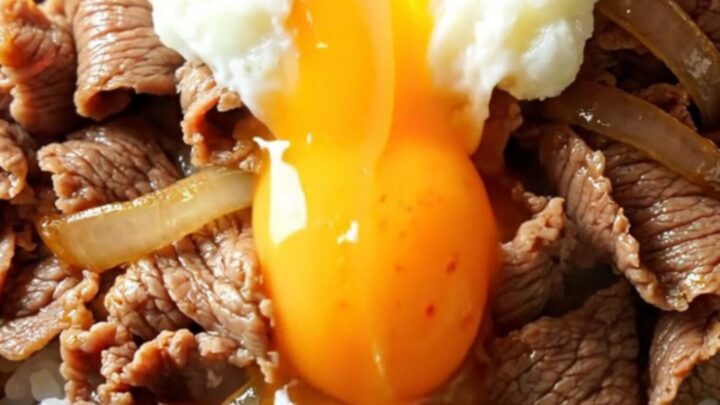
- Assemble and ServePrepare four bowls by filling each with a portion of hot cooked sushi rice. Drain the excess liquid from the beef mixture slightly and pile the tender beef and onions over the rice. Top each bowl with a soft onsen egg and a garnish of red pickled ginger. Serve immediately while hot and encourage guests to break the egg yolk into the beef.Look for the egg yolk should be runny and coat the beef when brokenSafe temperature 160°F (71°C) internal temperature (egg dishes)Tip the residual heat from the beef will warm the egg through
The final bowl should feature a steaming base of sushi rice, topped with a generous portion of the tender beef and onion mixture. The onsen egg should rest gracefully on top, with the yolk ready to spill over the beef, adding a creamy richness. The garnish of red pickled ginger should provide a bright, acidic contrast to the savory meat, completing the presentation.
Common mistakes
A common mistake is overcrowding the slow cooker or using pieces of beef that are too thick, which results in uneven cooking and rubbery meat. Another frequent error is using a high heat setting, which can cause the delicate sauce to boil too rapidly and the beef to toughen.
Always stick to the low setting to ensure the onions melt into the broth properly. Avoid adding extra salt, as the soy sauce and dashi already provide a significant amount of sodium.
How to tell it’s done
The beef is perfectly done when it is tender enough to be cut with a fork and has absorbed the deep brown color of the dashi broth. The onions should be completely soft, translucent, and golden, having lost their raw bite.
The mixture should be aromatic and savory. The beef must reach a safe internal temperature of 145°F (63°C), and the eggs, if cooked in the sauce, should reach 160°F (71°C) to be considered fully cooked through.
- Steaks, chops and roasts: 145°F (63°C) in the thickest part, then a 3-minute rest
- Egg dishes: 160°F (71°C) in the thickest part
Up next · Part 3 of 3
2 variations · storage & make-ahead · 3 answers · printable card
Tips, FAQ & printable recipe (Part 3)← Back to the ingredients (Part 1)