Dinner · Part 3 of 3: Tips & recipe card
Slow Cooker Honey Dijon Ribeye Pork Chops Tips, FAQ & printable recipe
- Prep
- Cook
- Total
- Serves
- 4
Tips for success
For the most flavorful sauce, use a good-quality whole-grain Dijon mustard with visible mustard seeds. The seeds add a pleasant pop of texture and a more complex mustard flavor.
If you prefer a smoother sauce, you can blend the mustard with a small amount of the pan gravy before adding it to the slow cooker. Honey can be substituted with maple syrup for a slightly different sweetness, but the flavor will be less floral.
To make the dish gluten-free, use a gluten-free pan gravy and serve with gluten-free noodles or mashed potatoes. If you don't have shallots, a small yellow onion, thinly sliced, works as a substitute.
For an extra layer of flavor, add a sprig of fresh thyme to the slow cooker during cooking. The sauce can be thickened with a cornstarch slurry if it seems too thin after cooking—mix 1 tablespoon cornstarch with 2 tablespoons cold water and stir into the hot sauce.
Variations
- Add mushrooms: Add 8 oz sliced cremini mushrooms to the slow cooker along with the shallots. They will release moisture and add an earthy depth to the sauce. Sauté them in butter first for extra flavor.
- Spicy kick: Stir in 1 teaspoon of crushed red pepper flakes or a minced chipotle pepper in adobo sauce with the mustard. The heat balances the honey's sweetness and adds a smoky note.
- Herb infusion: Add 2 sprigs of fresh thyme and 1 bay leaf to the slow cooker before cooking. Remove them before serving. The herbs infuse the sauce with a subtle woodsy aroma that complements the pork.
- Cider twist: Replace the pan gravy with 1 cup of apple cider and add 1 tablespoon of cornstarch to thicken. The cider adds a fruity sweetness that pairs beautifully with the honey and mustard.
Storage and make-ahead
- Fridge
- Store leftover pork chops and sauce in an airtight container in the refrigerator for up to 3 days. Keep the egg noodles separate for best texture.
- Freezer
- The pork and sauce can be frozen for up to 2 months. Thaw overnight in the refrigerator before reheating gently on the stovetop.
- Reheat
- Reheat the pork and sauce in a saucepan over low heat, adding a splash of water or broth to loosen the sauce.
Leftover pork chops and sauce can be stored in an airtight container in the refrigerator for up to 3 days. The egg noodles are best stored separately to avoid becoming mushy.
To reheat, place the pork and sauce in a saucepan over low heat, adding a splash of water or broth to loosen the sauce. The noodles can be reheated in the microwave or in a skillet with a little butter.
This dish can be assembled up to 24 hours in advance. Layer the pork chops, mustard, honey, shallots, sour cream, and pan gravy in the slow cooker insert, cover, and refrigerate.
When ready to cook, place the insert in the slow cooker and cook on low for 4 to 5 hours, adding about 30 minutes to the cooking time because the ingredients start cold. The cooked dish can also be made a day ahead and reheated gently before serving.
Serving ideas
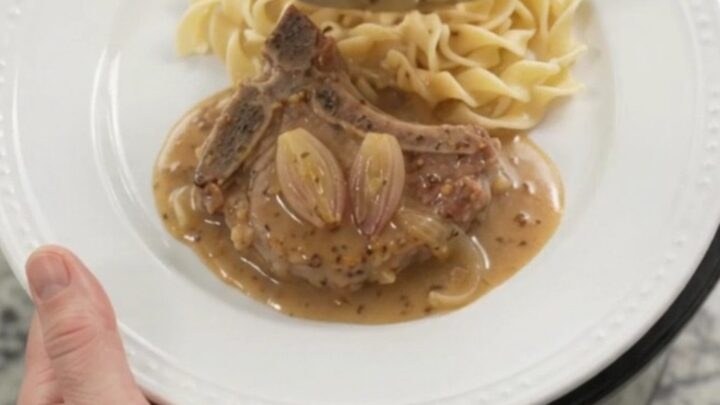
Serve the pork chops over a generous portion of buttered egg noodles, spooning the silky sauce over the top. The noodles soak up the gravy, making every bite rich and satisfying. For a lighter option, serve the pork chops with mashed potatoes or steamed green beans. A sprinkle of fresh parsley or chives adds a pop of color and freshness.
This dish pairs well with a crisp green salad dressed with a simple vinaigrette to cut through the richness. For a heartier meal, add a side of crusty bread to mop up the remaining sauce. The leftovers are just as delicious—shred the pork and toss with the sauce for a quick sandwich filling or serve over rice for a second meal.
Frequently asked questions
Can this recipe be made with boneless pork chops?
Why does the sour cream sometimes curdle in the slow cooker?
How can the sauce be thickened if it is too thin?
Can this dish be cooked on high instead of low?
What can be served instead of egg noodles?
Slow Cooker Honey Dijon Ribeye Pork Chops
Ingredients
- 4 bone-in ribeye pork chops (about 1 inch thick)
- 3 tbsp whole-grain Dijon mustard
- 2 tbsp honey
- 2 shallots, thinly sliced
- 1 cup sour cream
- 1 cup savory pan gravy (store-bought or homemade)
- 12 oz buttered egg noodles
Instructions
- Place the bone-in ribeye pork chops in the bottom of a 6-quart slow cooker in a single layer. They can overlap slightly if needed, but try to keep them as even as possible so they cook uniformly.
- Spoon the whole-grain Dijon mustard over the pork chops, then drizzle with honey. Scatter the sliced shallots evenly over the top. Use a spoon or your hands to rub the mustard and honey into the meat so every surface is coated.
- Dollop the sour cream over the pork chops, then pour the savory pan gravy evenly across the top. Do not stir. The sour cream will melt into the gravy as the slow cooker heats, creating a silky sauce.
- Cover the slow cooker and cook on low for 4 to 5 hours, or on high for 2 to 3 hours, until the pork chops are tender and reach an internal temperature of 145°F (63°C). The sauce should be bubbling gently around the edges. Let it rest for 3 minutes before slicing.
- Turn off the slow cooker. Using tongs, transfer the pork chops to a cutting board and let them rest for at least 3 minutes. This allows the juices to redistribute so the meat stays moist when sliced.
- While the pork chops rest, bring a large pot of salted water to a boil. Add the egg noodles and cook according to package directions until al dente. Drain and toss with butter to coat.
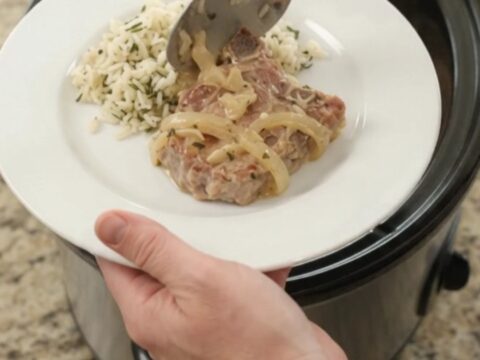
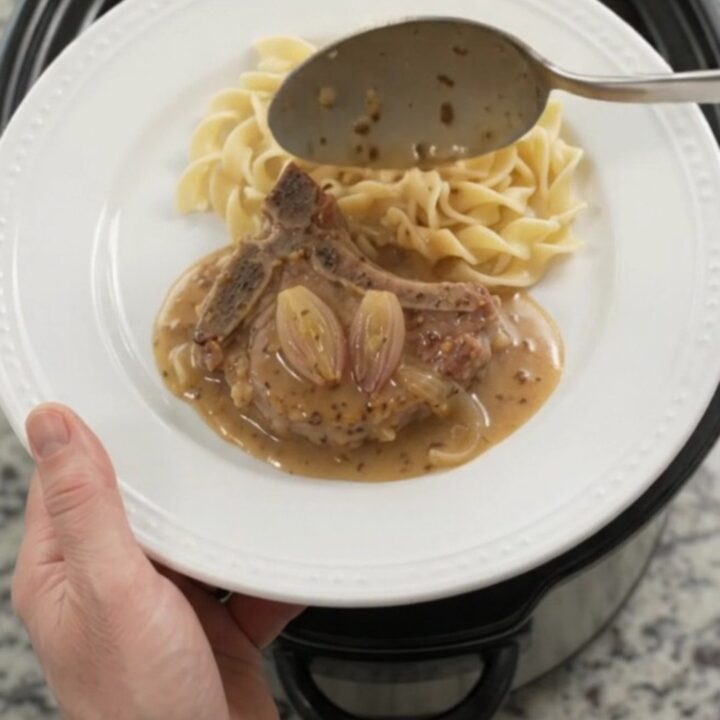
- Divide the buttered egg noodles among serving plates. Place a pork chop on top of each portion, then spoon the sour cream honey-Dijon gravy from the slow cooker over the meat and noodles. Serve immediately.
Estimated nutrition per serving
- Calories
- 620
- Protein
- 38 g
- Carbohydrates
- 32 g
- Fat
- 38 g
Next recipe

Slow Cooker Butter Cream Pork Chops and Potatoes
See the recipe → →This recipe is based on a short cooking video and is published under the pen name Clara Weller. It was checked before publication, but errors can slip through. Nutrition, when shown, is an estimate. Read more in our editorial policy and on our food safety page.
More recipes to try

Crockpot Sour Cream Ranch Pork Medallions
Total time: 6 h 10 min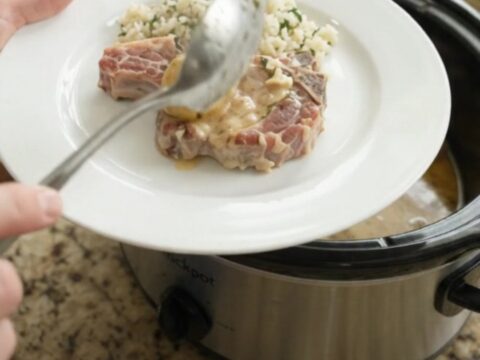
Creamy Parmesan Garlic Herb Ribeye Pork Chops
Total time: 6 h 10 min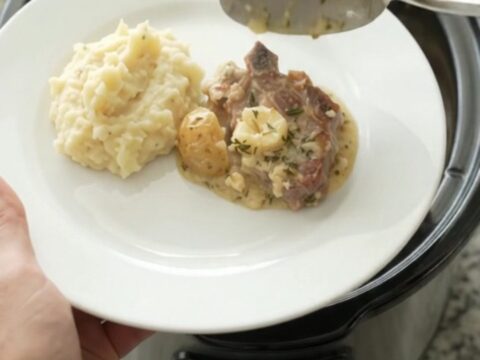
Crockpot Gruyère Garlic Herb Ribeye Pork Chops
Total time: 6 h 15 min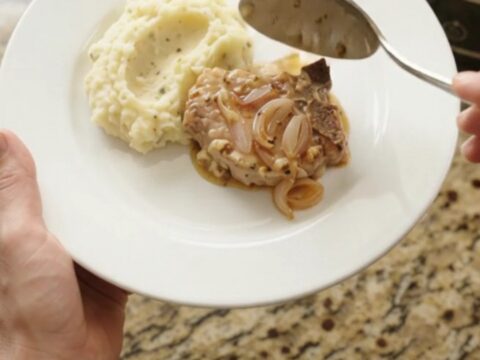
Crockpot Gruyère Honey Dijon Ribeye Pork Chops
Total time: 6 h 15 min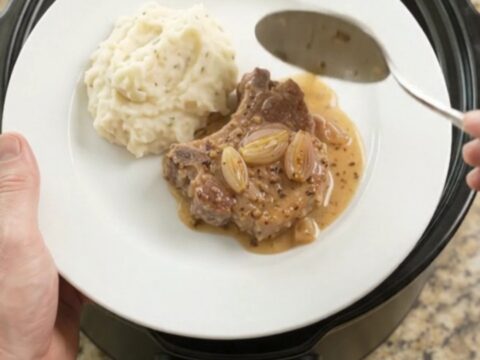
Butter Cream Honey Dijon Ribeye Pork Chops
Total time: 6 h 15 min