Dinner · Part 2 of 3: Instructions
Slow Cooker Honey Dijon Ribeye Pork Chops Step-by-step instructions
- Prep
- Cook
- Total
- Serves
- 4
Before you start
Before starting, pat the pork chops dry with paper towels and season lightly with salt and pepper if desired. Thinly slice the shallots and measure out the mustard, honey, sour cream, and pan gravy. Have a 6-quart slow cooker ready. If using store-bought pan gravy, warm it slightly to make it easier to pour. Cook the egg noodles just before serving so they stay warm and tender.
Ingredients at a glance (7)
- 4 bone-in ribeye pork chops (about 1 inch thick)
- 3 tbsp whole-grain Dijon mustard
- 2 tbsp honey
- 2 shallots, thinly sliced
- 1 cup sour cream
- 1 cup savory pan gravy (store-bought or homemade)
- 12 oz buttered egg noodles
Instructions
Layer the Ingredients
- Layer the pork chopsPlace the bone-in ribeye pork chops in the bottom of a 6-quart slow cooker in a single layer. They can overlap slightly if needed, but try to keep them as even as possible so they cook uniformly.Look for The chops should cover the bottom of the slow cooker insert without stacking too thickly.Tip If the chops are very thick, trim any excess fat to prevent the dish from becoming greasy.
- Add mustard, honey, and shallotsSpoon the whole-grain Dijon mustard over the pork chops, then drizzle with honey. Scatter the sliced shallots evenly over the top. Use a spoon or your hands to rub the mustard and honey into the meat so every surface is coated.Look for The chops should look glazed with mustard and honey, with shallot slices scattered across the surface.Tip For a milder onion flavor, soak the sliced shallots in cold water for 10 minutes and pat dry before adding.
- Pour in sour cream and pan gravyDollop the sour cream over the pork chops, then pour the savory pan gravy evenly across the top. Do not stir. The sour cream will melt into the gravy as the slow cooker heats, creating a silky sauce.Look for The sour cream should sit in dollops on top of the gravy, not fully mixed in.Tip Use full-fat sour cream for the best texture; low-fat versions can separate more easily.
At the end of this phase, the slow cooker insert holds a neat layer of pork chops coated with mustard and honey, topped with shallot slices. Dollops of sour cream sit on top, with pan gravy poured around them.
The raw ingredients look vibrant: the mustard is bright yellow, the honey is golden, and the shallots are pale purple. The aroma is fresh and savory, with a hint of sweetness from the honey.
Slow Cook
- Cook low and slowCover the slow cooker and cook on low for 4 to 5 hours, or on high for 2 to 3 hours, until the pork chops are tender and reach an internal temperature of 145°F (63°C). The sauce should be bubbling gently around the edges. Let it rest for 3 minutes before slicing.Look for The sauce should be gently bubbling and the pork chops should look opaque and cooked through.Safe temperature 145°F (63°C) internal temperature (steaks, chops and roasts)Tip Avoid lifting the lid during cooking to keep the heat steady and prevent the sauce from thinning.
- Rest the pork chopsTurn off the slow cooker. Using tongs, transfer the pork chops to a cutting board and let them rest for at least 3 minutes. This allows the juices to redistribute so the meat stays moist when sliced.Look for The pork chops should rest on a cutting board, lightly tented with foil if desired.Safe temperature 145°F (63°C) internal temperature (steaks, chops and roasts)Tip While the meat rests, the sauce can continue to thicken in the warm slow cooker.
After several hours, the slow cooker is gently bubbling, and the pork chops have turned opaque and are pulling away from the bone. The sauce has transformed into a creamy, golden gravy, with the sour cream fully melted in.
The kitchen smells rich and savory, with a sweet-tangy note from the honey and mustard. The pork chops should be fork-tender and register 145°F (63°C) on an instant-read thermometer.
Finish and Serve
- Cook the egg noodlesWhile the pork chops rest, bring a large pot of salted water to a boil. Add the egg noodles and cook according to package directions until al dente. Drain and toss with butter to coat.Look for The noodles should be tender but still firm to the bite.Tip Reserve a cup of pasta water in case the noodles need loosening when serving.
- Plate and serveDivide the buttered egg noodles among serving plates. Place a pork chop on top of each portion, then spoon the sour cream honey-Dijon gravy from the slow cooker over the meat and noodles. Serve immediately.Look for The gravy should be silky and coat the back of a spoon.Tip For a polished look, sprinkle with fresh chopped parsley before serving.
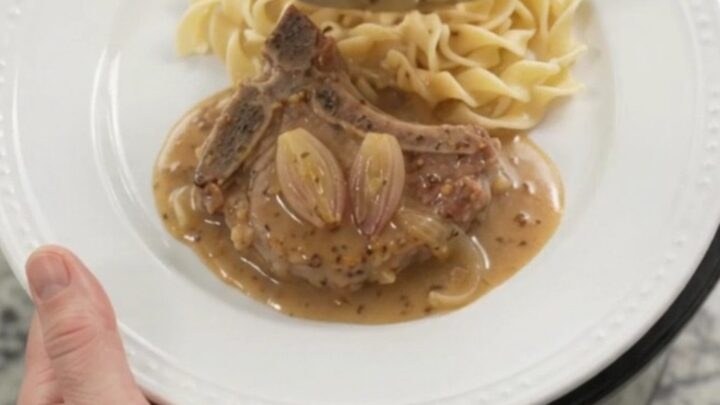
The egg noodles are cooked and tossed with butter, ready to be plated. The pork chops rest on a cutting board, their juices pooling slightly. The sauce is silky and coats the back of a spoon. When plated, the dish looks rustic and inviting: glossy pork chops nestled on a bed of noodles, with gravy spooned generously over the top. The final dish is steaming and fragrant, ready to serve.
Common mistakes
One common mistake is lifting the lid to check on the pork, which lets out heat and extends cooking time. Another is using low-fat sour cream, which can separate and become grainy. Overcooking the pork chops will make them dry and tough, so use a thermometer to check doneness.
Adding too much liquid can result in a thin sauce; the pan gravy provides enough moisture, so resist the urge to add broth or water. Finally, don't stir the sauce during cooking—the layers will meld on their own.
How to tell it’s done
The pork chops are done when they are fork-tender and reach an internal temperature of 145°F (63°C) when checked with an instant-read thermometer inserted into the thickest part of the meat without touching bone.
The sauce should be bubbling gently and have a silky, cohesive texture. After resting for at least 3 minutes, the meat should be juicy and easy to slice. The egg noodles should be al dente, tender but with a slight bite.
- Steaks, chops and roasts: 145°F (63°C) in the thickest part, then a 3-minute rest
Up next · Part 3 of 3
4 variations · storage & make-ahead · 5 answers · printable card
Tips, FAQ & printable recipe (Part 3)← Back to the ingredients (Part 1)