Dinner · Part 2 of 3: Instructions
Slow Cooker Guinea Fowl with Fresh Figs and Port Step-by-step instructions
- Prep
- Cook
- Total
- Serves
- 4
Before you start
Before beginning, ensure all ingredients are fresh and ready for the slow cooker. Wash and pat dry the guinea fowl pieces, removing any excess moisture with paper towels to ensure a clean cook. Peel and slice the shallots into uniform rounds to ensure they soften evenly.
Wash the fresh figs gently, trim the stems, and slice them in half. Have the veal stock powder and the ruby port wine measured and ready to pour, as the assembly process is fast and requires all components to be accessible to ensure a seamless setup.
Ingredients at a glance (5)
- 2 lbs guinea fowl pieces, bone-in and skin-on
- 3 large shallots, sliced shallots, sliced
- 6 fresh figs, halved
- 1 tbsp veal stock powder
- 1 cup ruby port wine
Instructions
Initial Assembly
- Assemble the slow cookerPlace the raw guinea fowl pieces into the bottom of the slow cooker. Scatter the sliced shallots and fresh fig halves evenly over the poultry to ensure the flavors permeate the meat during the long cooking process.Look for Arrange the pieces in a single layer if possible for even cooking.Tip Ensure the slow cooker is placed on a stable, heat-resistant surface before plugging it in.
At this stage, the slow cooker is filled with the raw guinea fowl, sliced shallots, and halved figs. Everything is arranged carefully to ensure even heat distribution. Ensure the power cord is clear of the cooking surface and the lid is ready to be placed on top.
Seasoning and Liquid Addition
- Season and add liquidDust the veal stock powder over the guinea fowl and figs using a spoon. Pour the ruby port wine over the top, ensuring it reaches the bottom of the cooker to create a flavorful braising liquid.Look for The liquid should partially submerge the ingredients.Tip Distribute the stock powder evenly to prevent clumping.
The veal stock powder is dusted over the ingredients and the port wine is poured over the top. The aromatics should be well-distributed, and the liquid should be visible at the bottom of the cooker. Verify that the lid is tightly sealed to begin the braising.
Slow Cooking and Finishing
- Slow cook and finishCover and cook on low for 4 hours until the guinea fowl reaches an internal temperature of 165°F (74°C). Once finished, remove the meat carefully and let it rest for 5 minutes before serving with the fig and port sauce.Look for The meat should be fork-tender and falling away from the bone.Safe temperature 165°F (74°C) internal temperature (poultry)Tip Use a meat thermometer to ensure the correct temperature is reached.
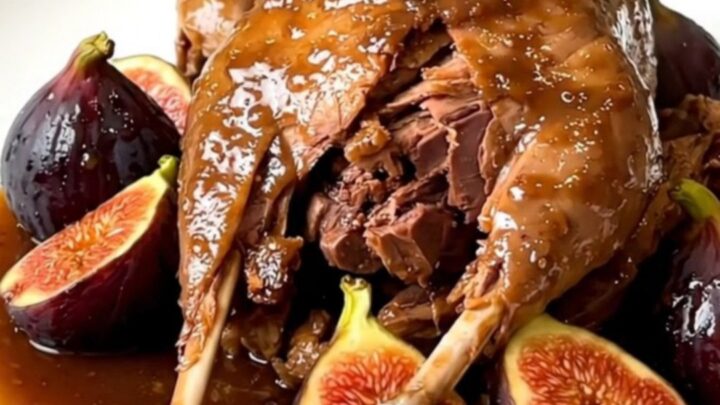
After four hours, the guinea fowl should be fully cooked, tender, and aromatic. The port wine and stock will have combined with the juices from the figs and shallots to create a rich, dark sauce. Check the temperature, let it rest, and prepare for plating.
Common mistakes
A common mistake is overcrowding the slow cooker, which can lead to uneven cooking and excess liquid that dilutes the sauce.
Ensure the pieces are arranged in a single layer. Another error is failing to use a meat thermometer; guessing the doneness of poultry can lead to dry or undercooked meat.
Finally, do not lift the lid repeatedly during the cooking process, as this releases the trapped steam and heat, which significantly increases the total cooking time required for the meal.
How to tell it’s done
The guinea fowl is done when the meat is tender enough to be easily pierced with a fork and pull away from the bone. The internal temperature must reach 165°F (74°C) at the thickest part of the meat.
The sauce should be glossy and reduced, with the shallots completely translucent and the figs softened but still holding their shape. Ensure the meat rests for 5 minutes to redistribute its juices before serving.
- Poultry: 165°F (74°C) in the thickest part
Up next · Part 3 of 3
2 variations · storage & make-ahead · 3 answers · printable card
Tips, FAQ & printable recipe (Part 3)← Back to the ingredients (Part 1)