Dinner · Part 2 of 3: Instructions
Slow Cooker Garlic Milk Pork Roast Step-by-step instructions
- Prep
- Cook
- Total
- Serves
- 6
Before you start
Before you begin, ensure your pork roast is completely thawed if it was previously frozen. Pat the meat dry with paper towels; removing excess surface moisture helps the seasoning adhere better and promotes a more even flavor distribution.
Gather all your ingredients and equipment, including your slow cooker, a sharp knife for peeling the garlic, and fresh rosemary sprigs. Having everything ready at your workstation will make the assembly process quick and efficient. Remember to clean your work surfaces thoroughly after handling the raw pork to maintain food safety standards in your kitchen.
Ingredients at a glance (6)
- 3 lb pork shoulder roast
- 6 cloves garlic cloves, peeled
- 2 sprigs fresh rosemary
- 1 tsp kosher salt
- 1/2 tsp black pepper
- 2 cups whole milk
Instructions
Assembly
- Prepare the roastPlace the pork shoulder roast into the center of the slow cooker insert. Scatter the peeled garlic cloves and fresh rosemary sprigs evenly around the sides of the meat. Season the top of the roast generously with the kosher salt and freshly cracked black pepper.Look for The pork should be positioned in the center, and the aromatics should be distributed evenly around it.Tip Ensure the slow cooker insert is clean and dry before adding the pork.
The pork should be securely placed in the slow cooker with the garlic and rosemary distributed evenly around it. Ensure the salt and pepper are applied evenly over the surface of the roast. The setup should look organized and ready for the liquid addition, with the garlic cloves tucked near the sides to ensure they soften effectively during the long, slow braise.
Slow Braising
- Add milk and cookPour the whole milk carefully over the pork roast. Cover the slow cooker with its lid. Set the slow cooker to the low setting and cook for 6 hours, or until the pork is fork-tender and reaches an internal temperature of 145°F (63°C). Once cooked, remove the meat and let it rest at least 3 minutes before slicing.Look for The milk will partially curdle during the cooking process, which is expected and creates the base for the flavorful sauce.Safe temperature 145°F (63°C) internal temperature (steaks, chops and roasts)Tip Do not lift the lid during the first few hours to maintain a consistent temperature.
During the cooking phase, the milk will gradually thicken and take on a golden hue as it absorbs the flavors of the pork and aromatics. You should notice a pleasant, savory aroma filling the kitchen. The milk may appear to separate into curds and whey; this is a natural part of the process and will contribute to the rich, textured sauce that coats the finished roast.
Resting and Slicing
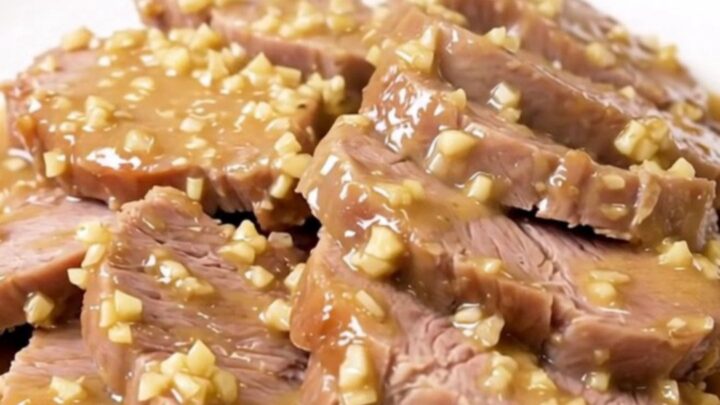
- Rest and serveOnce the pork has rested, slice it into portions. Serve the sliced pork with a generous portion of the creamy garlic sauce spooned over the top. Ensure any leftovers are cooled within two hours before refrigerating.Look for The pork should be very tender and easily pulled apart with a fork when checked.Tip The resting time is essential to allow the juices to redistribute throughout the meat.
After the resting period, the pork should be firm enough to slice cleanly but tender enough to fall apart easily. The sauce should be glossy and coating the back of a spoon.
Before serving, check that the meat is uniform in temperature and that the sauce has achieved a smooth, creamy consistency. The final presentation should be steaming, fragrant, and visually appealing.
Common mistakes
A common mistake is rushing the cooking process by using a higher temperature setting; the low setting is essential for achieving the desired tenderness. Another error is removing the lid too frequently, which allows heat to escape and increases the total cooking time significantly.
Avoid using milk with reduced fat, as it lacks the fat required to produce a stable, creamy sauce and may separate or curdle into an unappealing texture. Lastly, failing to let the meat rest after cooking will result in the loss of precious juices, causing the sliced pork to be less succulent than expected.
How to tell it’s done
The pork is done when it is fork-tender, meaning it yields easily to light pressure and the fibers pull apart without resistance. Using a digital meat thermometer, ensure the thickest part of the roast has reached an internal temperature of at least 145°F (63°C).
This temperature ensures the meat is safe to eat while maintaining its optimal tenderness. After removing the roast from the slow cooker, allow it to rest for at least 10 minutes on a cutting board before slicing; this crucial step allows the internal juices to redistribute, ensuring every slice remains moist and flavorful.
- Steaks, chops and roasts: 145°F (63°C) in the thickest part, then a 3-minute rest
Up next · Part 3 of 3
2 variations · storage & make-ahead · 3 answers · printable card
Tips, FAQ & printable recipe (Part 3)← Back to the ingredients (Part 1)