Dinner · Part 2 of 3: Instructions
Slow-Cooker Garlic Butter Chuck Roast with Potatoes and Carrots Step-by-step instructions
- Prep
- Cook
- Total
- Serves
- 6
Before you start
Before you begin, make sure the beef chuck roast is thawed if it was frozen. Pat it dry with paper towels—this helps the butter and seasonings adhere. Halve the baby Yukon Gold potatoes and cut the carrots into thick slices or chunks.
If you are using a compound butter that is very firm, let it sit at room temperature for a few minutes so it is easier to slice into medallions. Have your slow cooker ready and a large cutting board for shredding the meat.
Ingredients at a glance (5)
- 3 1/2 lb beef chuck roast
- 1 1/2 lb baby Yukon Gold potatoes, halved
- 4 medium heirloom carrots, thick-cut
- 4 medallions garlic-herb compound cowboy butter
- 12 oz buttered egg noodles, for serving
Instructions
Layer and Season
- Layer the roast and vegetablesPlace the beef chuck roast in the center of a 6-quart slow cooker. Arrange the halved baby Yukon Gold potatoes and thick-cut carrots around the roast, tucking them into the sides so they are nestled against the beef.Look for The roast sits in the middle with vegetables snugly around it.Tip Cut any large potatoes in half so they cook evenly with the roast.
- Top with cowboy butterPlace the four medallions of garlic-herb compound cowboy butter directly on top of the roast, spacing them evenly. They will melt as the slow cooker heats, creating a rich butter sauce.Look for The butter medallions sit on the roast, ready to melt.Tip If the butter is very cold, let it sit at room temperature for 10 minutes before slicing.
The slow cooker should look neat with the roast in the center and the potatoes and carrots nestled around it. The butter medallions sit on top of the roast, waiting to melt.
At this point, the raw ingredients should look fresh and vibrant. There is no need to add any liquid—the meat and vegetables will release their own juices as they cook.
Slow Cook
- Cook low and slowCover the slow cooker and cook on LOW for 8 to 10 hours, or on HIGH for 5 to 6 hours, until the beef is fork-tender and shreds easily. Avoid opening the lid during cooking to keep the heat steady. Let it rest for 3 minutes before slicing.Look for The meat is fork-tender and the vegetables are soft when pierced.Safe temperature 145°F (63°C) internal temperature (steaks, chops and roasts)Tip If using a 6-quart slow cooker, the roast should fit comfortably with the vegetables.
- Shred the beefOnce the beef is tender, transfer it to a cutting board. Let it rest for at least 3 minutes, then shred it with two forks, discarding any large pieces of fat. The meat should pull apart easily.Look for The beef shreds into long, tender strands with little effort.Safe temperature 145°F (63°C) internal temperature (steaks, chops and roasts)Tip Resting the beef before shredding helps keep it moist and juicy.
After 8 to 10 hours on low, the kitchen will smell of garlic, herbs, and beef. The roast should be visibly tender, with the meat starting to pull apart at the edges. The potatoes and carrots will be soft, and the butter will have melted into a golden gravy. The liquid should be bubbling gently around the edges of the pot.
Shred and Serve
- Return the beef to the potReturn the shredded beef to the slow cooker with the potatoes and carrots. Stir gently to coat everything in the buttery gravy. Let it sit on warm for 10 minutes so the flavors meld.Look for The beef is coated in a glossy, buttery sauce.Tip If the gravy seems too thin, remove the lid and simmer on HIGH for 15 minutes to reduce.
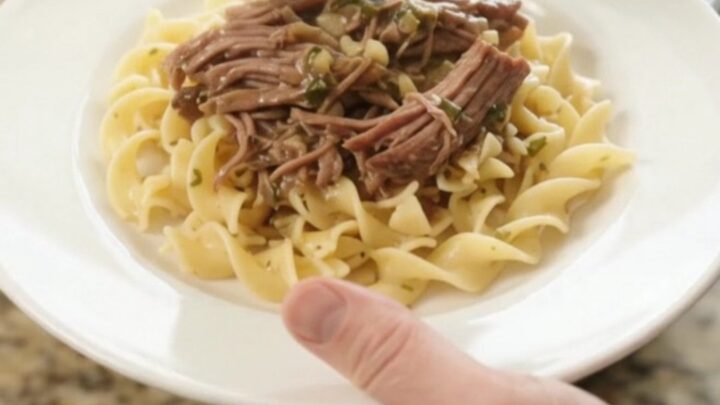
- Serve over buttered noodlesCook the egg noodles according to package directions, drain, and toss with a little butter. Spoon the shredded beef, potatoes, and carrots over the noodles, and ladle extra gravy on top.Look for The noodles are tender and the beef is piled high.Tip Warm the serving plates for a nicer presentation.
The shredded beef should be glossy and coated in the buttery gravy. The potatoes and carrots will be tender but intact. When you spoon the mixture over the noodles, the gravy should be thick enough to cling to the meat and vegetables. The dish should look hearty and inviting, with steam rising from the bowl.
Common mistakes
One common mistake is opening the slow cooker too often to check on the food. Every time the lid is lifted, heat escapes and the cooking time increases. Another issue is using a lean cut of beef, like sirloin, which will become dry and tough instead of tender.
Stick with chuck roast for the best results. Also, be careful not to overcook the vegetables—if they are cut too small, they may turn to mush. Cut them in large, even pieces so they hold their shape through the long cooking time.
How to tell it’s done
The beef is done when it is fork-tender and shreds easily. Use two forks to pull the meat apart; it should separate into long, moist strands without resistance.
The internal temperature of the beef should be at least 145°F (63°C) for food safety, but because it cooks for so long, it will be well above that and incredibly tender. The potatoes and carrots should be soft when pierced with a fork, but not falling apart. The gravy will be a rich, buttery liquid with a deep beefy flavor.
- Steaks, chops and roasts: 145°F (63°C) in the thickest part, then a 3-minute rest
Up next · Part 3 of 3
4 variations · storage & make-ahead · 5 answers · printable card
Tips, FAQ & printable recipe (Part 3)← Back to the ingredients (Part 1)