Dinner · Part 2 of 3: Instructions
Slow Cooker Duck and Tarbais Bean Garbure Step-by-step instructions
- Prep
- Cook
- Total
- Serves
- 4
Before you start
Before beginning, ensure all vegetables are diced into uniform pieces to ensure they cook at the same rate. If using dry beans, confirm they have been soaked for the appropriate amount of time, usually overnight, to reduce the cooking time significantly.
Have the slow cooker insert cleaned and ready, and ensure you have enough chicken broth on hand to properly submerge all the ingredients before starting the heat.
Ingredients at a glance (5)
- 2 legs duck confit
- 2 cups Tarbais beans, soaked
- 2 cups mixed vegetables, diced
- 1 tsp dried thyme
- 4 cups chicken broth
Instructions
Preparation and assembly
- Assemble the basePlace the duck confit legs into the bottom of the slow cooker insert. Distribute the soaked Tarbais beans and diced vegetables evenly over the duck legs.Look for The duck should be at the base to ensure it stays submerged in the liquid during the long cooking process.Tip Ensure the vegetables are cut into uniform sizes to promote even cooking throughout the simmering period.
At this stage, the slow cooker should be neatly arranged with the duck at the bottom. Check that the vegetables and beans are distributed evenly to prevent hot spots. The liquid level should be sufficient to cover the solid ingredients, but not so high that it risks boiling over during the cooking process. Everything should look clean and ready for the slow, steady heat.
Seasoning and simmering
- Season and coverSprinkle the dried thyme over the vegetable and bean layer. Pour the chicken broth over the ingredients until they are just covered.Look for The liquid should just cover the top of the beans and vegetables without overflowing the slow cooker vessel.Tip Using a high-quality chicken broth will significantly enhance the depth of flavor in this traditional rustic dish.
Once the broth is added and the thyme is sprinkled, the assembly phase is complete. Ensure the slow cooker is set to the low setting, which is crucial for achieving the desired tenderness. The liquid should be clear and fragrant with the scent of thyme. Once covered, the appliance should remain undisturbed to maintain a consistent temperature throughout the cooking cycle.
Final cooking and resting
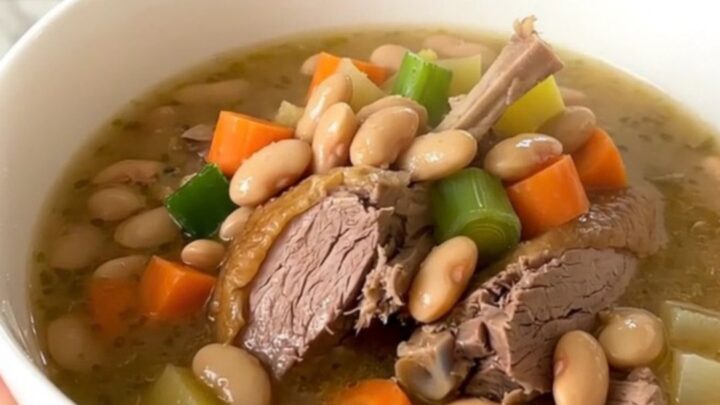
- Slow cook and serveCover the slow cooker and cook on low for 6 hours. Ensure the duck reaches an internal temperature of 165°F (74°C). Let the stew rest for 5 minutes before serving.Look for The meat should be tender enough to fall off the bone when gently pressed with a fork.Safe temperature 165°F (74°C) internal temperature (poultry)Tip If the broth is too thin, remove some of the beans and mash them before stirring back into the pot.
The final phase is marked by the rich aroma of slow-cooked duck filling the kitchen. The broth will have darkened and thickened, and the duck should be tender. Before serving, verify the internal temperature of the poultry.
A short resting period is essential to allow the flavors to settle and the liquid to stabilize, resulting in a more cohesive and professional final presentation.
Common mistakes
A common mistake is failing to ensure all ingredients are submerged in the broth, which can lead to uneven cooking and dry vegetables.
Another error is using too much salt in the beginning; since duck confit is already cured, it is best to wait until the end of the cooking process to adjust the seasoning. Finally, avoid lifting the lid of the slow cooker frequently, as this causes significant heat loss.
How to tell it’s done
The dish is considered done when the duck meat is exceptionally tender and pulls away from the bone with minimal resistance.
Use an instant-read thermometer to verify that the thickest part of the duck reaches an internal temperature of at least 165°F (74°C). The beans should be creamy and soft throughout, and the broth should have thickened slightly from the starch of the beans.
- Poultry: 165°F (74°C) in the thickest part
Up next · Part 3 of 3
2 variations · storage & make-ahead · 3 answers · printable card
Tips, FAQ & printable recipe (Part 3)← Back to the ingredients (Part 1)