Dinner · Part 2 of 3: Instructions
Slow Cooker Cowboy Caviar Chicken Step-by-step instructions
- Prep
- Cook
- Total
- Serves
- 4
Before you start
Before beginning, ensure your workspace is clean and organized. Gather all necessary ingredients, including the chicken, vegetables, and dressing. Check your slow cooker to ensure the ceramic insert is properly seated and the heating element is functioning correctly.
If the chicken breasts are very large, you may choose to trim them slightly to ensure they fit comfortably in the bottom of the slow cooker. Have a meat thermometer ready to check the chicken for doneness once the cooking time has elapsed.
Ingredients at a glance (7)
- 4 boneless skinless chicken breasts
- 1 cup black-eyed peas
- 1 cup corn
- 1/2 cup diced peppers
- 1 tsp chili powder
- 1 tsp cumin
- 1/2 cup Italian dressing
Instructions
Layering the ingredients
- Prepare the slow cookerPlace the raw chicken breasts into the base of the slow cooker, ensuring they are arranged in a single layer for even cooking. Add the black-eyed peas, corn, and diced peppers over the top of the chicken. Sprinkle the chili powder and cumin evenly across the mixture.Look for The ingredients should be layered evenly, with the chicken at the bottom to ensure it stays submerged in the juices as the vegetables release moisture during the cooking process.Tip If the chicken breasts are of significantly different sizes, try to place the thicker pieces toward the center of the slow cooker to ensure they cook at the same rate.
At the end of this phase, the ingredients should be neatly layered within the slow cooker. The chicken should be at the bottom, covered by a colorful mixture of peas, corn, and peppers. The spices should be evenly distributed to ensure every bite is well-seasoned. Check that no ingredients are sticking to the sides of the ceramic insert, as this can cause them to burn during the long cooking process. The setup should look organized and ready to be covered.
Slow cooking the chicken
- Add dressing and cookPour the Italian dressing over the chicken and vegetable mixture. Cover the slow cooker with its lid. Set the slow cooker to the low setting and cook for 4 hours until the chicken reaches an internal temperature of 165°F (74°C).Look for The chicken is finished when it is opaque throughout and shreds easily with a fork, with the vegetables softened and the dressing combined with the cooking juices to form a light sauce.Safe temperature 165°F (74°C) internal temperature (poultry)Tip Avoid lifting the lid frequently during the cooking process, as this releases heat and moisture, which can significantly increase the total cooking time required for the chicken.
As the cooking concludes, the kitchen should be filled with the savory, aromatic scent of the spices and the zesty Italian dressing. The chicken will have released its juices, creating a flavorful, light broth with the vegetables.
The corn and peppers should be soft and fully integrated into the mixture. Check that the chicken is fully submerged in the liquids if possible, and ensure the lid has remained sealed throughout the process to maintain the necessary moisture and heat levels.
Resting and serving
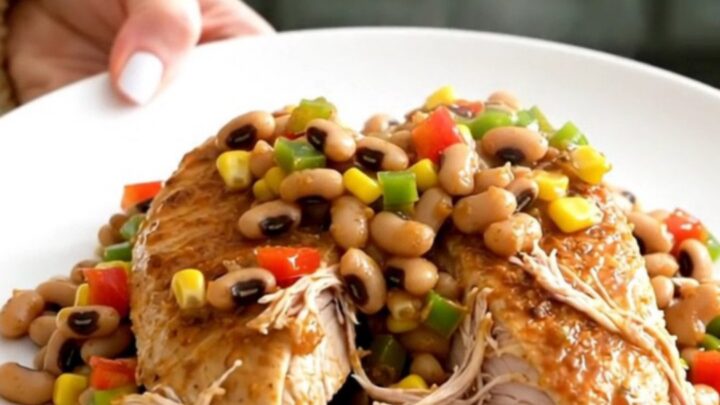
- Rest and serveRemove the chicken from the slow cooker and let it rest on a plate for 5 minutes before serving. This allows the juices to redistribute throughout the meat, ensuring it remains moist and tender. Serve the chicken topped with the warm vegetable and dressing mixture from the slow cooker.Look for The chicken should be firm yet tender, and the resting period ensures that the fibers relax, resulting in a much better texture when the meat is sliced or shredded for serving.Tip If a thicker sauce is preferred, remove the chicken and set the slow cooker to the high setting for 15 minutes to reduce the liquid until it reaches the desired consistency.
After resting, the chicken should be moist and tender, having absorbed the flavors of the cooking liquid. The meat will be easy to slice or pull apart, and the vegetable mixture should be warm and ready to serve as a topping. Check the texture of the chicken to ensure it is not dry or stringy. The dish should be served immediately while hot, with the juices from the slow cooker spooned over the top to add extra moisture and flavor to the meal.
Common mistakes
A common mistake is overcrowding the slow cooker, which can lead to uneven cooking and excess liquid that dilutes the flavor of the dish. Ensure the chicken is in a single layer. Another error is opening the lid too frequently; this releases essential heat and steam, significantly increasing the cooking time.
Finally, failing to check the temperature of the chicken can result in undercooked meat. Always prioritize safety by verifying the internal temperature rather than relying solely on the clock.
How to tell it’s done
The chicken is fully cooked when it reaches an internal temperature of 165°F (74°C). The meat should be completely opaque and feel firm to the touch, and it should shred easily with a fork. The vegetables should be tender, and the sauce should be fragrant and well-combined.
If the chicken is not quite at the required temperature, continue cooking for another 15 to 20 minutes and check again. Always use a digital thermometer inserted into the thickest part of the breast.
- Poultry: 165°F (74°C) in the thickest part
Up next · Part 3 of 3
2 variations · storage & make-ahead · 3 answers · printable card
Tips, FAQ & printable recipe (Part 3)← Back to the ingredients (Part 1)