Dinner · Part 2 of 3: Instructions
Slow Cooker Corsican Veal Stew with Pancetta and White Wine Step-by-step instructions
- Prep
- Cook
- Total
- Serves
- 4
Before you start
Before you begin, ensure you have all your ingredients measured and ready. Pat the veal chunks dry with paper towels to ensure they are clean before placing them into the slow cooker. Having your onions sliced and your pancetta strips prepared in advance will make the assembly process seamless.
Ensure your workspace is clean, especially when handling raw meat, and have all necessary equipment, such as your glass measuring cup and knife, within easy reach of your cooking area.
Ingredients at a glance (6)
- 2 lb veal chunks for stewing
- 1 cup sliced onions
- 4 oz pancetta strips
- 2 sprigs fresh rosemary
- 2 tbsp tomato paste
- 1 cup dry white wine
Instructions
Assembly Phase
- Layering the ingredientsPlace the veal chunks at the bottom of the slow cooker. Scatter the sliced onions and pancetta strips evenly over the meat, then top with the fresh rosemary sprigs.Look for The ingredients should be layered evenly to ensure consistent cooking throughout the process.Tip Layering the ingredients helps the flavors meld effectively as the slow cooker heats up.
At the end of this phase, your slow cooker should be neatly layered with the veal at the bottom, topped with onions, pancetta, and fresh rosemary sprigs, creating a foundation ready for the liquid. Ensure the ingredients are distributed evenly so that no single part of the pot is overcrowded, which facilitates uniform heat distribution during the cooking process. You are now prepared to add the sauce mixture and begin the slow cooking stage.
Sauce Preparation Phase
- Preparing and adding the sauceIn a glass measuring cup, whisk together the tomato paste and dry white wine until smooth. Pour this mixture over the ingredients already in the slow cooker.Look for The mixture should be completely combined before pouring to avoid clumps of tomato paste.Tip Using a dry white wine provides a balanced acidity that cuts through the richness of the veal.
The sauce mixture should be perfectly smooth, with the tomato paste fully incorporated into the white wine. It should appear as a vibrant, uniform liquid without any visible clumps.
Once poured over the ingredients, the sauce will begin to settle into the layers of meat and aromatics, preparing the dish for the slow transformation that occurs during the long cooking period. Ensure the measuring cup is clean before you proceed to the final steps.
Final Cooking Phase
- Slow cooking the stewCover the slow cooker and cook on the low setting for approximately 6 hours, or until the veal is fork-tender and reaches an internal temperature of at least 145°F (63°C). Allow the meat to rest for at least 5 minutes before serving to ensure the best texture and flavor distribution.Look for The stew is finished when the meat is tender and easily yields to a fork.Safe temperature 145°F (63°C) internal temperature (steaks, chops and roasts)Tip Monitor the temperature during the final hour to ensure the meat is cooked through perfectly without overcooking.
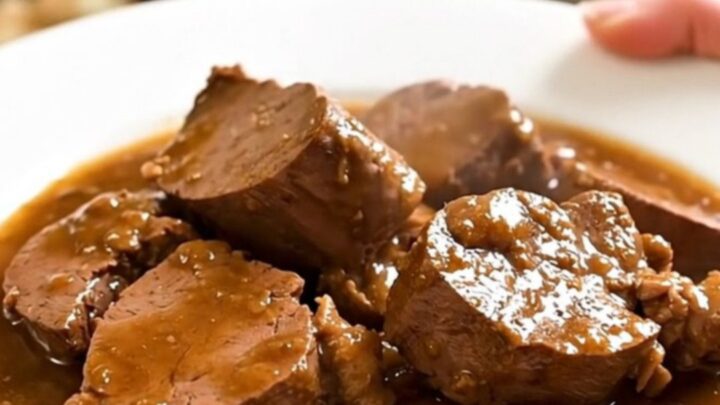
By the end of this phase, the kitchen should be filled with the rich, savory aroma of slow-cooked veal and herbs. The veal will be tender and easily pierced with a fork, and the sauce will have reduced into a glossy, flavorful glaze. Check the internal temperature of the meat to ensure it has reached 145°F (63°C) and allow it to rest briefly, ensuring the stew is at its peak texture and temperature before you serve it to your guests.
Common mistakes
A common mistake is adding too much liquid, which can result in a thin, watery sauce rather than the desired glossy consistency. Stick to the recommended amount of white wine, as the juices from the onions and veal will provide additional moisture.
Another error is failing to allow the meat to rest; skipping this step can cause the meat to lose its juices when sliced or served. Finally, ensure the slow cooker lid remains securely closed throughout the cooking process to maintain a consistent temperature.
How to tell it’s done
The stew is considered done when the veal is fork-tender, meaning it yields with very little resistance when pierced. The sauce should be glossy and thickened, coating the back of a spoon.
Using a meat thermometer, ensure the thickest pieces of meat reach an internal temperature of 145°F (63°C). Always allow the meat to rest for at least 5 minutes after cooking, which allows the juices to redistribute and ensures the most tender result for every serving of this savory dish.
- Steaks, chops and roasts: 145°F (63°C) in the thickest part, then a 3-minute rest
Up next · Part 3 of 3
2 variations · storage & make-ahead · 3 answers · printable card
Tips, FAQ & printable recipe (Part 3)← Back to the ingredients (Part 1)