Desserts · Part 3 of 3: Tips & recipe card
Slow-Cooker Quince and Almond Crumble Tips, FAQ & printable recipe
- Prep
- Cook
- Total
- Serves
- 6
Tips for success
For the best texture, use quince that are just ripe — they should be fragrant and yellow, not green. If they are very hard, give them an extra 30 minutes of cooking. If they are slightly soft, start checking at 3 hours.
The pomegranate juice is not just for color; its acidity helps balance the honey, so don't skip it. You can also add a strip of orange zest for an extra layer of aroma, though the video doesn't call for it — keep it simple if you prefer to stick to the recipe.
To make the crumble extra crisp, you can place the slow cooker insert under the broiler for 2 to 3 minutes after cooking, but watch it carefully — the nuts can burn quickly. If you do this, let the crumble cool for a minute before serving so the topping sets.
The mascarpone cream can be loosened with a teaspoon of milk or cream if it's too thick to dollop. For a more pronounced almond flavor, use almond extract in the crumble, but a few drops go a long way.
Variations
- Apple-Pear Crumble: Swap the quince for a mix of firm pears and tart apples. Reduce the cook time to 2.5–3 hours, as these fruits soften faster. Keep the honey and cinnamon, but use apple cider instead of pomegranate juice for a classic autumn flavor.
- Spiced Walnut Streusel: Replace the sliced almonds with chopped walnuts and add 1/2 teaspoon of ground cardamom to the crumble. The warm spice pairs beautifully with the honeyed quince. Toast the walnuts lightly before adding to the topping for extra depth.
- Citrus-Honey Quince: Add the zest and juice of one orange to the quince mixture, replacing the pomegranate juice with orange juice. The citrus brightens the honey and cinnamon, giving the dessert a sunnier, more Mediterranean character. Serve with a dollop of crème fraîche.
- Vegan Coconut Crumble: Use coconut oil instead of butter in the crumble and maple syrup instead of honey in the fruit. For serving, use a coconut-based whipped cream. The coconut oil yields a crisp, tender streusel, and the maple adds a deeper, caramel-like sweetness.
Storage and make-ahead
- Fridge
- Store leftover crumble in an airtight container in the refrigerator for up to 4 days. The topping will soften, but the flavor remains rich and spiced.
- Freezer
- Freeze the cooked crumble in a freezer-safe container for up to 3 months. Thaw overnight in the refrigerator before reheating.
- Reheat
- Reheat individual portions in the microwave for 1–2 minutes, or in a 350°F (175°C) oven for 10–12 minutes until warmed through and the topping crisps again.
Leftover crumble keeps in the refrigerator for up to 4 days in an airtight container. The topping will soften as it sits, but the flavor remains lovely. To reheat, spoon individual portions into a microwave-safe bowl and heat in 30-second bursts until warm, or reheat in a 350°F (175°C) oven for 10 minutes to re-crisp the topping. Let leftovers cool for no more than 2 hours before refrigerating.
The quince layer can be prepared up to 2 days ahead: peel, slice, and toss with honey, cinnamon, and pomegranate juice, then store in the refrigerator. When ready to cook, add the crumble topping and proceed. The crumble topping can also be mixed ahead and refrigerated for up to 3 days; just keep the butter cold. Cooked crumble can be made a day ahead and reheated gently — the texture will be softer but still delicious.
Serving ideas
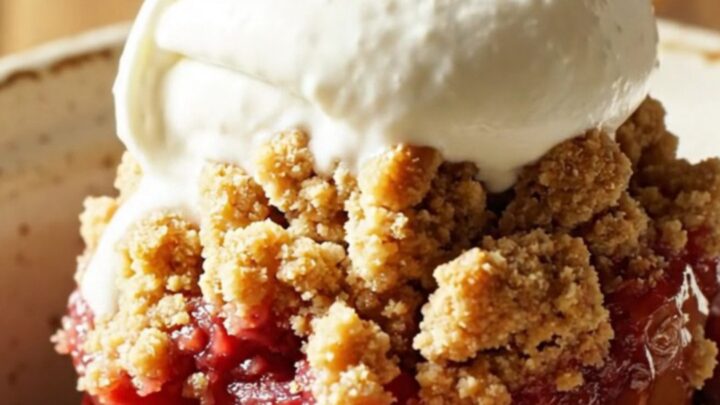
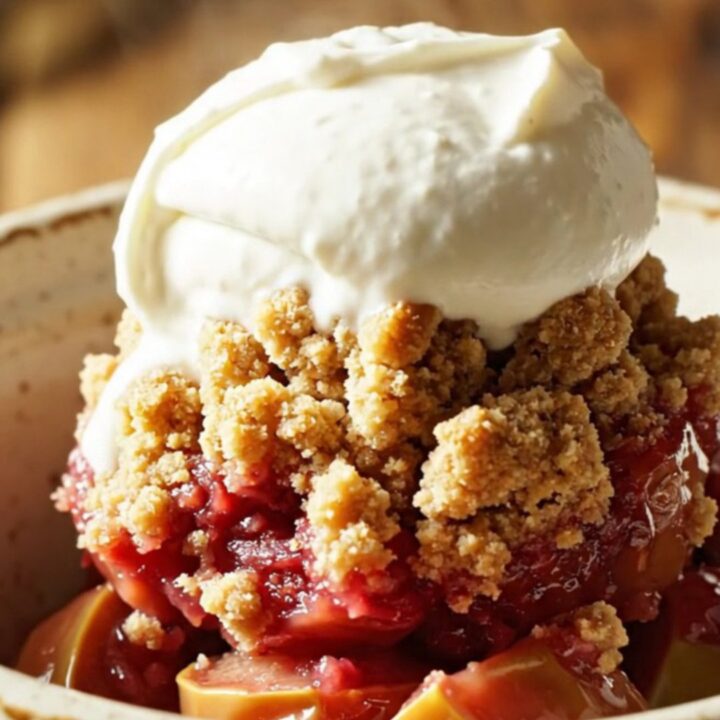
Serve this crumble warm, straight from the slow cooker, in deep bowls so the ruby syrup pools around the fruit. A generous spoonful of mascarpone cream on top is the classic finish, but a scoop of vanilla ice cream or a drizzle of heavy cream also works.
The contrast between the warm, spiced fruit and the cool, tangy cream is what makes this dessert sing. Garnish with toasted almonds for crunch and a light dusting of cinnamon if desired.
This dessert is equally good for a cozy weeknight treat or a holiday gathering — it feels special without demanding attention. Pair it with strong coffee or a glass of dessert wine like a late-harvest Riesling.
If you have extra mascarpone, serve it on the side so everyone can add as much as they like. The crumble is also lovely for breakfast the next day, spooned over yogurt or oatmeal, though that's a secret worth keeping.
Frequently asked questions
Can this crumble be made on the stovetop instead of a slow cooker?
Why did your crumble topping turn out soggy?
Can this recipe be doubled for a larger slow cooker?
What can be used instead of quince?
Is it necessary to use pomegranate juice?
Slow-Cooker Quince and Almond Crumble
Ingredients
- 3 quince, peeled, cored, and sliced
- 1/2 cup honey
- 2 cinnamon sticks
- 1/4 cup pomegranate juice
- 1/2 cup almond flour
- 1/2 cup rolled oats
- 1/2 cup sliced almonds
- 1/4 cup brown sugar, packed
- 4 tbsp cold butter, cut into small pieces
- 1/2 cup mascarpone cream
- 2 tbsp toasted sliced almonds
Instructions
- Peel, core, and slice the quince into 1/2-inch thick wedges. Place them directly into the slow cooker. Add the honey, cinnamon sticks, and pomegranate juice, then toss gently to coat every slice.
- In a medium bowl, stir together the almond flour, rolled oats, sliced almonds, and brown sugar. Cut in the cold butter with a pastry blender or your fingertips until the mixture resembles coarse meal with pea-sized butter bits. Sprinkle this crumble evenly over the quince.
- Cover the slow cooker and cook on HIGH for 3.5 hours. Do not lift the lid during the first 3 hours. The quince will turn ruby-pink and become tender, while the crumble toasts to a deep golden brown.
- Spoon the warm quince and crumble into stoneware bowls. Add a generous dollop of mascarpone cream on top and scatter with toasted sliced almonds. Serve immediately.
Estimated nutrition per serving
- Calories
- 410
- Protein
- 6 g
- Carbohydrates
- 62 g
- Fat
- 18 g
Next recipe
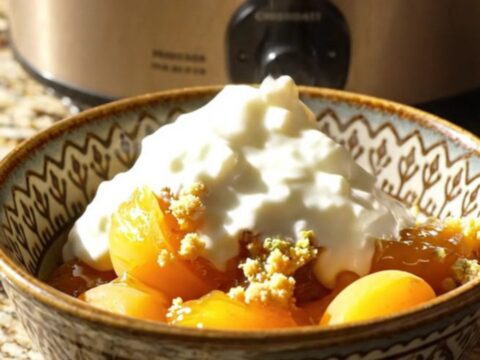
Slow-Cooker Apricot Pistachio Oat Crisp
See the recipe → →This recipe is based on a short cooking video and is published under the pen name Clara Weller. It was checked before publication, but errors can slip through. Nutrition, when shown, is an estimate. Read more in our editorial policy and on our food safety page.
More recipes to try
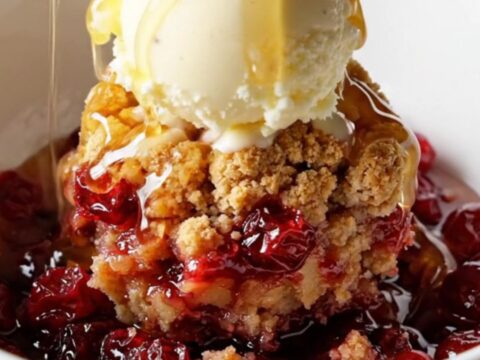
Crockpot Cranberry Apple Maple Crumble
Total time: 2 h 45 min
Warm Churro Croissant Casserole
Total time: 1 h
Slow Cooker Strawberry Rhubarb Crumble with Vanilla Bean
Total time: 2 h 55 min
Dark Cherry and Almond Marzipan Crisp
Total time: 2 h 50 min
Crockpot Spiced Plum and Hazelnut Brown Butter Crisp
Total time: 2 h 45 min