Dinner · Part 2 of 3: Instructions
Slow Cooker Chili Lime Butter Seafood Boil Step-by-step instructions
- Prep
- Cook
- Total
- Serves
- 6
Before you start
Before starting, thaw the lobster tails and shrimp if frozen. Split the lobster tails in half lengthwise using kitchen shears. Peel and devein the shrimp if needed.
Slice the Andouille sausage into 1/4-inch coins and halve the baby potatoes. Chop the cilantro. Measure the butter and chili lime seasoning. Have a 6-quart slow cooker ready. No other prep is needed—the slow cooker does the rest.
Ingredients at a glance (7)
- 4 split cold-water lobster tails
- 1 lb raw jumbo shrimp, peeled and deveined
- 12 oz smoked Andouille sausage, sliced into coins
- 1 1/2 lb baby potatoes, halved
- 1/2 cup unsalted butter, melted
- 2 tbsp chili lime seasoning
- 1/4 cup fresh cilantro, chopped
Instructions
Layer and Sauce
- Layer the Seafood and SausagePlace the split lobster tails and shrimp into the slow cooker in an even layer. Scatter the Andouille sausage coins and halved baby potatoes over the seafood. The order does not need to be perfect—just spread everything out so the heat reaches each piece evenly.Look for The slow cooker insert is filled with a colorful mix of pink shrimp, white lobster, red sausage, and golden potatoes.Tip If the lobster tails are frozen, thaw them in the refrigerator overnight before adding.
- Pour Over the Chili Lime ButterIn a small saucepan, melt the butter over low heat. Stir in the chili lime seasoning until fully combined. Pour the warm butter mixture evenly over the ingredients in the slow cooker. Sprinkle the chopped cilantro over the top.Look for The butter pools around the seafood and potatoes, carrying flecks of chili and lime.Tip Warm the butter just until melted—hot butter can start to cook the seafood before the slow cooker does.
At this stage, the slow cooker is filled with a colorful mix of lobster tails, shrimp, Andouille coins, and baby potatoes. The butter mixture has been poured over, and the cilantro is scattered on top.
The raw ingredients look vibrant, and the butter pools around them, ready to melt and infuse during cooking. The scene is set for the slow cooker to work its magic.
Slow Cook and Check
- Slow Cook on LowCover the slow cooker and set it to low. Cook for 3 1/2 to 4 hours, until the lobster tails are opaque and tender, the shrimp are pink and curled, and the potatoes are fork-tender. The sauce will be bubbling gently around the edges.Look for The butter sauce is bubbling softly, and the kitchen smells richly of chili, lime, and seafood.Safe temperature 145°F (63°C) internal temperature (shellfish)Tip Check at the 3-hour mark; slow cookers vary, and seafood can overcook if left too long.
- Test for DonenessInsert an instant-read thermometer into the thickest part of a lobster tail. It should register at least 145°F (63°C). The shrimp should be pink and firm to the touch, and the potatoes should yield easily when pierced with a fork.Look for The lobster meat is white and opaque, the shrimp are curled, and the potatoes slide off a fork.Safe temperature 145°F (63°C) internal temperature (shellfish)Tip If the potatoes are still hard, continue cooking and check again in 15 minutes.
After 3 1/2 to 4 hours on low, the pot is bubbling gently. The lobster tails are opaque and the shrimp are pink and curled. The potatoes are tender when pierced. The aroma is rich with chili, lime, and smoked sausage. The sauce has reduced slightly and is glossy. This is the moment to test the temperature and prepare to serve.
Serve and Enjoy
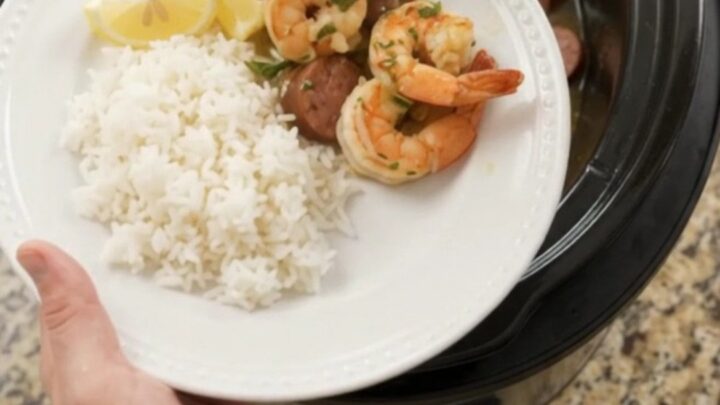
- Serve Over RiceSpoon steamed jasmine rice onto serving plates. Use a slotted spoon to lift the seafood, sausage, and potatoes from the slow cooker and arrange them over the rice. Drizzle with extra chili lime butter sauce from the pot. Serve with lemon wedges on the side.Look for The seafood is glossy with butter, and the rice is ready to soak up every drop.Tip For a low-carb option, serve over cauliflower rice or with crusty bread to mop up the sauce.
The seafood is lifted out with a slotted spoon, leaving the buttery sauce behind. The lobster tails are intact, the shrimp are plump, and the potatoes are glistening. Served over steamed rice with lemon wedges, the dish looks like a professional seafood boil. The sauce can be spooned over the top for extra flavor.
Common mistakes
One common mistake is adding the seafood too early and letting it cook for hours, which makes it rubbery. The slow cooker on low for 3 1/2 to 4 hours is enough. Another is using frozen seafood directly; thaw it first for even cooking.
Also, do not skimp on the seasoning—the chili lime butter needs enough salt and spice to flavor the large amount of seafood and potatoes. Finally, resist lifting the lid too often, as that releases heat and slows cooking.
How to tell it’s done
The dish is done when the lobster tails are opaque and tender, the shrimp are pink and firm, and the potatoes are easily pierced with a fork. To be certain, insert an instant-read thermometer into the thickest part of a lobster tail; it should read at least 145°F (63°C).
The sauce should be bubbly and glossy. If the potatoes are still hard, cover and cook for 15 more minutes, then check again. Avoid overcooking, as seafood can become tough.
- Shellfish: 145°F (63°C) in the thickest part
Up next · Part 3 of 3
4 variations · storage & make-ahead · 5 answers · printable card
Tips, FAQ & printable recipe (Part 3)← Back to the ingredients (Part 1)