Dinner · Part 2 of 3: Instructions
Slow Cooker Chicken and Okra Gumbo Step-by-step instructions
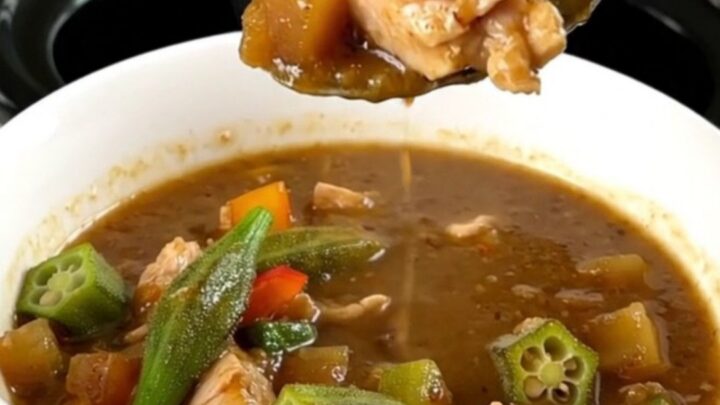
- Prep
- Cook
- Total
- Serves
- 6
Before you start
Before beginning, ensure all vegetables are thoroughly washed, peeled, and diced to uniform sizes to ensure even cooking. Prepare the chicken thighs by trimming any excess fat and cutting them into consistent bite-size pieces.
Measure out your Cajun seasoning and whisk your dark roux into the chicken broth in a separate bowl until completely smooth. Have your slow cooker clean and ready on a level surface, away from any heat-sensitive materials.
Ingredients at a glance (8)
- 2 lbs boneless skinless chicken thighs, cut into bite-size pieces
- 2 cups okra, sliced into rounds
- 1 cup bell pepper, diced
- 1 cup onion, diced
- 1 cup celery, diced
- 2 tbsp Cajun seasoning
- 1/2 cup dark roux
- 3 cups chicken broth
Instructions
Layering the ingredients
- Assemble the basePlace the bite-size chicken thigh pieces into the bottom of the slow cooker insert. Add the sliced okra, diced bell pepper, diced onion, and diced celery over the chicken in an even layer.Look for The chicken pieces should cover the bottom of the insert completely.Tip Ensure the vegetables are evenly distributed for consistent cooking.
At the end of this phase, the slow cooker should be filled with layers of raw chicken and fresh vegetables. The chicken should be evenly distributed at the bottom to ensure it cooks thoroughly, and the vegetables should be spread out to allow heat to circulate properly through the mixture before the liquid is added.
Adding the liquid base
- Season and stirSprinkle the Cajun seasoning over the top of the vegetables. In a separate container, whisk the dark roux into the chicken broth until smooth, then pour the mixture over the ingredients in the slow cooker.Look for The liquid should just cover the chicken and vegetable mixture.Tip Whisking the roux separately prevents lumps from forming in the finished gumbo.
The mixture should now be covered with the seasoned broth and roux base. Check that the liquid is well-combined and no dry spots of seasoning or roux remain. The ingredients should be mostly submerged in the liquid, creating the environment necessary for the long, slow braise that develops the deep flavors of the gumbo.
Slow cooking to perfection
- Cook and serveCover the slow cooker and cook on low for 4 hours. Once cooked, check that the chicken has reached an internal temperature of 165°F (74°C). Let the gumbo rest for 5 minutes before serving to allow the sauce to thicken slightly.Look for The chicken should be tender and the sauce should have a thick, deep color.Safe temperature 165°F (74°C) internal temperature (poultry)Tip Serve warm in shallow bowls for the best presentation.
Once the cooking time is complete, the gumbo should be fragrant and thick, with the chicken tender and the vegetables fully softened. The sauce should have a rich, dark color from the roux.
Ensure the internal temperature of the chicken has reached 165°F (74°C) before turning off the slow cooker and letting the dish rest briefly.
Common mistakes
Avoid over-crowding the slow cooker, as this can prevent the ingredients from cooking evenly and may cause the sauce to become too thin.
Do not lift the lid of the slow cooker during the cooking process, as this releases heat and moisture, significantly increasing the cooking time. Finally, ensure the roux is properly incorporated into the broth before adding it to the slow cooker to prevent lumps.
How to tell it’s done
The gumbo is done when the chicken is fully cooked through and tender, reaching an internal temperature of at least 165°F (74°C).
The sauce should be thick and glossy, having absorbed the savory notes from the Cajun seasoning and the vegetables. The okra should be soft and integrated into the sauce, providing a slight thickening effect without losing its shape entirely.
- Poultry: 165°F (74°C) in the thickest part
Up next · Part 3 of 3
2 variations · storage & make-ahead · 3 answers · printable card
Tips, FAQ & printable recipe (Part 3)← Back to the ingredients (Part 1)