Dinner · Part 2 of 3: Instructions
Slow Cooker Chicken and Cabbage Stew for Easy Weeknight Dinners Step-by-step instructions
- Prep
- Cook
- Total
- Serves
- 4
Before you start
Before beginning, prepare the vegetables by thoroughly washing the cabbage and potatoes. Slice the cabbage into thick ribbons and cut the potatoes into uniform one-inch chunks to ensure they cook at the same rate.
Have the chicken ready and ensure your slow cooker is clean and placed on a stable, heat-resistant surface near an electrical outlet. Having all components measured and ready to go makes the assembly process very quick and efficient.
Ingredients at a glance (5)
- 4 pieces chicken thighs, bone-in, skin-on
- 1/2 head white cabbage, sliced
- 2 medium potatoes, peeled and cut into chunks
- 1 cube poultry bouillon, crumbled
- 1 1/2 cups water
Instructions
Preparation and Layering
- Layering the IngredientsPlace the raw chicken thighs in the bottom of the slow cooker. Scatter the sliced white cabbage and potato pieces on top of the chicken to ensure even cooking.Look for The chicken should be at the bottom to maximize contact with the heat source.Tip Do not overcrowd the slow cooker to allow the heat to circulate properly.
The chicken is arranged evenly at the bottom, topped by the cabbage and potatoes. The slow cooker is ready to be seasoned and closed for the long, slow braise that will develop the deep, savory flavors of the stew.
Seasoning and Liquid Addition
- Adding Seasoning and LiquidCrumble the poultry bouillon cube evenly over the top of the vegetables. Carefully pour the water over the mixture to provide the necessary moisture for the stew.Look for Ensure the bouillon is crumbled finely so it dissolves uniformly into the liquid.Tip Use warm water if you want to speed up the initial heating process.
The bouillon is dispersed throughout the vegetables, and the liquid has been added to the base. The ingredients are now perfectly positioned for the moisture to circulate throughout the pot during the cooking process.
Cooking and Finishing
- Slow Cooking and ServingCover and cook on low for 5 to 6 hours or on high for 3 to 4 hours. Ensure the chicken reaches an internal temperature of 165°F (74°C). Let the chicken rest for 5 minutes before serving.Look for The chicken is tender and pulling away from the bone easily.Safe temperature 165°F (74°C) internal temperature (poultry)Tip Check the internal temperature with a meat thermometer to ensure safety.
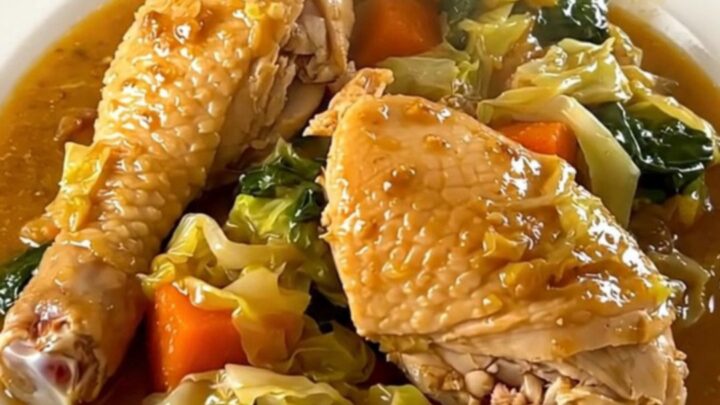
The chicken is cooked through, the vegetables are tender, and the broth is rich and aromatic. The dish is ready to be plated and served while hot, ensuring all components have reached their peak flavor and texture.
Common mistakes
A common mistake is overcrowding the slow cooker, which prevents even cooking and can lead to uneven temperatures. Another error is failing to ensure the bouillon is properly crumbled, which may result in pockets of saltiness.
Avoid lifting the lid repeatedly during the cooking process, as this significantly increases the required cooking time by allowing heat to escape.
Finally, ensure the meat is fully thawed before placing it in the slow cooker to maintain food safety standards.
How to tell it’s done
The dish is considered done when the chicken thighs are tender enough to pull away from the bone with a fork. Using a digital meat thermometer, verify that the thickest part of the chicken has reached an internal temperature of 165°F (74°C).
The potatoes should be fork-tender, and the cabbage should be soft and translucent, having fully absorbed the savory liquid from the bouillon and chicken drippings.
- Poultry: 165°F (74°C) in the thickest part
Up next · Part 3 of 3
2 variations · storage & make-ahead · 3 answers · printable card
Tips, FAQ & printable recipe (Part 3)← Back to the ingredients (Part 1)