Dinner · Part 2 of 3: Instructions
Slow Cooker Butternut Squash and Chickpea Curry Step-by-step instructions
- Prep
- Cook
- Total
- Serves
- 4
Before you start
Before beginning, ensure your slow cooker is clean and placed on a stable, heat-resistant surface away from any water sources. Have all ingredients prepared ahead of time: peel, seed, and cube the butternut squash into uniform pieces, and ensure the chickpeas are thoroughly rinsed under cold water to remove any excess starch from the canning liquid.
Measuring your ingredients accurately before assembly ensures the ratios are balanced, which is crucial for the consistency of the final sauce. Prepare a clean space for the slow cooker to prevent any spills during the transfer of ingredients.
Ingredients at a glance (4)
- 2 lbs butternut squash, peeled and cubed
- 2 cans (15 oz each) chickpeas, drained and rinsed
- 2 tbsp yellow curry powder
- 2 cups vegetable broth
Instructions
Preparation and Assembly
- Prepare the BasePlace the cubed butternut squash into the base of the slow cooker. Ensure the pieces are roughly uniform in size to promote even cooking throughout the process.Look for squash is evenly distributed at the bottom of the slow cookerTip Cut the squash into one-inch cubes so they soften perfectly without turning into mush.
At this phase, the raw ingredients are layered in the slow cooker. The squash should be at the bottom, followed by the chickpeas, spices, and liquid. Ensure the curry powder is evenly distributed over the chickpeas to avoid clumps of spice. The pot should look full but not packed, with enough space for the heat to circulate effectively. Check that the power cord is securely plugged in and the slow cooker is set to the low setting before covering it with the lid to begin the cooking process.
Simmering and Infusion
- Add Aromatics and LiquidScatter the drained chickpeas over the squash. Sprinkle the yellow curry powder evenly over the top, then pour the vegetable broth over all the ingredients to submerge them partially.Look for curry powder is well-distributed and broth covers the bottom third of the ingredientsTip Adding the spices before the liquid helps them bloom and coat the squash directly.
During this phase, the slow cooker maintains a consistent, low temperature. You will notice the kitchen starting to smell fragrant as the curry spices bloom and the squash begins to release its moisture. The chickpeas will absorb the flavors of the broth and spices, becoming soft and creamy.
You should not open the lid during this time, as the steam trapped inside is necessary for cooking the squash through to the center. The ingredients will gradually settle, and the liquid will begin to transform into a flavorful, aromatic sauce.
Final Reduction and Finishing
- Slow Cook the CurryCover the slow cooker with the lid. Cook on low heat for four hours, or until the butternut squash is fork-tender and the sauce has slightly thickened and become glossy.Look for squash is soft when pierced with a fork and the sauce appears thick and aromaticTip Resist the urge to open the lid frequently, as this releases heat and extends the total cooking time.
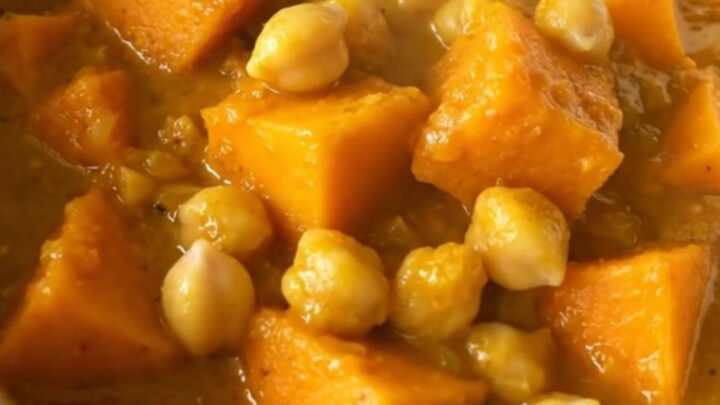
In the final stage, the squash should be completely soft and the sauce should have achieved a thick, glossy consistency. The curry will look uniform and vibrant, with the chickpeas and squash coated in a rich, golden sauce. If the sauce appears too thin, you can remove the lid to let some steam escape, which will help thicken it further. Once the texture is to your liking, turn off the slow cooker and allow the curry to sit for a few minutes to let the flavors settle before serving.
Common mistakes
A common mistake is overcrowding the slow cooker, which can prevent the ingredients from cooking evenly and result in unevenly softened squash. Another error is cutting the squash into irregular sizes, which leads to some pieces turning to mush while others remain undercooked.
Avoid adding too much broth, as the squash will release its own liquid during the cooking process; starting with the recommended amount is essential for achieving the correct sauce consistency. Finally, avoid lifting the lid during the first few hours, as this causes significant heat loss and disrupts the cooking cycle.
How to tell it’s done
The curry is done when the butternut squash cubes are fork-tender, meaning a fork slides into them with no resistance. The sauce should be reduced, glossy, and fragrant, coating the back of a spoon. Because this dish does not contain raw proteins, you do not need to check for internal temperatures; visual cues and texture are your guides.
If the squash still feels firm, continue cooking on low for another thirty minutes. The overall appearance should be uniform, with the squash and chickpeas fully integrated into the thickened, spiced sauce.
Up next · Part 3 of 3
2 variations · storage & make-ahead · 3 answers · printable card
Tips, FAQ & printable recipe (Part 3)← Back to the ingredients (Part 1)