Dinner · Part 2 of 3: Instructions
Slow-Cooker Bucatini all’Amatriciana with Guanciale Step-by-step instructions
- Prep
- Cook
- Total
- Serves
- 4
Before you start
Before beginning, ensure all ingredients are measured and ready. Dicing the guanciale into uniform, small cubes allows for even rendering of the fat. Finely dice the onion so it incorporates seamlessly into the sauce during the long simmer.
Have your pasta pot filled with water and ready to boil, and ensure you have a reliable timer for the slow cooker. Grate the Pecorino Romano ahead of time so it is ready for the final tossing stage. Clear your workspace to allow for efficient assembly of the slow cooker contents.
Ingredients at a glance (7)
- 8 oz guanciale, diced
- 1 onion, diced
- 1 tsp red pepper flakes
- 1/2 cup dry white wine
- 28 oz crushed San Marzano tomatoes
- 16 oz bucatini, cooked al dente
- 1 1/2 cups Pecorino Romano, grated
Instructions
Layering Phase
- Layering the baseAdd the diced guanciale, diced onion, red pepper flakes, dry white wine, and crushed San Marzano tomatoes into the slow cooker vessel. Stir gently to combine the ingredients evenly before beginning the cooking process. Ensure the guanciale is distributed throughout the tomato mixture to allow the fat to render properly during the long simmer, infusing the sauce with deep, savory flavor.Look for The mixture should be combined well with the wine and tomatoes coating the aromatics and guanciale.Tip Layering allows the flavors to meld slowly, creating a much deeper sauce profile than stove-top methods.
At this stage, you should have a colorful, raw mixture in the slow cooker. The guanciale and onions should be evenly distributed. The wine and tomatoes provide the necessary liquid to start the cooking process. Check that the lid fits securely to prevent moisture loss, and verify that the slow cooker is set to the low setting before walking away to let the flavors begin their long, slow integration process.
Simmering Phase
- Slow simmeringCover the slow cooker and set it to cook on LOW for 3.5 hours. During this time, the guanciale will render its fat, and the tomatoes will reduce into a glossy, rich sauce. Resist the urge to lift the lid frequently, as this releases essential heat and steam necessary for the proper breakdown of the tomatoes and the development of the complex, savory Amatriciana base.Look for The sauce should appear thick, vibrant, and glossy with tiny pools of rendered fat on the surface.Tip Use a digital timer to ensure the full duration is met for maximum flavor extraction.
After 3.5 hours, the sauce should look transformed. The initial bright red of the tomatoes should have deepened to a rich, dark crimson. You should see a glossy sheen on the surface, indicating that the guanciale fat has successfully emulsified with the tomato juices.
The onions should be completely soft and almost translucent, having dissolved into the sauce. The aroma should be savory, spicy, and deeply concentrated, filling the kitchen with an inviting, authentic scent.
Finishing Phase
- Tossing and servingWhile the sauce finishes, boil the bucatini in salted water until al dente. Drain the pasta, reserving a small amount of pasta water if needed. Transfer the hot pasta directly into the slow cooker, add the grated Pecorino Romano, and toss thoroughly until every strand is coated in the thick sauce. Serve immediately while hot, ensuring each portion gets a generous amount of the crispy guanciale pieces.Look for The sauce should cling tightly to the bucatini, creating a creamy, emulsified coating from the cheese and rendered fat.Tip Toss vigorously to create an emulsion between the cheese and the hot sauce for a silky texture.
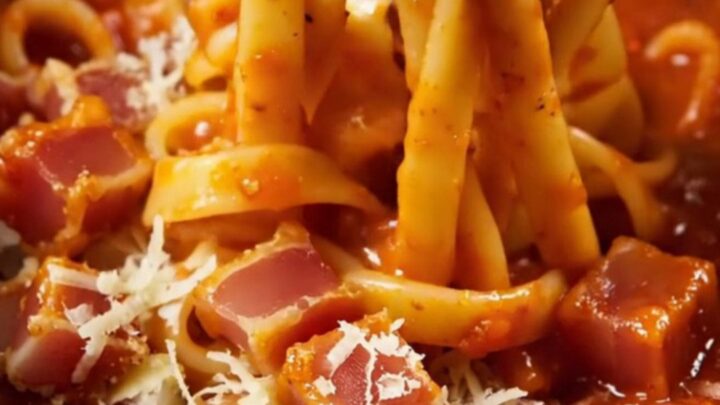
The final phase involves combining the al dente pasta with the hot sauce. As you toss the bucatini with the Pecorino Romano, you should observe the sauce transforming into a creamy, uniform glaze that coats every strand of pasta. The guanciale pieces should be distributed evenly, providing a satisfying texture contrast. The final dish should be steaming hot, aromatic, and ready to serve immediately, with the cheese fully melted and incorporated into the sauce.
Common mistakes
A common mistake is using too much heat or not enough time, which prevents the guanciale from fully rendering its fat. Ensure the slow cooker is set to low and left undisturbed for the full duration.
Another error is overcooking the pasta before it hits the sauce; remember that it will continue to absorb some sauce and heat during the final tossing step. Finally, avoid using low-quality cheese, as it will not melt properly and will result in a grainy sauce rather than a smooth, creamy finish.
How to tell it’s done
The dish is done when the tomato sauce has thickened significantly, looking glossy and deep red, and the guanciale pieces are tender and flavorful. The bucatini should be cooked to al dente, meaning it has a slight chew when bitten, and it should be thoroughly coated in the sauce.
When tossed with the Pecorino Romano, the sauce should emulsify into a creamy, clinging layer around the pasta. There should be no watery liquid at the bottom of the bowl; the sauce should be rich and uniform throughout.
Up next · Part 3 of 3
2 variations · storage & make-ahead · 3 answers · printable card
Tips, FAQ & printable recipe (Part 3)← Back to the ingredients (Part 1)