Dinner · Part 1 of 3: Ingredients
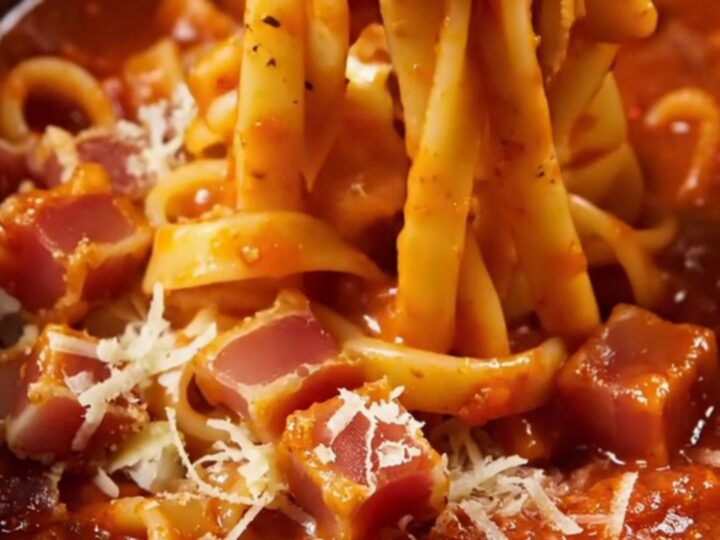
Slow-Cooker Bucatini all’Amatriciana with Guanciale
- Prep
- Cook
- Total
- Serves
- 4
Transform humble pantry staples into a masterpiece of Roman cuisine with this set-it-and-forget-it slow-cooker method. By slowly rendering the guanciale and simmering the San Marzano tomatoes, you achieve a depth of flavor that usually takes hours of active monitoring at the stove.
This recipe makes a restaurant-quality Bucatini all'Amatriciana accessible to any home cook, delivering bold, spicy, and savory results that are perfect for weeknight dinners or cozy weekend gatherings.
The magic of Amatriciana lies in the balance between the salty, fatty guanciale and the acidic, sweet brightness of San Marzano tomatoes. By utilizing a slow cooker, the guanciale fat renders completely, infusing the sauce with a richness that is impossible to replicate quickly.
The addition of red pepper flakes provides a subtle, warming heat that cuts through the fat, while the Pecorino Romano adds a sharp, salty finish that ties the entire dish together. This is a classic Roman staple made simple, reliable, and incredibly satisfying for any pasta lover.
Ingredients
- 8 oz guanciale, diced
- 1 onion, diced
- 1 tsp red pepper flakes
- 1/2 cup dry white wine
- 28 oz crushed San Marzano tomatoes
- 16 oz bucatini, cooked al dente
- 1 1/2 cups Pecorino Romano, grated
Why this recipe works
The slow-cooker environment provides a consistent, low-heat setting that allows the guanciale to render its fat slowly without burning. This process creates a silky, flavorful base that permeates the San Marzano tomatoes, resulting in a sauce that is far more cohesive and intense than one cooked rapidly. The long simmer time also ensures that the onions break down completely, adding body and natural sweetness to the sauce without needing any extra thickeners or additives.
By cooking the sauce separately from the pasta, you maintain total control over the texture of the bucatini. The final step of tossing the al dente pasta with the sauce and cheese ensures that the starch from the pasta helps emulsify the sauce, creating a perfect, glossy coating. This method prevents the pasta from becoming mushy or overcooked, a common issue when pasta is cooked directly inside a slow cooker. The result is a perfect balance of texture and intense flavor.
Notes and substitutions
Guanciale is the traditional choice for this dish, offering a superior flavor profile compared to bacon or pancetta due to its specific curing process and higher fat content. If you cannot find guanciale, thick-cut pancetta is the next best option.
Avoid using thin-sliced American breakfast bacon if possible, as the smoke level can overwhelm the delicate balance of the tomatoes and cheese. Choose a high-quality dry white wine, such as a Pinot Grigio or Sauvignon Blanc, to provide the necessary acidity.
For the best results, use genuine Pecorino Romano, which provides a sharp, salty punch that is essential to the character of Amatriciana. Avoid pre-grated cheeses, as they often contain anti-caking agents that prevent the cheese from melting into a smooth, creamy emulsion.
When choosing your San Marzano tomatoes, look for cans that specify they are grown in Italy to ensure the correct level of sweetness and acidity. The quality of your ingredients is the foundation of this simple yet iconic Roman recipe.
- guanciale: thick-cut pancetta or high-quality smoked bacon
- bucatini: thick spaghetti or rigatoni
Equipment
- Slow cooker
- Chef's knife
- Cutting board
- Large pot for pasta
- Colander
- Cheese grater
- Serving tongs
Up next · Part 2 of 3
3 steps · 3 h 30 min of cooking · what to look for at each stage
Step-by-step instructions (Part 2)