Dinner · Part 2 of 3: Instructions
Slow-Cooker Brisket with Shallots and Carrots Step-by-step instructions
- Prep
- Cook
- Total
- Serves
- 6
Before you start
Before you begin, trim any excess fat from the brisket, leaving a thin layer for flavor and moisture. Peel the shallots and measure the baby carrots. Have the gravy and butter ready to go.
Make sure your slow cooker is clean and the insert is in place. If you plan to serve with slider buns, toast them lightly before serving. The prep is minimal, so you can have everything in the cooker in under fifteen minutes.
Ingredients at a glance (5)
- 3 1/2 lb beef brisket, trimmed
- 8 whole shallots, peeled
- 1 lb baby carrots
- 2 cups rich brown gravy
- 4 tbsp unsalted butter, cut into pats
Instructions
Layer and Season
- Layer the Beef and VegetablesPlace the trimmed beef brisket flat in the bottom of a 6-quart slow cooker. Scatter the peeled whole shallots and baby carrots around the roast, nestling them into the corners so they are partially submerged as the meat cooks.Look for The brisket should sit flat with vegetables tucked around it.Tip Trim excess fat from the brisket, but leave a thin layer for moisture.
- Pour Over the Gravy and ButterPour the rich brown gravy evenly over the beef and vegetables. Dot the top of the roast with the pats of unsalted butter, distributing them so they melt across the surface during cooking.Look for The gravy should come about halfway up the sides of the meat.Tip If the gravy is very thick, thin it with a little beef broth.
At the end of this phase, the brisket sits flat in the slow cooker, surrounded by shallots and carrots. The gravy and butter are poured over the top, creating a rich, savory liquid that will slowly braise the meat.
The raw beef should look fresh and well-marbled, and the vegetables should be evenly distributed. Give the mixture a gentle stir if needed, but don't disturb the meat too much.
Cook Low and Slow
- Cover and Cook Low and SlowCover the slow cooker and set it to low. Cook for 8 to 10 hours, until the brisket is fork-tender and easily shreds. Avoid lifting the lid during cooking to keep the heat steady. Let it rest for 3 minutes before slicing.Look for The meat should be deeply browned and nearly falling apart.Safe temperature 145°F (63°C) internal temperature (steaks, chops and roasts)Tip Cooking on low yields the most tender results.
- Rest the BrisketWhen the brisket is fork-tender, turn off the slow cooker. Using tongs, transfer the roast to a cutting board and let it rest for at least 10 minutes. The internal temperature should register at least 145°F (63°C).Look for The meat is steaming and the juices are settling.Safe temperature 145°F (63°C) internal temperature (steaks, chops and roasts)Tip Resting helps the meat retain its juices for shredding.
After hours of cooking, the kitchen smells of rich beef and caramelized shallots. The brisket is deeply browned and the gravy has darkened to a mahogany color. The meat is fork-tender and easily pulls apart. The shallots have softened into sweet, jammy pieces, and the carrots are tender but still hold their shape. The gravy is thick and glossy, with a concentrated beef flavor.
Shred and Serve
- Shred the BeefUsing two forks, shred the rested brisket into bite-size pieces, discarding any large pieces of fat. Return the shredded meat to the slow cooker with the shallots and carrots, and stir gently to coat with the gravy.Look for The meat should pull apart easily with little resistance.Tip For chunkier pieces, pull apart with fingers instead of forks.
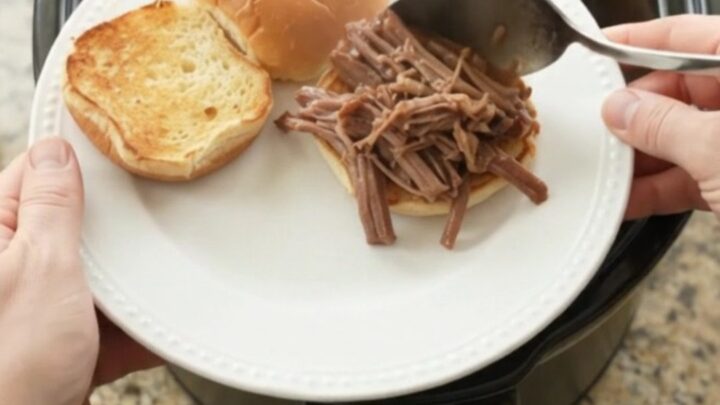
- Serve and EnjoySpoon the shredded brisket, shallots, and carrots onto a serving platter or individual plates. Drizzle with extra gravy from the slow cooker. Serve hot, optionally with toasted brioche slider buns.Look for The gravy is glossy and the vegetables are glazed.Tip Pair with crusty bread or mashed potatoes to soak up the gravy.
The shredded brisket is piled back into the slow cooker, coated with the luscious gravy. The shallots and carrots are scattered throughout. When served, the beef is juicy and tender, the vegetables are glazed, and the gravy pools around everything. The dish looks rustic and inviting, perfect for family dinner or a casual gathering.
Common mistakes
One common mistake is lifting the lid during cooking, which lets out heat and extends the cooking time. Resist the urge to peek. Another is using a lean cut like round roast; it won't become as tender as brisket.
Also, don't skip the resting step — it allows the juices to redistribute, making the meat more moist. Finally, be careful not to overseason the gravy; the brisket and vegetables already add flavor.
How to tell it’s done
The brisket is done when it is fork-tender and easily shreds. The internal temperature should be at least 145°F (63°C) for food safety, but for the most tender results, cook until it reaches about 200°F (93°C) — that's when the collagen has fully broken down.
The shallots should be soft and caramelized, and the carrots tender but not mushy. The gravy should be thick and glossy, coating the back of a spoon.
- Steaks, chops and roasts: 145°F (63°C) in the thickest part, then a 3-minute rest
Up next · Part 3 of 3
4 variations · storage & make-ahead · 5 answers · printable card
Tips, FAQ & printable recipe (Part 3)← Back to the ingredients (Part 1)