Dinner · Part 2 of 3: Instructions
Slow Cooker Braised Pork Cheeks in Red Wine Step-by-step instructions
- Prep
- Cook
- Total
- Serves
- 4
Before you start
Before beginning, ensure your slow cooker is placed on a stable, heat-resistant surface away from any edges. Gather all your ingredients and prepare the pork cheeks by trimming any excess silver skin or tough connective tissue if necessary. Peel and slice your carrots uniformly to ensure they cook evenly alongside the meat.
Having the wine measured and the veal stock ready will make the assembly process seamless, allowing you to focus on the proper placement of the ingredients within the slow cooker insert for the best possible results during the long, slow cook.
Ingredients at a glance (4)
- 2 lbs pork cheeks, trimmed
- 3 carrots, sliced
- 1 tbsp powdered veal stock
- 1 1/2 cups full-bodied red wine
Instructions
Initial Assembly
- Prepare the slow cooker basePlace the trimmed pork cheeks into the bottom of the slow cooker insert. Arrange the sliced carrots evenly over the meat, ensuring they are distributed to provide a base of flavor for the braise.Look for The pork should be in a single layer if possible for even cooking.Tip Ensure the slow cooker insert is clean and dry before adding the ingredients.
At this stage, the pork cheeks and carrots are arranged in the slow cooker. The ingredients should be neatly layered to provide a consistent base.
Check that the pork is trimmed properly and the carrots are cut to uniform sizes to ensure even cooking throughout the long process. The slow cooker insert should be positioned correctly, and the power cord should be securely connected to a reliable outlet.
Seasoning and Liquid Addition
- Add aromatics and liquidSprinkle the powdered veal stock over the pork and carrots. Pour the red wine over the ingredients, ensuring the liquid flows around the meat to begin the infusion process.Look for The liquid should partially submerge the pork cheeks.Tip Use a dry, robust red wine like a Cabernet Sauvignon or Merlot for the best depth of flavor.
The veal stock powder is sprinkled evenly over the ingredients, and the red wine is poured over the top. The liquid should settle around the base of the pork, creating the braising environment. Check that the stock is evenly distributed to avoid clumps. The ingredients should look ready for the transformation that will occur during the slow, steady heat of the cooking phase.
Slow Cooking
- Slow cook and serveCover the slow cooker and cook on the low setting for 8 hours. Once the time is up, verify that the pork reaches an internal temperature of 145°F (63°C). Let the pork rest for 5 minutes before serving with the sauce and carrots.Look for The meat should be fork-tender and easily pull apart with a gentle touch.Safe temperature 145°F (63°C) internal temperature (steaks, chops and roasts)Tip If the sauce is too thin, you can reduce it in a small saucepan over medium heat for a few minutes after cooking.
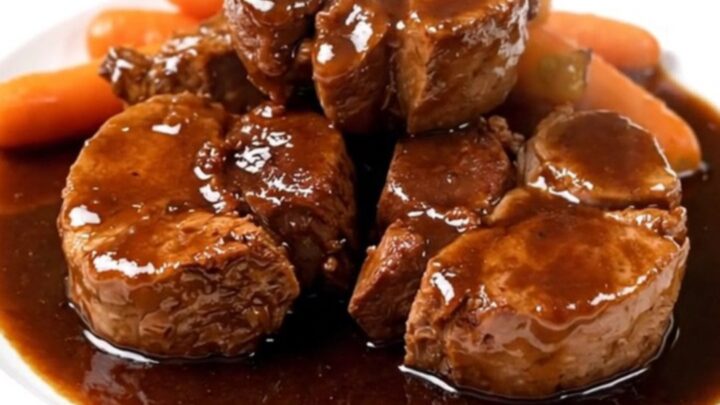
The pork is now fully cooked and tender. The liquid has reduced into a rich, glossy sauce, and the carrots have softened to perfection. Before serving, verify the internal temperature of the pork reaches 145°F (63°C) and ensure the meat is fork-tender. The aroma should be savory and deep, indicating that the wine and stock have successfully melded with the pork and vegetables.
Common mistakes
Avoid lifting the lid of the slow cooker during the cooking process, as this releases essential heat and steam, which can significantly increase the cooking time and affect the final texture of the meat.
Ensure the pork cheeks are not overcrowded; they should be arranged in a single layer to allow for even heat distribution. Additionally, do not be tempted to add extra water, as the wine and natural juices released by the pork and carrots are sufficient to create a flavorful, concentrated braising liquid.
How to tell it’s done
The pork cheeks are perfectly cooked when they are fork-tender and can be easily shredded with minimal pressure. Use a digital meat thermometer to confirm the internal temperature has reached at least 145°F (63°C).
The meat should look dark and glossy, coated in a thickened, reduced sauce, and the carrots should be soft enough to pierce easily with a fork. Always allow the meat to rest for at least 5 minutes before serving to ensure the juices redistribute.
- Steaks, chops and roasts: 145°F (63°C) in the thickest part, then a 3-minute rest
Up next · Part 3 of 3
2 variations · storage & make-ahead · 3 answers · printable card
Tips, FAQ & printable recipe (Part 3)← Back to the ingredients (Part 1)