Dinner · Part 1 of 3: Ingredients
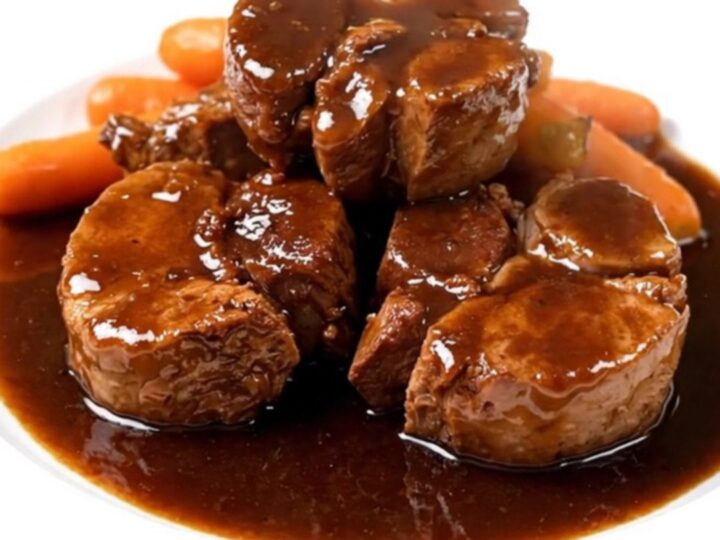
Slow Cooker Braised Pork Cheeks in Red Wine
- Prep
- Cook
- Total
- Serves
- 4
Elevate your weeknight dinner with the sophisticated, tender results of slow-cooked pork cheeks. This classic French-inspired preparation uses the gentle, consistent heat of a slow cooker to transform a humble cut of meat into a succulent masterpiece.
By braising in a rich red wine reduction, every bite becomes infused with deep, complex flavors that are sure to impress at the dinner table without requiring constant attention or complex culinary techniques.
The magic of this recipe lies in the slow, controlled braising process. Pork cheeks are a flavorful, hardworking muscle that benefits immensely from long, low-temperature cooking, which breaks down the connective tissues to create a meltingly tender consistency. By pairing the pork with aromatic carrots and a concentrated veal stock, the braising liquid becomes a glossy, savory sauce that complements the richness of the meat perfectly.
This dish is designed for those who appreciate the depth of a slow-cooked meal but need a preparation method that fits into a busy lifestyle. Simply assemble, set, and let the slow cooker work its wonders while you attend to other tasks, resulting in a restaurant-worthy entree that is as comforting as it is elegant.
Ingredients
- 2 lbs pork cheeks, trimmed
- 3 carrots, sliced
- 1 tbsp powdered veal stock
- 1 1/2 cups full-bodied red wine
Why this recipe works
The slow cooker method provides a consistent, low-temperature environment that is ideal for collagen-rich cuts like pork cheeks. By maintaining a steady heat over several hours, the tough fibers gradually soften, resulting in a texture that is exceptionally tender and moist.
This process allows the flavors of the red wine and veal stock to penetrate the meat thoroughly, ensuring that each bite is seasoned throughout rather than just on the surface.
Braising in a self-contained environment ensures that moisture is retained throughout the cooking process. As the liquid slowly simmers, it extracts the natural gelatin from the pork cheeks, which thickens the sauce and gives it a glossy, professional finish.
This approach eliminates the need for constant monitoring, as the slow cooker manages the heat distribution, allowing the ingredients to meld and develop a complex, savory profile that is difficult to achieve with faster cooking methods.
Notes and substitutions
When selecting pork cheeks, look for pieces that are well-trimmed of excess fat and silver skin. If your butcher does not have them available, pork shoulder cut into uniform chunks is a reliable alternative that provides a similar texture. Ensure the carrots are sliced into even, half-inch rounds to guarantee they cook at the same rate as the meat, resulting in a consistent texture throughout the final dish.
The choice of red wine is crucial for the final flavor profile of the sauce. A dry, full-bodied variety such as a Cabernet Sauvignon, Merlot, or Syrah works best, as these varieties have the necessary structure to stand up to the richness of the pork. Avoid using sweet wines or those labeled specifically as cooking wine, as the salt content and added preservatives can negatively impact the delicate balance of the braising liquid.
- powdered veal stock: beef bouillon granules or high-quality beef stock concentrate
- pork cheeks: boneless pork shoulder cut into 2-inch chunks
Equipment
- Slow cooker
- Measuring cup
- Knife
- Cutting board
- Vegetable peeler
Up next · Part 2 of 3
3 steps · 8 h of cooking · what to look for at each stage
Step-by-step instructions (Part 2)