Dinner · Part 2 of 3: Instructions
Slow Cooker Bordeaux Beef Cheeks with Carrots Step-by-step instructions
- Prep
- Cook
- Total
- Serves
- 4
Before you start
Before starting, ensure your beef cheeks are properly cleaned and trimmed of any excess silver skin or heavy fat caps. Have your carrots peeled and sliced into uniform half-inch rounds to ensure they cook at the same rate as the beef.
Gather all your ingredients and have your slow cooker positioned on a stable, heat-resistant surface away from any water splashes. Ensure you have fresh thyme sprigs washed and ready for the pot.
Ingredients at a glance (5)
- 2 lbs beef cheeks, trimmed of excess fat
- 3 medium carrots, sliced into rounds
- 1 tbsp all-purpose flour
- 1 1/2 cups Bordeaux red wine
- 2 sprigs fresh thyme
Instructions
Layering the Pot
- Prepare the ingredientsPlace the raw beef cheeks into the bottom of the slow cooker insert. Scatter the sliced carrots evenly over the beef. Sprinkle the flour over the ingredients to help thicken the sauce during the cooking process.Look for Evenly layered ingredients in the slow cooker base.Tip Ensure the beef cheeks are patted dry before adding them to the pot for better searing results if desired.
At this phase, the pot should contain the raw beef at the bottom, topped with carrots and a dusting of flour. The ingredients are neatly arranged, and the foundation for the braise is set.
Ensure the flour is distributed over the carrots to help integrate it into the sauce as the liquids release during the cooking process.
Slow Braising
- Add liquid and cookPour the Bordeaux red wine over the beef and carrots. Add the fresh thyme sprigs. Cover the slow cooker and set to low heat for 8 hours. The slow, moist heat is essential to break down the connective tissue in the cheeks.Look for Wine should partially submerge the beef and carrot mixture.Tip Keep the lid closed throughout the cooking time to maintain steady pressure and moisture levels.
During the long cooking phase, the kitchen will fill with the rich, aromatic scent of red wine and herbs. The liquid will begin to darken and the beef will slowly soften. Check periodically to ensure the slow cooker is maintaining its low setting and that the seal is tight to keep the moisture inside the pot.
Final Reduction
- Final check and servingCheck that the beef cheeks have reached an internal temperature of 145°F (63°C). Once fully cooked, let the meat rest for at least 5 minutes before serving to ensure the juices redistribute throughout the fibers for maximum tenderness.Look for Meat pulls apart easily with a fork and sauce is glossy and reduced.Safe temperature 145°F (63°C) internal temperature (steaks, chops and roasts)Tip If the sauce is too thin, remove the beef and reduce the liquid in a small saucepan over medium heat.
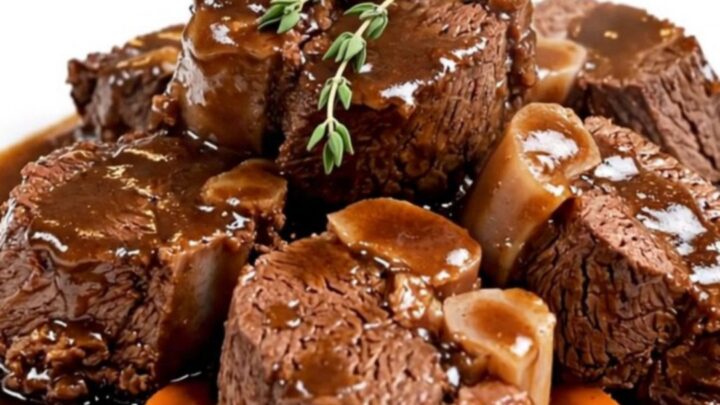
At the end of the cycle, the meat is incredibly soft and the sauce has reached a luxurious consistency. The carrots should be tender but still hold their shape. Verify the internal temperature of the beef has reached 145°F (63°C) and allow the dish to rest for at least 5 minutes before serving for optimal texture.
Common mistakes
A common mistake is overcrowding the slow cooker, which can prevent even cooking and lead to uneven texture. Always ensure there is enough space for the liquid to circulate around the meat.
Another error is failing to trim the beef cheeks; leaving too much fat can result in a greasy, heavy sauce. Finally, never lift the lid frequently during the cooking process, as each time you open it, you lose valuable heat and moisture.
How to tell it’s done
The beef cheeks are done when they are fork-tender and reach an internal temperature of 145°F (63°C). The meat should be easily pierced with minimal resistance and should begin to pull away from itself when prodded.
The sauce should be thickened, glossy, and dark, indicating that the wine and flour have successfully integrated with the beef juices and rendered fats, resulting in a rich, savory finish.
- Steaks, chops and roasts: 145°F (63°C) in the thickest part, then a 3-minute rest
Up next · Part 3 of 3
2 variations · storage & make-ahead · 3 answers · printable card
Tips, FAQ & printable recipe (Part 3)← Back to the ingredients (Part 1)