Dinner · Part 2 of 3: Instructions
Slow Cooker Beef Stew with Butternut Squash and Cinnamon Step-by-step instructions
- Prep
- Cook
- Total
- Serves
- 4
Before you start
Before starting, ensure the beef is trimmed of excess fat if preferred and cut into uniform cubes for even cooking. Prepare the butternut squash by peeling, seeding, and dicing it into one-inch pieces.
Slice the onions thinly to ensure they break down and meld into the sauce during the long cooking time. Have all ingredients measured and ready to ensure a smooth assembly process when loading the slow cooker.
Ingredients at a glance (6)
- 1 lb beef cubes
- 2 cups diced butternut squash
- 1 medium onion, sliced
- 1 stick cinnamon stick
- 1 tbsp crumbled bouillon
- 2 cups tomato coulis
Instructions
Initial Assembly
- Assemble the Stew BasePlace the raw beef cubes into the base of the slow cooker. Add the diced butternut squash and the sliced onions over the beef. Scatter the crumbled bouillon and place the cinnamon stick on top.Look for Ingredients should be layered evenly across the bottom of the slow cooker insert.Tip Keeping the meat at the very bottom ensures direct contact with the hottest part of the appliance.
The ingredients should be layered neatly in the slow cooker with the beef at the bottom. This ensures the meat remains submerged in the juices during the cooking process. Check that the cinnamon stick is positioned where it can infuse the entire dish.
Slow Cooking Phase
- Add Liquid and Slow CookPour the tomato coulis evenly over the layered ingredients in the slow cooker. Secure the lid tightly and set the slow cooker to low heat for 8 hours to allow the meat to braise gently.Look for The tomato coulis covers most of the solid ingredients without needing extra liquid.Tip Resist opening the lid throughout the cycle to prevent heat loss and extended cooking time.
During this phase, the slow cooker maintains a consistent, low temperature. There is no need to open the lid, as doing so releases heat and extends the required cooking time. The kitchen will begin to smell fragrant as the cinnamon and tomato meld.
Final Resting
- Check Doneness and RestVerify that the beef is fully tender. Check that the internal temperature of the beef cubes reaches at least 145°F (63°C). Turn off the slow cooker and allow the stew to rest for at least 3 minutes before serving.Look for The beef gives way easily under a fork and the sauce looks glossy and rich.Safe temperature 145°F (63°C) internal temperature (steaks, chops and roasts)Tip Use a standard digital probe thermometer inserted into the center of the largest beef cube to verify temperature.
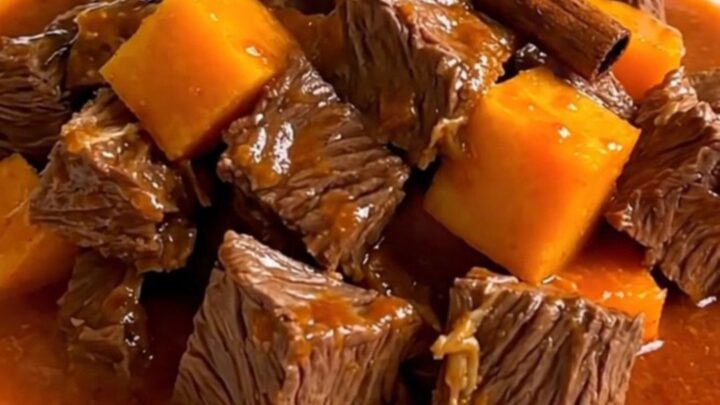
At the end of the cooking cycle, the stew should look glossy and the beef should be tender. Allowing the stew to rest for a few minutes before serving ensures the flavors settle and the temperature stabilizes, making the final dish more enjoyable.
Common mistakes
Avoid cutting the beef into pieces that are too large, as this will prevent them from becoming tender within the designated cook time.
Another common error is adding too much liquid; the tomato coulis is sufficient, and additional water or broth is usually unnecessary as the vegetables will release their own moisture.
Finally, ensure the slow cooker is not overfilled, as this can affect the cooking temperature and lead to uneven results.
How to tell it’s done
The beef is fully cooked when it is fork-tender and pulls apart easily with minimal resistance. Use an instant-read thermometer to ensure the meat has reached an internal temperature of at least 145°F (63°C).
The butternut squash should be soft enough to be easily pierced by a fork without falling apart entirely, and the sauce should have a glossy, thickened consistency.
- Steaks, chops and roasts: 145°F (63°C) in the thickest part, then a 3-minute rest
Up next · Part 3 of 3
2 variations · storage & make-ahead · 3 answers · printable card
Tips, FAQ & printable recipe (Part 3)← Back to the ingredients (Part 1)