Dinner · Part 2 of 3: Instructions
Slow Cooker Beef Shank with Purple Carrots and Thyme Step-by-step instructions
- Prep
- Cook
- Total
- Serves
- 4
Before you start
Before starting, ensure all vegetables are thoroughly washed and sliced to a uniform thickness, which promotes even cooking throughout the braising phase. Prepare the slow cooker by checking that the power cord is unobstructed and the unit is placed on a stable, heat-resistant surface.
Have all ingredients measured and ready to go, as the assembly process is quite fast. Remember to handle raw beef on a dedicated cutting board, and sanitize all surfaces and utensils immediately after contact to maintain a clean workspace.
Ingredients at a glance (6)
- 2 lbs beef shank, bone-in
- 3 cups purple carrots, sliced into rounds
- 1 large onion, sliced
- 1 cube beef bouillon cube, crumbled
- 3 sprigs fresh thyme
- 1 cup red wine
Instructions
Initial Assembly
- Assemble the basePlace the beef shank pieces into the bottom of the slow cooker. Scatter the sliced purple carrots and onions evenly over the beef. Crumble the beef bouillon cube over the top of the vegetables.Look for Ingredients should be layered evenly to ensure consistent heat distribution throughout the cooking process.Tip Ensure the beef shanks are in direct contact with the bottom of the slow cooker to maximize tenderness.
At this stage, the slow cooker is filled with the raw beef and vegetables. The aroma is neutral, and the ingredients are neatly layered. The main goal here is to ensure the beef is at the bottom, closest to the heat source, and that the bouillon is evenly distributed to begin flavoring the juices as they start to release during the initial warming phase.
Braising Process
- Add aromatics and liquidArrange the fresh thyme sprigs on top of the vegetables. Pour the red wine carefully over the ingredients in the slow cooker. Cover and cook on low for 8 hours until the meat is tender.Look for The liquid should partially submerge the ingredients to facilitate proper braising during the long cooking time.Tip Using a dry red wine like Cabernet Sauvignon or Merlot provides the best depth of flavor for this stew.
During the long braising phase, the slow cooker will emit a rich, savory scent of wine and herbs. The liquid will begin to bubble gently, and the beef will slowly change color from bright red to a deep, cooked brown.
Check that the liquid remains at a consistent, gentle simmer and that the vegetables are beginning to soften, which indicates the flavor extraction is working as intended.
Final Resting
- Finish and serveCheck that the meat has reached an internal temperature of at least 145°F (63°C). Once cooked, let the meat rest for at least 5 minutes before serving on a warm plate.Look for The meat should be very tender and easily pull away from the bone when poked with a fork.Safe temperature 145°F (63°C) internal temperature (steaks, chops and roasts)Tip The residual heat from the slow cooker will keep the dish warm while you prepare the plates.
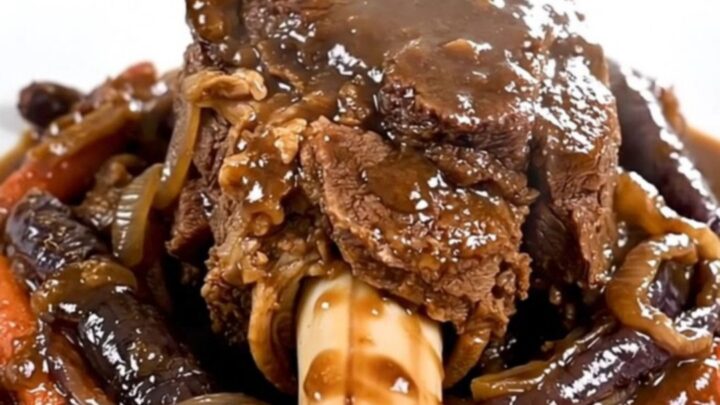
At the end of the cooking time, the stew should look glossy and dark. The beef will be incredibly soft, and the carrots will have absorbed the deep hues of the wine. After the required five-minute rest, the meat will be firm enough to slice or pull apart easily, and the sauce will have settled into a cohesive, flavorful consistency that is ready to be plated and served.
Common mistakes
A common mistake is rushing the cooking time; beef shank requires a long, slow process to become tender, and cutting it short will result in tough, chewy meat. Another error is over-seasoning with salt early on; since bouillon cubes can be quite salty, it is better to taste the sauce at the very end and adjust if necessary.
Finally, avoid lifting the lid frequently during the cooking process, as this releases essential heat and steam, which can significantly extend the required cook time.
How to tell it’s done
The beef shank is perfectly done when it reaches an internal temperature of at least 145°F (63°C). At this stage, the meat should be exceptionally tender, easily pulling away from the center bone with minimal pressure from a fork.
The cooking liquid should have reduced slightly, becoming a glossy, flavorful sauce that coats the back of a spoon. Always verify the temperature with a digital meat thermometer inserted into the thickest part of the shank to ensure safety and optimal texture.
- Steaks, chops and roasts: 145°F (63°C) in the thickest part, then a 3-minute rest
Up next · Part 3 of 3
2 variations · storage & make-ahead · 3 answers · printable card
Tips, FAQ & printable recipe (Part 3)← Back to the ingredients (Part 1)