Dinner · Part 2 of 3: Instructions
Slow Cooker Aveyron Sausage with Red Wine and Onions Step-by-step instructions
- Prep
- Cook
- Total
- Serves
- 4
Before you start
Before starting, ensure the slow cooker is clean and placed on a stable, heat-resistant surface. Have all ingredients measured and ready. If the onions are not already sliced, prepare them by cutting them into uniform half-moons to ensure even cooking.
Take the sausages out of the refrigerator about 20 minutes before you begin to allow them to lose their initial chill, which helps with more even cooking throughout the process.
Ingredients at a glance (5)
- 8 fresh sausages
- 2 large yellow onions, sliced
- 1 tbsp all-purpose flour
- 1 tsp dried thyme
- 1 cup dry red wine
Instructions
Preparation and layering
- Layering the ingredientsPlace the fresh sausages in the bottom of the slow cooker, ensuring they are arranged in an even layer. Scatter the sliced yellow onions over the top of the sausages to create a flavor base.Look for sausages are evenly distributed at the baseTip Ensure the onions are sliced thinly to allow them to melt into the sauce during the long cooking process.
The sausages should be arranged in a single layer at the bottom of the cooker, covered completely by the sliced onions. The scene should look orderly, with the onions providing a uniform blanket over the meat, ready for the seasoning and liquid to be added.
Simmering and thickening
- Seasoning and simmeringSprinkle the flour and dried thyme evenly over the onions and sausages. Pour the red wine over the entire mixture. Cover the slow cooker and cook on low for 4 hours until the sausages reach an internal temperature of 160°F (71°C).Look for sauce appears thickened and glossySafe temperature 160°F (71°C) internal temperature (ground meat)Tip The flour helps thicken the wine juices into a rich, velvety gravy as the onions release their moisture.
During the cooking phase, the kitchen will begin to smell of savory herbs and reduced wine. The liquid should be bubbling gently.
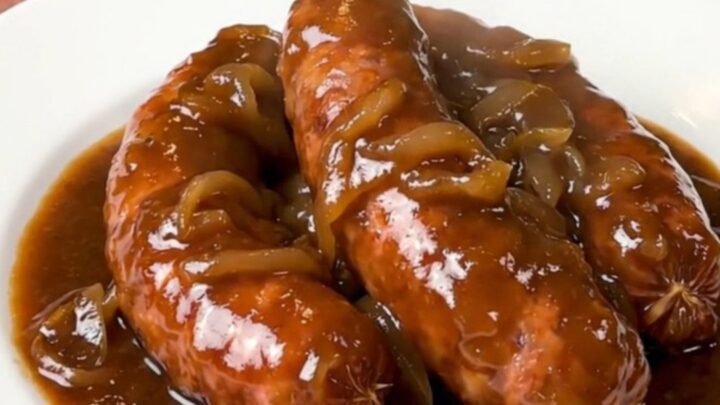
By the end of the time, the sauce should have transformed from a thin liquid into a thickened, glossy gravy that coats the back of a spoon.
Resting and serving
- Serving the dishOnce the cooking time is complete, remove the sausages and spoon the thickened onion gravy over them. Let the meat rest for at least 5 minutes before serving to ensure the flavors settle and the temperature stabilizes.Look for gravy coats the back of a spoonSafe temperature 160°F (71°C) internal temperature (ground meat)Tip Serve immediately while steaming hot for the best texture and flavor profile.
After removing the sausages, the gravy should remain hot and stable. The sausages should look plump and coated in the rich onion reduction. Check that the internal temperature is at least 160°F (71°C) before plating and serving the final dish.
Common mistakes
A common mistake is using a wine that is too sweet or too acidic, which can throw off the balance of the dish. Stick to dry, medium-bodied red wines. Another error is failing to distribute the flour evenly, which can lead to lumps.
Ensure the flour is sprinkled across the entire surface rather than in one spot. Finally, avoid opening the lid too frequently, as this releases heat and moisture, significantly extending the cooking time.
How to tell it’s done
The sausages are done when they reach an internal temperature of 160°F (71°C) when measured with a meat thermometer. The gravy should be glossy, thickened, and deep in color.
The onions should be translucent and very soft, effectively melting into the sauce. Ensure the sausages are not overcooked to the point of splitting, as this can affect their texture and moisture.
- Ground meat: 160°F (71°C) in the thickest part
Up next · Part 3 of 3
2 variations · storage & make-ahead · 3 answers · printable card
Tips, FAQ & printable recipe (Part 3)← Back to the ingredients (Part 1)