Desserts · Part 2 of 3: Instructions
Slow Cooker Apple, Quince, and Pear Compote Step-by-step instructions
- Prep
- Cook
- Total
- Serves
- 4
Before you start
Before beginning, ensure all fruit is thoroughly washed and patted dry. Peel the quince if you prefer a smoother texture, though leaving the skin on adds a nice color and structure. Chop the apples and pears into uniform, bite-sized chunks to ensure they cook evenly.
Have your slow cooker ready on a clean, stable surface near a power outlet. Measure out the brown sugar and water ahead of time so that the assembly process can be done quickly and efficiently, maintaining the cleanliness of your workspace throughout.
Ingredients at a glance (5)
- 2 quince, thinly sliced
- 2 apples, chopped
- 2 pears, chopped
- 1/4 cup brown sugar
- 1/2 cup water
Instructions
Layering the fruit
- Prepare the fruit baseArrange the thinly sliced quince pieces evenly across the bottom of the slow cooker insert to ensure they cook through thoroughly during the long stewing process.Look for The quince slices should cover the bottom layer.Tip Slice the quince thinly so it softens at the same rate as the apples and pears.
At this stage, the base layer of quince is neatly arranged in the slow cooker. The fruit should be sliced thinly to ensure it cooks through at the same rate as the softer fruits. Ensure the bottom of the insert is fully covered to create a stable foundation for the remaining ingredients. Check that the quince is prepared and ready for the next addition.
Adding sugar and liquid
- Add remaining ingredientsPlace the chopped apples and pears on top of the quince layer. Sprinkle the brown sugar evenly over the fruit and pour the water into the slow cooker to provide enough moisture for the steaming process.Look for The water should settle around the base of the fruit.Tip Distribute the sugar evenly to ensure consistent caramelization across all fruit pieces.
The apples and pears are now layered over the quince, and the brown sugar and water have been added. The mixture should look organized, with the sugar distributed evenly to promote caramelization.
Check that the water has been poured in correctly and is visible at the base, providing the necessary steam to cook the fruit thoroughly without drying it out.
Cooking to perfection
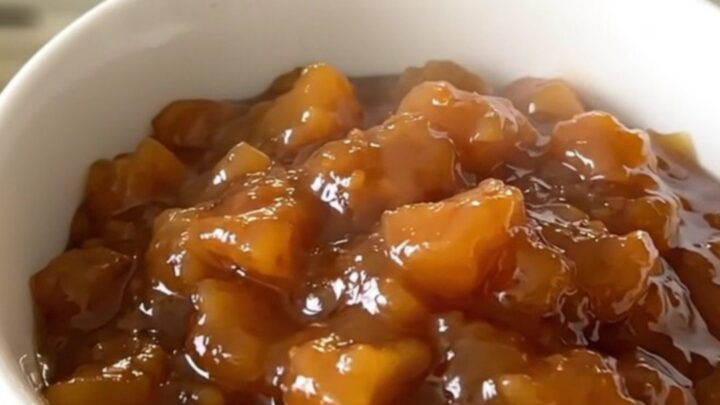
- Cook and serveCover the slow cooker and cook on low for 4 hours until the fruit is tender and glossy. Once finished, transfer the compote to a serving bowl and serve warm.Look for The fruit should look translucent and soft.Tip Allow the compote to sit for a few minutes before serving to let the juices thicken slightly.
After four hours, the fruit should be tender and the liquid reduced to a glossy, aromatic syrup. The kitchen will smell sweet and fruity. Check the texture of the quince to ensure it is tender enough to be easily pierced. The compote is now ready to be transferred to a serving bowl and enjoyed while it is still warm and fragrant.
Common mistakes
A common mistake is cutting the fruit into uneven pieces, which leads to some parts turning into mush while others remain undercooked and tough. Another error is opening the slow cooker lid too frequently, which allows heat to escape and increases the cooking time significantly.
Avoid overcrowding the slow cooker, as this can prevent the fruit from cooking evenly. Finally, do not use overripe fruit, as it will disintegrate too quickly and result in a texture that is less appealing for a compote.
How to tell it’s done
The compote is done when the quince is easily pierced with a fork and the apples and pears are soft yet hold their shape. The liquid at the bottom of the slow cooker should have reduced slightly and appear as a glossy, light syrup.
If the fruit still feels firm, continue cooking for another 30 minutes, checking frequently. The overall appearance will be a rich, warm-toned mix of softened fruit pieces, ready to be served immediately while warm.
Up next · Part 3 of 3
2 variations · storage & make-ahead · 3 answers · printable card
Tips, FAQ & printable recipe (Part 3)← Back to the ingredients (Part 1)