Dinner · Part 2 of 3: Instructions
Slow-Cooked Pork Swiss Steak for an Easy Comfort Dinner Step-by-step instructions
- Prep
- Cook
- Total
- Serves
- 4
Before you start
Before you begin, ensure your slow cooker insert is clean and dry. Prepare the vegetables by washing the green bell peppers and onions thoroughly under cool running water. Pat them dry with a clean kitchen towel to remove excess moisture.
Using a sharp chef's knife, slice the peppers and onions into uniform strips, approximately half an inch wide. Keeping the strips consistent ensures they will soften at the same rate during the long cooking process. Have all your ingredients measured and ready before you start layering.
Ingredients at a glance (5)
- 4 lbs bone-in pork shoulder steaks
- 2 large green bell peppers, sliced into strips
- 1 large yellow onion, sliced into strips
- 1 tbsp paprika
- 28 oz canned diced tomatoes
Instructions
Preparation and Layering
- Layer the PorkPlace the bone-in pork shoulder steaks into the base of the slow cooker insert. Ensure the steaks are arranged in a single layer or slightly overlapping to allow for even cooking throughout the process.Look for The pork should be neatly arranged in the bottom of the slow cooker.Tip If the steaks are very thick, you may need a larger slow cooker or to cook them in two batches.
- Add Vegetables and SeasoningPile the sliced green peppers and onions directly over the pork steaks. Sprinkle the paprika evenly over the top of the vegetables to ensure the flavor permeates the dish during the long, slow cooking cycle.Look for The pork should be completely covered by the layer of peppers and onions.Tip Slicing the vegetables into uniform strips helps them cook at the same rate.
The pork should be arranged in an even layer at the bottom of the insert, providing a stable foundation for the vegetables. Make sure the steaks are not tightly packed, allowing the heat to circulate properly around each piece.
Adding Aromatics and Tomatoes
- Incorporate TomatoesPour the diced tomatoes, including their juices, over the top of the pepper and onion mixture. The tomato liquid will provide the base for the rich gravy that forms as the pork renders its fat and juices during the slow cooking process.Look for The tomatoes should settle around and over the vegetables.Tip Do not stir the ingredients; the slow cooker will naturally combine these flavors over the long cook time.
The peppers, onions, and tomatoes should be distributed evenly over the pork. The tomatoes should start to settle into the gaps between the steaks, creating the base for the flavorful sauce that will develop during the long cook.
Slow Cooking to Perfection
- Slow Cook and ServeCover the slow cooker and set to low for 8 hours. Once cooked, ensure the pork reaches an internal temperature of 145°F (63°C). Let the meat rest for 5 minutes before serving to ensure tenderness and juiciness in every bite.Look for The pork should be fork-tender and the sauce thickened.Safe temperature 145°F (63°C) internal temperature (steaks, chops and roasts)Tip Check the temperature at the thickest part of the meat to confirm it is fully cooked.
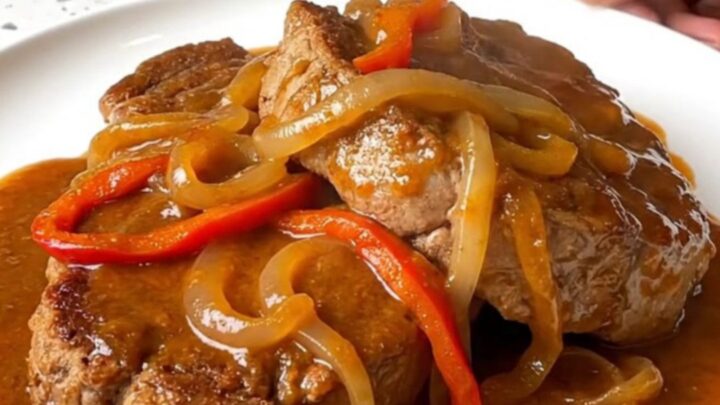
The kitchen should smell savory and aromatic as the pork braises. The meat will be incredibly tender and the sauce should have thickened into a rich, flavorful gravy that coats the back of a spoon.
Common mistakes
A common mistake is overcrowding the slow cooker, which can lead to uneven cooking and excess liquid that dilutes the flavor of the gravy.
Another error is lifting the lid too frequently to check on the progress; every time the lid is opened, heat and moisture escape, which significantly increases the total cooking time and can dry out the meat.
Finally, ensure the meat is not completely submerged in liquid if you prefer a more braised texture rather than a stewed one.
How to tell it’s done
The pork is done when it is fork-tender, meaning the meat pulls away easily from the bone with minimal pressure. Use a digital meat thermometer to check the thickest part of the steak; it must reach at least 145°F (63°C) for safety.
The gravy should appear thick and slightly reduced, with the vegetables softened but still holding their shape. Allowing the meat to rest for 5 minutes after removing it from the heat ensures the juices redistribute for maximum tenderness.
- Steaks, chops and roasts: 145°F (63°C) in the thickest part, then a 3-minute rest
Up next · Part 3 of 3
2 variations · storage & make-ahead · 3 answers · printable card
Tips, FAQ & printable recipe (Part 3)← Back to the ingredients (Part 1)