Dinner · Part 2 of 3: Instructions
Slow-Braised Turkish White Beans with Pastırma and Butter Rice Step-by-step instructions
- Prep
- Cook
- Total
- Serves
- 6
Before you start
Before you start, soak the dried white beans in plenty of water overnight, or for at least 8 hours. The next day, drain and rinse them. Slice the pastırma into thin strips, dice the onion, and measure out the tomato paste, pepper paste, salt, and pul biber.
Have the beef broth or water hot and ready. For the rice, rinse the rice until the water runs clear, and break the vermicelli into small pieces. Set out a large Dutch oven or heavy pot, a colander, and a medium saucepan with a lid.
Ingredients at a glance (15)
- 2 cups dried Turkish white beans (dermason fasulye), soaked overnight
- 100 g cured Turkish beef pastırma, sliced
- 1 large onion, diced
- 2 tbsp butter
- 2 tbsp tomato paste
- 1 tbsp red pepper paste (biber salçası)
- 4 cups beef broth or water
- 1 tsp salt
- 1 tsp pul biber (Turkish red pepper flakes)
- 1 1/2 cups long-grain rice, rinsed
- 1/2 cup vermicelli (or thin spaghetti, broken into small pieces)
- 2 tbsp butter
- 3 cups hot water or chicken broth
- 1/2 tsp salt
- Pickled Turkish peppers (turşu biber), for serving
Instructions
Prepare the Beans and Sauté the Aromatics
- Soak and Parboil the BeansDrain the soaked white beans and rinse them under cold water. Place them in a large pot and cover with fresh water by 2 inches. Bring to a boil over high heat, then reduce to a simmer and cook for 15 minutes, skimming off any foam that rises to the surface. Drain the beans and set them aside.Look for The beans should be just tender but still hold their shape without splitting.Tip Parboiling helps soften the beans while keeping them intact during the long slow-braise.
- Sauté the AromaticsIn a large Dutch oven or heavy pot, melt 2 tablespoons of butter over medium heat. Add the diced onion and cook, stirring occasionally, until soft and translucent, about 5 minutes. Add the sliced pastırma and cook for another 2 minutes until it begins to render its fat and becomes fragrant.Look for The onion should be soft but not browned, and the pastırma should be slightly crisped at the edges.Tip Stir frequently so the pastırma doesn't burn; it's cured, so it cooks quickly.
- Add the PastesStir in the tomato paste and red pepper paste, mixing well with the onion and pastırma. Cook for 1 to 2 minutes until the pastes darken slightly and become fragrant, stirring constantly to prevent sticking.Look for The mixture should look like a thick, rusty-red paste with a rich aroma.Tip Cooking the pastes briefly removes their raw taste and deepens the overall flavor.
At the end of this phase, the beans are parboiled and drained, and the pot holds a fragrant mixture of softened onion, pastırma, and pastes. The onion should be translucent, the pastırma slightly crisped, and the pastes have darkened to a deep red.
The kitchen should smell of butter, fenugreek, and tomato. Before moving on, ensure the pastes are well incorporated and not sticking to the bottom.
Slow-Braise the Beans
- Add Beans and BrothAdd the parboiled beans to the pot, then pour in the hot beef broth (or water). Stir in the salt and pul biber. Bring the mixture to a gentle simmer, then reduce the heat to low, cover, and let it cook slowly for 1 hour, stirring occasionally.Look for The liquid should be gently bubbling, and the beans should be mostly submerged.Tip Use hot broth to keep the cooking temperature steady and avoid shocking the beans.
- Slow-Braise Until VelvetyContinue to simmer, covered, for about 45 minutes to 1 hour, until the beans are completely tender and the sauce has thickened to a velvety consistency. Stir occasionally to prevent the bottom from sticking. If the sauce becomes too thick, add a splash of hot water.Look for The sauce should coat the back of a spoon, and the beans should be creamy but not falling apart.Tip Patience is key; the low heat allows the flavors to meld and the sauce to develop a rich body.
- Check the SeasoningTaste the beans and adjust the seasoning with more salt or pul biber if needed. If the sauce is too thin, continue to simmer uncovered for a few minutes. If it is too thick, add a little hot broth or water to loosen it.Look for The sauce should be rich, slightly spicy, and well-seasoned.Tip Cured pastırma can be salty, so taste before adding extra salt.
The beans are now simmering in a rich, reddish-brown liquid. After an hour, the sauce should have thickened, and the beans should be tender but intact. The aroma is deep and savory, with notes of tomato and spice. Give the pot a gentle stir to check for sticking. The beans should be creamy inside, and the sauce should coat a spoon. Taste and adjust seasoning before serving.
Cook the Rice and Serve
- Make the Butter RiceIn a medium saucepan, melt 2 tablespoons of butter over medium heat. Add the vermicelli and cook, stirring frequently, until golden brown and fragrant, about 2 to 3 minutes. Add the rinsed rice and stir to coat with the butter.Look for The vermicelli should be golden and the rice lightly coated with butter.Tip Toasting the vermicelli gives the rice a nutty flavor and a beautiful color.
- Cook the RicePour in the hot water or chicken broth and add the salt. Bring to a boil, then reduce the heat to low, cover, and simmer for 15 to 18 minutes, until the liquid is absorbed and the rice is tender. Remove from heat and let it rest, covered, for 5 minutes before fluffing with a fork.Look for The rice should be fluffy and separate, with the vermicelli distributed throughout.Tip Keep the lid on during cooking to trap the steam and ensure even cooking.
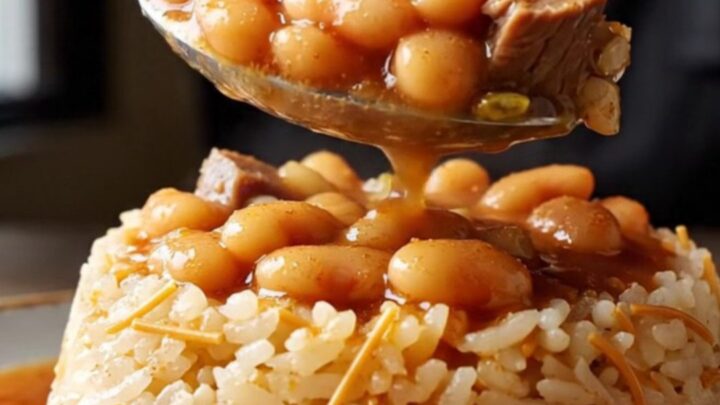
- Serve the Beans Over RiceSpoon a generous portion of the butter rice onto each plate. Ladle the hot, saucy beans over the rice, making sure to include a few strips of pastırma. Serve immediately with pickled Turkish peppers on the side. Let it rest for 3 minutes before slicing.Look for The beans should be glossy and saucy, the rice fluffy, and the peppers bright and crunchy.Safe temperature 145°F (63°C) internal temperature (steaks, chops and roasts)Tip For the best texture, spoon the beans over the rice just before serving so the rice stays fluffy.
The rice is fluffy, with golden vermicelli pieces scattered throughout. The beans are ladled over the rice, and pickled peppers sit on the side. The dish looks vibrant and comforting, with the sauce glistening. Take a spoonful to ensure the beans are hot and the rice is tender. The flavors should be balanced—savory, slightly spicy, and rich with butter.
Common mistakes
A common mistake is skipping the parboiling step, which can result in beans that cook unevenly or split during the long braise. Another is using cold broth, which can lower the pot temperature and extend the cooking time.
Be careful not to overcook the pastırma in the sauté step—it’s cured and can become tough if cooked too long. Also, avoid stirring the beans too vigorously, as that can break them. Finally, don’t be tempted to rush the simmer; the slow braise is what creates the velvety sauce.
How to tell it’s done
The beans are done when they are completely tender and creamy on the inside, but not mushy or falling apart. The sauce should be thick enough to coat the back of a spoon, and it will have deepened in color to a rich, rusty red. The pastırma strips will be tender and flavorful.
Taste a bean to check for doneness—it should yield easily to gentle pressure. If the sauce is too thin, simmer uncovered for a few minutes; if too thick, add a splash of hot broth. The rice is done when all the liquid is absorbed and the grains are fluffy and separate.
- Steaks, chops and roasts: 145°F (63°C) in the thickest part, then a 3-minute rest
Up next · Part 3 of 3
4 variations · storage & make-ahead · 5 answers · printable card
Tips, FAQ & printable recipe (Part 3)← Back to the ingredients (Part 1)