Dinner · Part 1 of 3: Ingredients
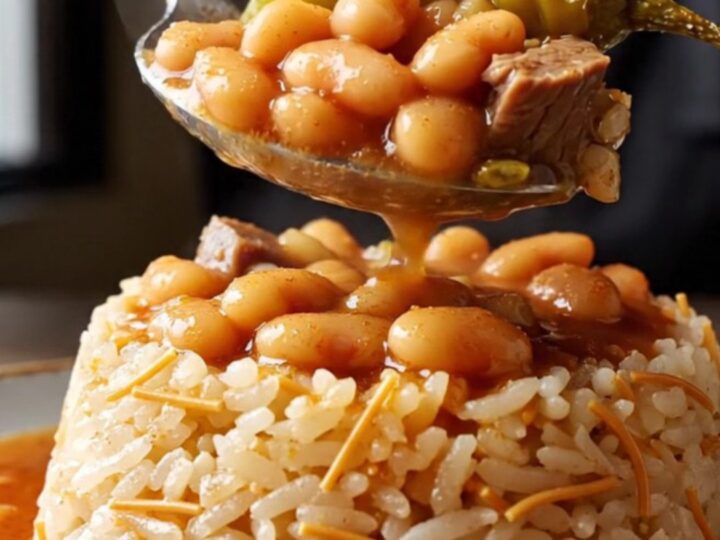
Slow-Braised Turkish White Beans with Pastırma and Butter Rice
- Prep
- Cook
- Total
- Serves
- 6
There’s a reason kuru fasulye is Turkey’s national comfort dish: it’s a pot of creamy white beans slow-braised until the sauce turns thick and velvety, enriched with strips of fenugreek-spiced pastırma.
Served over buttery vermicelli rice pilaf, with pickled peppers for a bright, tangy crunch, every spoonful delivers deep, savory satisfaction. This recipe brings that iconic Turkish meal to your kitchen, with clear steps and honest ingredients.
Kuru fasulye, or white bean stew, is a beloved staple across Turkey, often served as the main course with rice pilaf and pickles. This version uses dermason beans, a plump white bean that holds its shape beautifully during long cooking. The addition of pastırma—a cured, air-dried beef coated in fenugreek—adds a unique, aromatic richness that elevates the dish.
Here, the beans are parboiled briefly, then slow-braised with onion, tomato paste, and red pepper paste in beef broth until the sauce is thick and luscious. The butter rice, cooked with toasted vermicelli, provides a nutty, buttery base that soaks up the sauce perfectly.
Ingredients
- 2 cups dried Turkish white beans (dermason fasulye), soaked overnight
- 100 g cured Turkish beef pastırma, sliced
- 1 large onion, diced
- 2 tbsp butter
- 2 tbsp tomato paste
- 1 tbsp red pepper paste (biber salçası)
- 4 cups beef broth or water
- 1 tsp salt
- 1 tsp pul biber (Turkish red pepper flakes)
For the butter rice
- 1 1/2 cups long-grain rice, rinsed
- 1/2 cup vermicelli (or thin spaghetti, broken into small pieces)
- 2 tbsp butter
- 3 cups hot water or chicken broth
- 1/2 tsp salt
For serving
- Pickled Turkish peppers (turşu biber), for serving
Why this recipe works
Parboiling the soaked beans for 15 minutes before the long braise ensures they become tender without splitting. This step softens the beans enough that they cook evenly during the slow simmer, while still maintaining their plump, intact shape. The result is a creamy interior and a firm skin that doesn’t turn to mush, even after an hour of gentle cooking.
Slow-braising the beans in a covered pot with hot broth allows the flavors to meld and the sauce to thicken naturally. The low, gentle heat encourages the starches from the beans to release into the sauce, creating a velvety texture that clings to each spoonful. Cooking the tomato and pepper pastes beforehand deepens their flavor and removes any raw, acidic edge.
Notes and substitutions
Dermason beans are the traditional choice, but cannellini or great northern beans work well if you can’t find them. Soaking the beans overnight is essential for even cooking; if you’re short on time, use a quick-soak method: cover with water, bring to a boil for 2 minutes, then let stand for 1 hour.
Pastırma is a cured beef product with a distinctive fenugreek coating; if unavailable, a good-quality beef bacon can substitute, though the flavor will differ.
The red pepper paste, biber salçası, is a staple of Turkish cooking, adding both color and a sweet-spicy depth. You can find it in Middle Eastern markets or online. If you can’t, mix tomato paste with a pinch of smoked paprika and cayenne.
The pul biber (Turkish red pepper flakes) provides a mild, fruity heat; adjust to your taste. For the rice, use long-grain rice like basmati or jasmine, and don’t skip toasting the vermicelli—it adds a wonderful nuttiness.
- pastırma: If pastırma is unavailable, use a good-quality beef bacon or a double-smoked bacon; the flavor will be slightly different but still delicious.
- red pepper paste: Substitute with 1 tbsp tomato paste plus 1/2 tsp smoked paprika and a pinch of cayenne for a similar depth.
- pul biber: Use 1/2 tsp regular red pepper flakes plus 1/2 tsp sweet paprika for a milder heat.
- dermason beans: Use cannellini or great northern beans; they hold their shape well and have a creamy texture.
Equipment
- Large pot or Dutch oven
- Colander
- Wooden spoon
- Chef's knife
- Cutting board
- Measuring cups and spoons
- Medium saucepan with lid
Up next · Part 2 of 3
9 steps · 1 h 30 min of cooking · what to look for at each stage
Step-by-step instructions (Part 2)