Dinner · Part 2 of 3: Instructions
Slow-Braised Lamb Shanks with Tender Potatoes and Carrots Step-by-step instructions
- Prep
- Cook
- Total
- Serves
- 4
Before you start
Before you begin cooking, gather all your ingredients and prepare your vegetables. Pat the lamb shanks completely dry with paper towels; removing surface moisture is key to achieving a deep, beautiful sear.
Wash the baby potatoes thoroughly, leaving them whole to prevent them from becoming mushy during the long braise. Peel and chop the carrots into thick, rustic chunks that will hold up to the slow cooking process. Measure out your dark savory gravy so it is ready to go when the pan is hot.
Ingredients at a glance (6)
- 4 lamb shanks
- 2 tbsp cooking oil
- 3 cups dark savory gravy (store-bought or made ahead)
- 1 lb whole baby potatoes
- 3 carrots, chopped
- 4 fresh thyme sprigs
Instructions
Searing the Lamb
- Sear the LambHeat the cooking oil in a large Dutch oven over medium-high heat. Add the lamb shanks to the hot oil and sear for about 8 to 10 minutes, turning occasionally, until they develop a deep golden-brown crust on all sides.Look for The lamb should have a deep brown crust.Tip Do not crowd the pan; sear in batches if necessary to get a good crust.
At the end of this phase, the lamb shanks should have a gorgeous, deep golden-brown crust on all sides. You will hear a loud, active sizzling sound as the meat sears in the hot oil. The kitchen will fill with the rich, savory aroma of browning meat, and a layer of dark, caramelized bits should form on the bottom of the Dutch oven, ready to flavor the gravy.
Preparing the Gravy Base
- Add the GravyReduce the heat to medium. Pour the dark savory gravy into the pot with the seared lamb shanks, scraping up any browned bits from the bottom of the pot with a wooden spoon to incorporate those rich flavors.Look for The liquid should begin to simmer and turn deep brown.Tip Scraping the browned bits adds incredible depth of flavor to the gravy.
- Add the Vegetables and HerbsNestle the whole baby potatoes, chopped carrots, and fresh thyme sprigs into the pot around the lamb shanks. Bring the braising liquid to a gentle simmer, ensuring the vegetables are partially submerged in the rich sauce.Look for The sauce should bubble gently around the vegetables.Tip Keep the vegetables partially submerged so they cook evenly.
At this point, the dark savory gravy will have dissolved all the caramelized bits from the bottom of the pot, creating a rich and aromatic base.
The liquid should be a deep, rich brown color and bubbling gently, creating a highly flavorful environment that is ready to receive the vegetables and herbs. The aroma of the simmering gravy will begin to fill your kitchen, signaling that the base is perfectly prepared.
Slow Braising with Vegetables
- Braise Until TenderCover the pot tightly with a lid and reduce the heat to low. Simmer gently for 2 to 2.5 hours until the lamb is meltingly tender and easily pulls away from the bone. Ensure the lamb reaches a safe internal temperature of 145°F (63°C). Let the lamb shanks rest for at least 3 minutes before serving.Look for A fork should slide easily into the lamb, and meat should pull away from the bone.Safe temperature 145°F (63°C) internal temperature (steaks, chops and roasts)Tip Letting the meat rest allows the juices to redistribute, keeping it succulent.
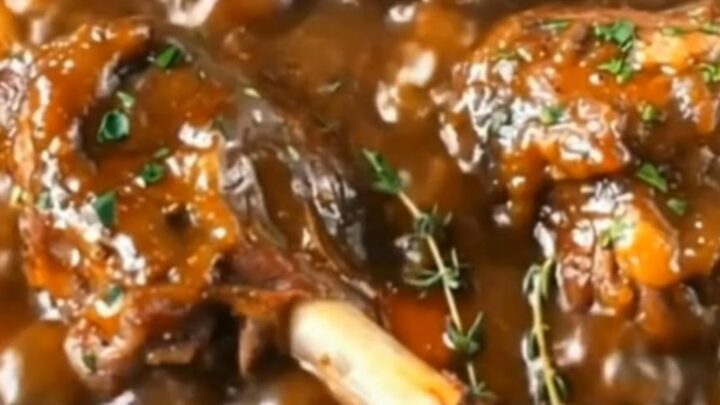
By the end of the slow braise, the lamb shanks will be incredibly tender, with the meat visibly pulling away from the bone. The gravy should be thick, glistening, and bubbling gently around the vegetables. The baby potatoes and carrots will be completely fork-tender, having absorbed the rich flavors of the lamb and fresh thyme, making them incredibly flavorful and ready to serve.
Common mistakes
One common mistake is rushing the searing process. Searing the lamb shanks too quickly or crowding the pan will cause the meat to steam rather than brown, preventing the development of the rich fond that flavors the gravy.
Another mistake is letting the braising liquid boil too rapidly. High heat will tighten the muscle fibers, making the lamb tough and dry. Always keep the heat on a very gentle simmer once the pot is covered to ensure the meat becomes meltingly tender.
How to tell it’s done
The lamb shanks are perfectly done when the meat is incredibly tender and can be easily pulled away from the bone with a fork.
To ensure food safety, the lamb must reach an internal temperature of at least 145°F (63°C) when measured with a meat thermometer in the thickest part of the meat, avoiding the bone. Additionally, the meat must be allowed to rest for at least 3 minutes after cooking to allow the juices to settle.
- Steaks, chops and roasts: 145°F (63°C) in the thickest part, then a 3-minute rest
Up next · Part 3 of 3
2 variations · storage & make-ahead · 3 answers · printable card
Tips, FAQ & printable recipe (Part 3)← Back to the ingredients (Part 1)