Dinner · Part 2 of 3: Instructions
Sizzling Chili Oil Garlic Udon Noodles in 10 Minutes Step-by-step instructions
- Prep
- Cook
- Total
- Serves
- 2
Before you start
Before starting, make sure the udon noodles are cooked and drained, but keep them warm. Have all the aromatics minced and measured, and the sauce ingredients combined in a small bowl.
The oil should be in a small saucepan with a thermometer nearby. Set up a large heatproof bowl or wok for the noodles — it needs to withstand the hot oil. Finally, clear the area around the stove so you can pour the oil safely without splashing.
Ingredients at a glance (8)
- 400 g thick udon noodles, cooked
- 6 cloves garlic, minced
- 3 scallions, chopped
- 2 tbsp gochugaru (Korean chili flakes)
- 1 tbsp toasted sesame seeds
- 30 ml dark soy sauce
- 30 ml black vinegar
- 60 ml neutral oil (such as grapeseed or canola)
Instructions
Prep and Pile
- Cook the UdonBring a large pot of water to a rolling boil. Add the thick udon noodles and cook according to package directions, usually 3 to 5 minutes for fresh udon or 7 to 8 minutes for dried. Drain well and rinse briefly with hot water to remove excess starch. Transfer the noodles to a large heatproof bowl or wok.Look for Noodles are tender but still chewy, with no raw flour taste.Tip Rinse with hot water, not cold, to keep the noodles warm and prevent sticking.
- Pile the AromaticsWhile the noodles are still steaming, pile the minced garlic, chopped scallions, gochugaru, and toasted sesame seeds directly on top of the noodles. Create a small mound in the center so the hot oil will hit all the aromatics at once.Look for The garlic and scallions form a neat pile; the chili flakes are bright red.Tip The mound doesn't need to be perfect, but keep it centralized for even sizzling.
- Add the Sauce BaseDrizzle the dark soy sauce and black vinegar over the noodles and aromatics. Toss gently with chopsticks to coat the noodles evenly with the sauce, then reshape the aromatics into a mound on top. The sauce will pool at the bottom of the bowl.Look for Noodles are evenly colored with a dark, glossy sheen.Tip Toss gently to avoid breaking the udon; the sauce should be absorbed, not watery.
The noodles are cooked, drained, and steaming in a heatproof bowl. A colorful mound of garlic, scallions, gochugaru, and sesame seeds sits on top, and the dark soy and vinegar have been drizzled over. The kitchen smells of fresh garlic and chili. The oil is in a saucepan, ready to be heated.
Sizzle and Toss
- Heat the OilIn a small saucepan, heat the neutral oil over high heat until it reaches 400°F (200°C). The oil should be shimmering and just beginning to smoke. If using a thermometer, watch for the temperature to hold steady; if not, test with a wooden chopstick — bubbles should race up immediately.Look for Oil is shimmering, with wisps of smoke rising from the surface.Tip Do not let the oil smoke heavily for more than a few seconds; it can burn the garlic.
- Pour and SizzleCarefully pour the hot oil directly over the pile of garlic, scallions, chili flakes, and sesame seeds. The oil will erupt in a loud sizzle, flash-frying the aromatics and turning them into a glossy, fragrant sauce. Let the sizzle subside for about 30 seconds.Look for A loud sizzle, then the aroma of toasted garlic and chili fills the kitchen.Tip Pour in a steady stream, not all at once, to avoid splashing hot oil.
- Toss to CoatUse wooden chopsticks or tongs to toss the noodles thoroughly, scraping the bottom of the bowl to incorporate the sizzled aromatics and sauce. The oil will emulsify with the soy and vinegar, creating a shiny, clinging sauce. Keep tossing until every strand is coated.Look for Noodles are uniformly glossy, with bits of garlic and chili clinging to each strand.Tip Toss from the bottom up; don't be afraid to use a little force to separate clumps.
The oil is shimmering and just beginning to smoke. As it hits the aromatics, there's a loud, satisfying sizzle, and the garlic and chili bloom into a fragrant, toasty aroma.
After a quick toss, the noodles are evenly coated in a glossy, reddish-brown sauce, with bits of garlic and sesame clinging to each strand.
Rest and Serve
- Rest and AbsorbLet the noodles rest for 1 to 2 minutes so the sauce can absorb into the udon. The noodles will continue to soak up the chili oil, becoming more flavorful and less saucy. Stir once more before serving.Look for The sauce has thickened slightly and clings to the noodles without pooling.Tip The rest is short but crucial — it lets the flavors meld without the noodles getting cold.
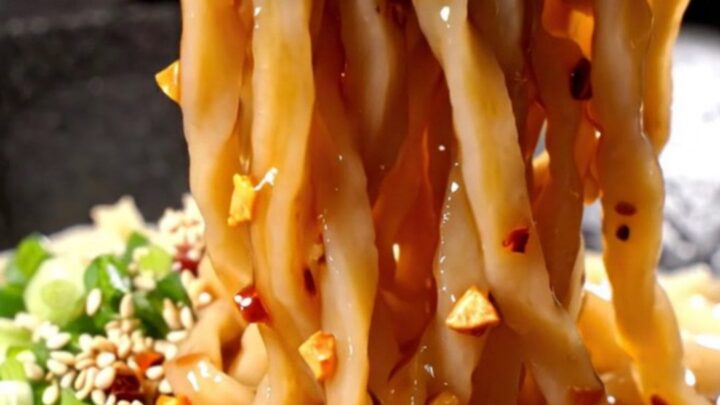
- Serve and EnjoyTransfer the noodles to serving bowls, using chopsticks to lift a glossy, steaming tangle. Garnish with extra scallions or sesame seeds if desired — though the video keeps it simple. Serve immediately while hot and sizzling.Look for Noodles are steaming, ruby-red, and fragrant with garlic and chili.Tip Serve right away; the noodles are best when the oil is still warm and aromatic.
The noodles have rested for a minute, allowing the sauce to cling and thicken slightly. Each bite is chewy, spicy, and savory, with the crunch of sesame seeds and the mellow sweetness of cooked garlic. The bowl is glossy and inviting, ready to be lifted with chopsticks.
Common mistakes
The most common mistake is not heating the oil enough. If the oil isn't smoking, it won't sizzle properly, and the garlic will remain raw and pungent. Use a thermometer to ensure 400°F (200°C).
Another pitfall is pouring the oil too slowly, which cools it down before it hits all the aromatics — pour in a steady stream. Finally, don't skip the rest after tossing; the noodles need a minute to absorb the sauce, otherwise the oil will pool at the bottom of the bowl.
How to tell it’s done
The noodles are done when they are evenly coated with a glossy, red-tinted sauce and the aromatics are sizzled but not burnt — the garlic should be fragrant and slightly translucent, not dark brown. The sesame seeds should be toasted and crisp.
Taste a strand: it should be chewy, with a balanced heat from the gochugaru, a savory depth from the soy, and a bright tang from the vinegar. If the sauce seems too thin, toss the noodles a bit more; the oil will emulsify with the other liquids.
Up next · Part 3 of 3
4 variations · storage & make-ahead · 5 answers · printable card
Tips, FAQ & printable recipe (Part 3)← Back to the ingredients (Part 1)