Dinner · Part 3 of 3: Tips & recipe card
Seared Scallops with Brown Butter, Butternut Squash and Parmesan Tips, FAQ & printable recipe
- Prep
- Cook
- Total
- Serves
- 4
Tips for success
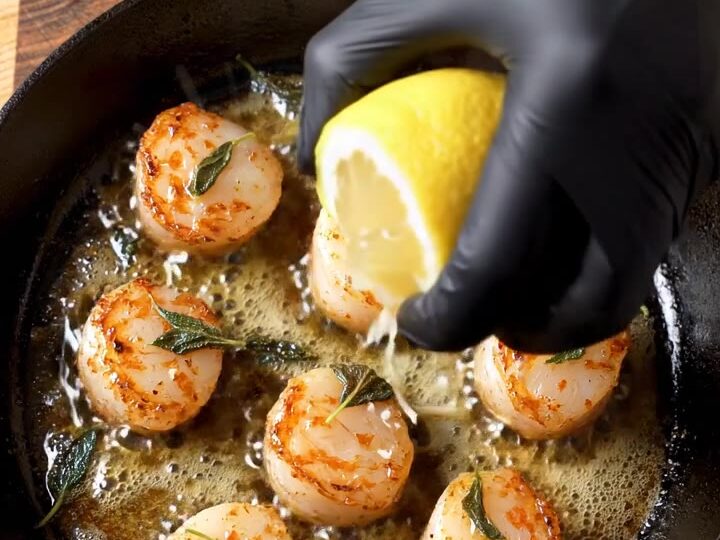
Keep the heat under control when browning the butter. Once it foams and turns golden with a nutty smell, reduce the heat a little so it browns evenly without turning bitter. Swirl the pan constantly and spoon the butter over the scallops as you go, which keeps the color even and the flavor balanced across the whole dish.
Serve on warm plates and add the parmesan at the last moment. Warm plates keep the scallops from cooling quickly, and fresh grated cheese melts slightly into the hot butter and squash. Pre-grated cheese in a shaker is drier and tastes less fresh, so grate it just before serving whenever you can, for the best texture and aroma.
Variations
- Crispy sage version: Fry the whole sage leaves in the brown butter until crisp, then lift them out to garnish. Keep the scallops, squash and parmesan exactly as written for a more pronounced crunch and a crisp, savory finish on every plate.
- Acorn squash swap: Replace the butternut squash with acorn squash cut into similar small cubes. Its slightly firmer, nuttier flesh browns nicely in the brown butter and keeps its shape well during cooking.
- Pecorino finish: Use finely grated Pecorino Romano instead of parmesan for a saltier, sharper finish. It melts into the hot butter and pairs particularly well with the sweet squash and the browned scallop crust.
- Lemon zest brightener: Finish the plated scallops with a light grating of lemon zest over the parmesan. The citrus adds brightness that cuts through the richness of the brown butter and lifts the sweet squash.
Storage and make-ahead
- Fridge
- Store leftover scallops and squash in an airtight container in the refrigerator for up to 1 day. Cool them within 2 hours first, and keep the parmesan separate.
- Reheat
- Reheat gently in a skillet over low heat with a teaspoon of butter, just until warmed through, to avoid overcooking the scallops.
Scallops are best eaten the same day they are cooked, while the sear is crisp and the centers are still tender. If you have leftovers, let the scallops and squash cool for no more than 2 hours before covering and refrigerating them in a shallow airtight container.
Keep the brown butter separately if you can, and store the parmesan in its own container. The squash holds its texture well, and the sage will soften, so the leftovers are best enjoyed within a day for the most pleasant texture and flavor.
Most of the work can be done in advance. Dice the butternut squash up to a day ahead, keep it in an airtight container in the refrigerator, and bring it back to room temperature briefly before cooking. Grate the parmesan and pick the sage leaves ahead as well, keeping each in a separate container.
The scallops should be seared just before serving, since their texture changes quickly after cooking. Keep them chilled and dry until the skillet is hot, so the sear remains crisp and the dish comes together in about fifteen minutes.
Serving ideas
Serve the scallops hot, straight from the skillet, with the golden brown butter spooned over them and the squash arranged alongside.
A simple green salad with lemon vinaigrette balances the richness of the butter and the sweetness of the squash, and a crusty bread is ideal for soaking up the sauce left in the pan. Add a generous shower of parmesan just before serving so the cheese stays fresh.
For a more complete dinner, pair the scallops with a light grain such as farro or wild rice, which absorbs the brown butter well. A crisp, dry white wine or sparkling wine complements the sweet squash and the nutty butter.
Garnish each plate with a crisp sage leaf and an extra pinch of pepper, and serve immediately while the scallops are at their best.
Frequently asked questions
Can the scallops be seared ahead of time?
Why does the butter turn black instead of golden?
How do you know the scallops are cooked through?
Can you use frozen scallops for this dish?
What can you serve with seared scallops and butternut squash?
Seared Scallops with Brown Butter, Butternut Squash and Parmesan

Ingredients
- 1 lb butternut squash, peeled, seeded and diced into small cubes
- 1 lb large sea scallops, side muscle removed and patted dry
- 3/4 tsp kosher salt, plus more to taste
- 1/4 tsp freshly ground black pepper
- 1 tbsp olive oil
- 4 tbsp unsalted butter
- 12 fresh sage leaves, plus a sprig for garnish
- 1/2 cup finely grated parmesan cheese, plus more for serving
Instructions
- Dice the butternut squash into small, even cubes about 1/2 inch wide. Pick the sage leaves from the stem and keep the sprig for garnish. Grate the parmesan on the small holes of a box grater into a fine pile and set it aside.
- Pat the scallops completely dry with paper towels. Season both sides with the kosher salt and black pepper. Let them rest on the board while the skillet heats.
- Heat the olive oil in the cast iron skillet over medium-high heat until it shimmers. Add the scallops in a single layer and sear without moving them until deep golden on the bottom, then flip with tongs and sear the other side.
- Reduce the heat to medium. Add the butter, squash cubes and whole sage leaves to the skillet. Swirl the butter as it melts, foams and browns to a nutty golden color, spooning it over the scallops and squash.
- Cook the scallops and squash for a few more minutes, turning the scallops with tongs, until the squash is tender and the scallop centers are opaque. Season the squash with a pinch more salt if needed.
- Divide the scallops and squash among warm plates. Spoon the golden brown butter over the top, arrange the crisp sage leaves alongside, and shower generously with the grated parmesan. Serve immediately.
Estimated nutrition per serving
- Calories
- 390
- Protein
- 26 g
- Carbohydrates
- 18 g
- Fat
- 23 g
- Fiber
- 2 g
- Sugar
- 4 g
- Sodium
- 820 mg
Next recipe

Coconut-Crusted Mahi-Mahi with Mango Skillet Salsa: Crispy and Quick
See the recipe → →This recipe is based on a short cooking video and is published under the pen name Clara Weller. It was checked before publication, but errors can slip through. Nutrition, when shown, is an estimate. Read more in our editorial policy and on our food safety page.
More recipes to try

Crispy Eggplant Parmesan Skillet with Melted Mozzarella and Burrata
Total time: 1 h 10 min
Truffle Four Cheese Mac and Cheese with Crispy Panko Cauliflower Skillet
Total time: 55 min
Blistered Tomato Gnocchi with Molten Brie in Garlic Butter Skillet
Total time: 38 min
Queso Fundido Skillet Cheesy Sweet Potato Bake in One Pan
Total time: 1 h
Garlic Butter Clams and Prawns in White Wine, One Skillet in Minutes
Total time: 27 min