Dinner · Part 2 of 3: Instructions
Rosemary Thyme Butter Chuck Roast: 4-Ingredient Slow Cooker Step-by-step instructions
- Prep
- Cook
- Total
- Serves
- 6
Before you start
Before you start, make sure your slow cooker is clean and dry. Pat the beef chuck roast dry with paper towels — this helps the seasonings adhere, though no extra salt is needed if you're using salted butter.
Smash the garlic cloves with the flat side of a chef's knife to release their flavor, but leave them in large pieces so they don't disintegrate during cooking. Rinse the fresh rosemary and thyme sprigs and pat them dry. Have the butter ready at room temperature for a minute or two so it's easier to unwrap, but cold butter works just as well.
Ingredients at a glance (5)
- 3 1/2 lb beef chuck roast
- 12 garlic cloves, smashed
- 4 sprigs fresh rosemary
- 6 sprigs fresh thyme
- 1 stick salted butter
Instructions
Layer and Set
- Layer the Roast and AromaticsPlace the beef chuck roast in the center of the slow cooker. Scatter the smashed garlic cloves and the fresh rosemary and thyme sprigs over the top of the roast, pressing them gently so they stay in place.Look for The roast sits snugly in the pot with herbs and garlic scattered across the surface.Tip No need to sear the meat first — the slow cooker does all the work.
- Add the ButterUnwrap the stick of salted butter and place it directly on top of the seasoned roast. It will melt as the cooker heats, basting the meat and creating a rich, golden jus.Look for The butter sits on top of the roast, ready to melt into the meat.Tip Using cold butter is fine — it will melt slowly and evenly.
At the end of this phase, the slow cooker contains the raw beef, garlic, herbs, and butter, all nestled together. The butter is starting to soften and melt, and the aromatics are fragrant. The scene is simple and clean — raw ingredients ready to transform. Before moving on, make sure the roast is centered and the herbs and garlic are spread evenly over the top.
Cook and Shred
- Cook Low and SlowCover the slow cooker and cook on low for 8 to 10 hours, or on high for 5 to 6 hours, until the beef is fork-tender and shreds easily. The butter and juices will form a bubbling, golden pan jus. Let it rest for 3 minutes before slicing.Look for The pot is bubbling gently and the meat is falling apart when pierced with a fork.Safe temperature 145°F (63°C) internal temperature (steaks, chops and roasts)Tip Low and slow gives the most tender results; resist the urge to open the lid often.
- Shred the BeefRemove the roast from the slow cooker and place it on a cutting board. Use two forks to shred the beef into large, bite-sized pieces, discarding any large pieces of fat. Return the shredded beef to the pot and stir gently to coat with the jus. Let it rest for 3 minutes before slicing.Look for The beef pulls apart easily into moist, tender shreds.Safe temperature 145°F (63°C) internal temperature (steaks, chops and roasts)Tip Shred while the beef is still warm for the best texture.
After cooking, the pot is bubbling gently with a golden, butter-emulsified jus. The beef is fork-tender and shreds easily into moist, long strands.
The garlic cloves have softened into sweet, spreadable confit, and the rosemary and thyme have infused the liquid with their woodsy aroma. The kitchen smells rich and savory — a sign that the slow cooker has done its magic.
Serve
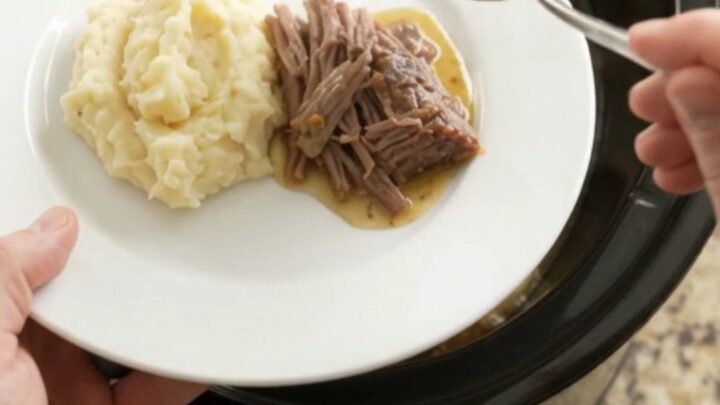
- Serve with Mashed PotatoesSpoon the shredded beef and a generous amount of the buttery pan jus over whipped Yukon Gold mashed potatoes. Serve hot, with extra fresh herbs if desired.Look for The beef is piled high on creamy mashed potatoes, drenched in golden jus.Tip The jus is the star — don't skimp when spooning it over.
The shredded beef is piled high on a bed of whipped Yukon Gold mashed potatoes, drenched in the golden jus. The plate is hearty and comforting, with the beef glistening and the potatoes creamy and smooth. The final dish looks like it came from a rustic steakhouse — simple, elegant, and deeply satisfying.
Common mistakes
The most common mistake is opening the slow cooker too often to check on the meat. Every time you lift the lid, heat escapes, which can extend the cooking time and dry out the beef. Another pitfall is using a roast that's too lean — without enough marbling, the meat can become dry and stringy.
Finally, don't skip the resting period after shredding; letting the beef sit in the warm jus for a few minutes allows it to reabsorb some of the liquid, keeping it moist and flavorful.
How to tell it’s done
The beef is done when it is fork-tender and pulls apart easily with little resistance. To test, insert a fork into the thickest part of the roast and twist gently — the meat should shred without effort.
The internal temperature should read at least 145°F (63°C) for food safety; because the roast is cooked low and slow, it will likely be well above that, often reaching 190°F (88°C) or higher, which is ideal for breaking down collagen. The jus will be bubbling and golden, with a rich, buttery aroma.
- Steaks, chops and roasts: 145°F (63°C) in the thickest part, then a 3-minute rest
Up next · Part 3 of 3
4 variations · storage & make-ahead · 5 answers · printable card
Tips, FAQ & printable recipe (Part 3)← Back to the ingredients (Part 1)