Dinner · Part 2 of 3: Instructions
Rosemary Thyme Brown Gravy Chuck Roast: Slow-Cooker Comfort Step-by-step instructions
- Prep
- Cook
- Total
- Serves
- 8
Before you start
Before you start, make sure you have a 6- to 7-quart slow cooker. Pat the chuck roast dry with paper towels—this helps the gravy coat the meat better. Smash the garlic cloves by pressing them with the flat side of a knife. Rinse the fresh rosemary and thyme sprigs and pat them dry.
Measure out the brown gravy and have the butter ready. No need to sear the roast; the slow cooker does all the work. If you're using a particularly large roast, trim it to fit comfortably in the cooker, leaving space for the gravy to surround it.
Ingredients at a glance (6)
- 3 1/2 lb beef chuck roast
- 12 cloves garlic, smashed
- 4 sprigs fresh rosemary
- 6 sprigs fresh thyme
- 2 cups rich brown gravy (beef bone broth based)
- 4 tbsp unsalted butter, cut into pats
Instructions
Layer and Dump
- Layer the Roast and AromaticsPlace the beef chuck roast in the center of a 6- to 7-quart slow cooker. Scatter the smashed garlic cloves and fresh rosemary and thyme sprigs over the top of the roast.Look for The roast should sit snugly in the cooker with the herbs and garlic evenly distributed on top.Tip If the roast is larger than the cooker, trim it to fit or cut it into large chunks.
- Add the Gravy and ButterPour the rich brown gravy over the roast, ensuring it coats the meat and herbs. Dot the top with pats of unsalted butter.Look for The gravy should come about halfway up the sides of the roast, not fully submerge it.Tip Use a good-quality beef bone broth gravy for the deepest flavor.
The roast sits in the center of the slow cooker, topped with smashed garlic and fresh herb sprigs. The brown gravy is poured over, and pats of butter dot the top. At this point, the scene is raw and simple—the aromas of garlic and herbs mingle with the rich scent of the gravy. Everything is ready for the long, slow transformation ahead.
Slow-Cook to Tender
- Slow-Cook Until TenderCover the slow cooker and cook on low for 8 to 10 hours, or on high for 4 to 5 hours, until the beef is fork-tender and easily shreds. Let it rest for 3 minutes before slicing.Look for The meat should be so tender that it falls apart when pierced with a fork.Safe temperature 145°F (63°C) internal temperature (steaks, chops and roasts)Tip Do not open the lid during cooking—each peek adds 20 minutes of cook time.
- Rest the RoastTurn off the slow cooker and let the roast rest in the gravy for at least 3 minutes before shredding. This allows the juices to redistribute.Look for The meat will be very hot and fragrant; the gravy will be bubbling gently.Tip Resting is essential for keeping the meat moist and tender.
After hours of gentle bubbling, the slow cooker releases a fragrant steam that fills the kitchen with the scent of roasted beef, garlic, and herbs. The gravy has deepened to a rich mahogany color, and the meat is visibly tender, pulling away from the bone (if any). The sound is a soft, rhythmic simmer—a promise of the meal to come.
Shred and Serve
- Shred the BeefUsing two forks, shred the beef directly in the slow cooker, mixing it with the garlic and herbs. The garlic should be soft and spreadable.Look for The beef should shred easily into long, tender strands.Tip Remove any large herb stems before serving if desired.
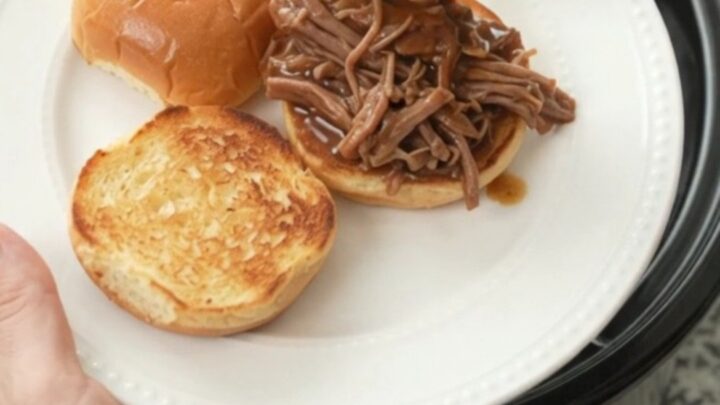
- Serve and EnjoySpoon the shredded beef and gravy onto plates or into slider buns. Serve hot, with extra gravy spooned over the top.Look for The beef should be glossy with gravy and the herbs fragrant.Tip Toasted brioche slider buns are a great choice for serving.
The beef shreds effortlessly with two forks, revealing moist, tender strands coated in glossy gravy. The garlic cloves are soft and sweet, and the herbs have infused the sauce with their essence. The final dish is a hearty, comforting pile of beef and gravy, ready to be spooned over potatoes or piled onto buns.
Common mistakes
One common mistake is opening the slow cooker too often. Every time the lid is lifted, heat escapes and adds 20 minutes to the cooking time. Trust the process and resist the urge to peek. Another pitfall is using a lean cut of beef, such as sirloin, which will dry out during long cooking.
Stick with chuck roast or another well-marbled cut. Finally, don't skip the resting time before shredding—this allows the juices to redistribute and keeps the meat moist. If the gravy seems too thin at the end, you can simmer it on the stovetop to reduce it, but avoid cornstarch unless absolutely necessary.
How to tell it’s done
The roast is done when it is fork-tender and easily shreds. Insert a fork into the thickest part of the meat—it should slide in with little resistance, and the meat should begin to fall apart.
The internal temperature of the beef should reach at least 145°F (63°C), but because it cooks low and slow, it will likely be much higher, which is fine for this cut.
The gravy should be thick and glossy, and the garlic cloves should be soft and spreadable. If the meat is still tough, continue cooking and check again in 30-minute intervals.
- Steaks, chops and roasts: 145°F (63°C) in the thickest part, then a 3-minute rest
Up next · Part 3 of 3
4 variations · storage & make-ahead · 5 answers · printable card
Tips, FAQ & printable recipe (Part 3)← Back to the ingredients (Part 1)