Dinner · Part 2 of 3: Instructions
Roasted Whole Vegetable Pipe Rigate Pasta Step-by-step instructions
- Prep
- Cook
- Total
- Serves
- 4
Before you start
Before starting, halve the baby eggplants and sweet red peppers, quarter the onion, and have the whole tomatoes ready. Bring a large pot of salted water to a boil for the pasta, but do not add the pasta until the vegetables are nearly done. Measure the olive oil and shred the mozzarella if using a block.
Set out a potato masher, a wooden spoon, and a colander. Have the fresh parsley chopped and ready for the final garnish. This recipe moves quickly once the vegetables are tender, so having everything prepped in advance makes the process seamless.
Ingredients at a glance (8)
- 2 baby eggplants, halved
- 2 sweet red peppers, halved and seeded
- 4 whole tomatoes
- 1 onion, quartered
- 3 tbsp olive oil
- 10 oz pipe rigate pasta
- 1 cup shredded mozzarella cheese
- Fresh parsley, chopped, for garnish, to taste
Instructions
Roast and Mash
- Roast the whole vegetablesPlace the halved baby eggplants, halved sweet red peppers, whole tomatoes, and quartered onion in a large skillet. Drizzle with olive oil and toss gently to coat. Cover the skillet with a glass lid. Set over medium heat and cook, without stirring, until the vegetables are tender and the skins soften, about 20 minutes. The tomatoes will release their juices, creating a shallow braising liquid.Look for The vegetables are soft and collapsed, with steam condensing under the lid.Tip Keep the heat medium-low so the vegetables sweat rather than brown, which keeps the sauce sweet and mellow.
- Mash into a rustic sauceRemove the lid. Use a potato masher to crush the softened vegetables directly in the skillet until you have a chunky, rustic sauce. Some larger pieces are welcome. Continue mashing until the mixture is uniform and the tomatoes have broken down completely. The sauce should be thick and glossy, with visible bits of eggplant and pepper.Look for The sauce is thick and jammy, with no large chunks remaining.Tip Do not over-mash; a little texture makes the final dish more interesting.
After this phase, the vegetables are soft and collapsed, with a sweet, jammy aroma filling the kitchen. The sauce is thick and rustic, with no large chunks. The skillet should have a shallow layer of glossy liquid from the tomatoes and onions.
The vegetables should be fully tender and easily mashed, with no resistance. Taste the sauce and adjust seasoning if needed, though the natural sweetness should be prominent. This is the foundation of the dish, so take your time to get it right.
Boil and Combine
- Boil the pastaBring a large pot of salted water to a boil. Add the pipe rigate pasta and cook until al dente according to the package directions, about 9 minutes. Reserve 1 cup of the starchy cooking water before draining. Drain the pasta in a colander, but do not rinse it; the starch helps the sauce cling.Look for The pasta is tender but still has a slight bite in the center.Tip Salt the pasta water generously; it is the only chance to season the pasta itself.
- Combine pasta and sauceAdd the drained pipe rigate to the skillet with the mashed vegetable sauce. Pour in about 1/2 cup of the reserved cooking water. Toss everything together with a wooden spoon, allowing the sauce to fill the hollow pasta shells. Cook over medium heat for 1 to 2 minutes, stirring constantly, until the sauce thickens and coats the pasta evenly.Look for The sauce clings to the pasta and the shells are filled with sauce.Tip Add more cooking water a splash at a time if the sauce seems dry; the pasta should be glossy, not soupy.
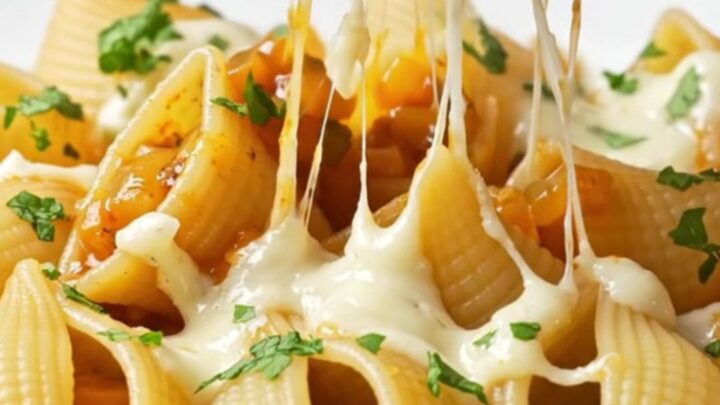
- Melt the mozzarellaSprinkle the shredded mozzarella cheese over the pasta. Continue tossing gently for another minute or two, until the cheese melts into long, stretchy strands that coat the pasta and sauce. The cheese should be fully melted and glossy, not clumpy. If the skillet looks dry, add a little more reserved pasta water.Look for The cheese is melted and pulls into long webs when lifted with a spoon.Tip Use low heat after adding the cheese so it melts slowly without becoming rubbery.
The pasta is al dente and the sauce has been combined with the pasta and a splash of cooking water. The sauce should cling to the pasta, filling the hollow shells. The mixture should be glossy and cohesive, not soupy or dry. The cheese is just beginning to melt, forming soft strands. The skillet should be over medium heat, and the pasta should be coated evenly. This is the moment to adjust the sauce consistency with additional pasta water if needed.
Melt and Garnish
- Garnish and serveRemove the skillet from the heat. Sprinkle the chopped fresh parsley over the top. Serve immediately while the cheese is still hot and stretchy. Lift a heaping spoonful to show the pasta shells overflowing with sweet vegetable sauce and melted cheese. The dish is best enjoyed right away, while the texture is at its peak.Look for The parsley adds a fresh green contrast to the golden, cheesy pasta.Tip Warm the serving plates in the oven for a few minutes so the pasta stays hot longer.
The mozzarella is fully melted and stretchy, coating the pasta in a creamy, golden layer. The dish is glossy and inviting, with the cheese pulling into long webs when lifted. The parsley adds a fresh, green contrast. The pasta is hot and ready to serve immediately. The texture should be creamy, with the sauce and cheese clinging to every shell. The aroma is rich and savory, with the sweetness of roasted vegetables coming through.
Common mistakes
A common mistake is overcooking the vegetables on high heat, which can cause them to brown and turn bitter. Keep the heat medium-low and let them steam gently under the lid. Another pitfall is adding too much pasta water at once, which can make the sauce thin and watery.
Add it in small splashes until the sauce reaches a glossy, clinging consistency. Finally, do not skip the starchy pasta water—it is essential for helping the sauce coat the pasta. Without it, the dish can be dry and clumpy.
How to tell it’s done
The vegetables are done when they are completely tender and can be easily crushed with a potato masher; the eggplants should be soft enough to collapse with light pressure. The sauce should be thick and glossy, with no large chunks remaining.
The pasta is done when it is al dente—tender but still firm to the bite. The mozzarella is melted when it forms long, stretchy strands when you lift a spoonful of pasta. The dish is ready to serve immediately, while the cheese is hot and the sauce is glossy.
Up next · Part 3 of 3
4 variations · storage & make-ahead · 5 answers · printable card
Tips, FAQ & printable recipe (Part 3)← Back to the ingredients (Part 1)