Dinner · Part 2 of 3: Instructions
Roasted Vegetable Pipe Rigate Pasta Step-by-step instructions
- Prep
- Cook
- Total
- Serves
- 4
Before you start
Before starting, gather all the ingredients and equipment. Preheat the oven to 400°F (200°C) and have a deep oven-safe pan or Dutch oven ready. Wash the vegetables, but leave them whole — no peeling or chopping needed. Measure out the olive oil, salt, pepper, and water.
Cook the pasta just before you're ready to combine everything, so it stays hot. Reserve a cup of the starchy cooking water before draining. Have the mozzarella shredded and the dill chopped. The entire dish comes together in three phases: roasting, mashing, and combining.
Ingredients at a glance (12)
- 1 large eggplant (about 1 lb)
- 2 sweet red peppers
- 4 ripe tomatoes
- 2 yellow onions, halved
- 3 tbsp olive oil
- 1 tsp kosher salt
- 1/2 tsp black pepper
- 1/2 cup water
- 10 oz pipe rigate pasta
- 1 cup starchy pasta cooking water
- 1 cup shredded mozzarella
- 1/4 cup fresh dill, chopped
Instructions
Roast the Whole Vegetables
- Roast the whole vegetablesPlace the whole eggplant, sweet red peppers, tomatoes, and halved onions in a deep oven-safe pan. Drizzle with olive oil and season with salt and black pepper. Turn the vegetables to coat them lightly. Add the water to the pan, cover with a glass lid or foil, and roast at 400°F (200°C) for 30 to 35 minutes, until the eggplant is collapsed and the pepper skins are blistered. The steam trapped under the lid will help the vegetables soften evenly.Look for The vegetables are tender and the skins of the peppers are blistered and charred in spots.Tip Keep the vegetables whole — they release moisture as they roast, creating a rich base for the sauce.
- Simmer until fully tenderReduce the oven temperature to 350°F (175°C). Keep the pan covered and continue to cook for another 10 to 15 minutes, until the eggplant is completely soft and the tomatoes have burst. The liquid should be gently bubbling. Check that the vegetables are fork-tender throughout; if they need more time, cover and cook in 5-minute increments.Look for The vegetables are very soft and the liquid has reduced slightly into a savory broth.Tip If the pan looks dry, add a splash of water to keep the vegetables from scorching.
The vegetables are tender and the skins of the peppers are blistered and charred in spots. The eggplant has collapsed and the tomatoes have burst, releasing their juices. The pan has a shallow layer of savory liquid. The aroma is sweet and roasted. Before moving on, make sure the vegetables are fork-tender throughout; if not, return the pan to the oven for another 5 to 10 minutes.
Mash and Combine
- Mash into rustic sauceRemove the pan from the oven and let it cool for 5 minutes. Using a potato masher, crush the roasted vegetables directly in the pan until you have a chunky, rustic puree. Leave some larger pieces for texture. The sauce should be thick and jammy, with the natural sweetness of the peppers and tomatoes coming through. Season with additional salt and pepper if needed.Look for The sauce is thick and chunky, with no large vegetable pieces remaining.Tip Mash gently — you want a rustic texture, not a smooth puree.
- Cook the pastaBring a large pot of generously salted water to a rolling boil. Add the pipe rigate pasta and cook according to the package directions until al dente, about 10 to 12 minutes. Reserve 1 cup of the starchy pasta cooking water before draining. Drain the pasta well but do not rinse it — the starch on the surface helps the sauce cling to the shells.Look for The pasta is tender but still has a slight bite in the center.Tip Taste the pasta a minute before the suggested time — al dente is key.
- Combine pasta and sauceAdd the drained pipe rigate pasta to the pan with the mashed vegetable sauce. Pour in the reserved starchy cooking water. Stir gently to coat every shell with the sauce. The starchy water will loosen the sauce and help it cling to the pasta. Heat over medium-low, stirring occasionally, until the sauce is bubbling and the pasta is fully coated.Look for The sauce has thickened slightly and is coating the pasta shells evenly.Tip Add the pasta water gradually — you may not need all of it if the sauce is already loose.
The vegetables have been mashed into a chunky, rustic sauce with no large pieces. The pasta is cooked al dente and drained, and the reserved cooking water is ready. The sauce is thick and jammy, with a deep red-amber color.
The pan is over medium-low heat, and the pasta is being coated with the sauce. The starchy water is being added gradually to loosen the sauce to the right consistency.
Finish and Serve
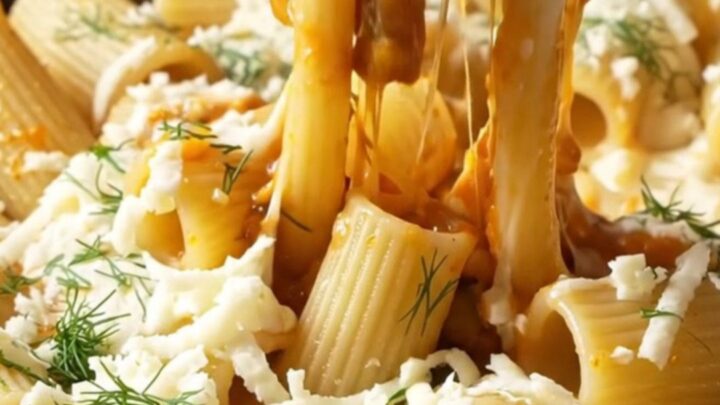
- Add mozzarella and dillSprinkle the shredded mozzarella over the pasta. Stir continuously for 1 to 2 minutes, until the cheese is melted and forms long, gooey ropes that weave through the shells. Fold in the chopped fresh dill. The dill should be added just before serving so it stays bright and fragrant. Taste and adjust seasoning with salt and pepper.Look for The cheese is fully melted and stretches when you lift the spoon.Tip Stir gently to avoid breaking the pasta shells.
- Serve hotSpoon the pasta into warm bowls immediately. Garnish with a few extra dill fronds and a crack of black pepper, if desired. Serve piping hot, while the cheese is still stretchy and the sauce is glossy. The pasta is best eaten right away — the sauce thickens as it cools, so enjoy it while it's at its most luscious.Look for The pasta is steaming and the cheese is molten.Tip Warm the bowls in the oven or with hot water to keep the pasta hot longer.
The mozzarella is fully melted and stretches into long ropes when lifted. The dill has been folded in, and the pasta is glossy and well-coated. The dish is piping hot and ready to serve. The sauce should not be watery, and the cheese should be evenly distributed. The pasta shells are filled with the vegetable sauce, and every bite has a hint of fresh dill.
Common mistakes
One common mistake is overcooking the vegetables until they become mushy and watery — they should be tender but still hold their shape enough to mash into a chunky puree. Another is using too much pasta water, which can make the sauce thin and soupy; add it gradually and only as needed.
Avoid stirring the pasta too vigorously once the cheese is added, as this can break the shells and turn the dish into a mush. Finally, don't skip the resting time after roasting — letting the vegetables cool slightly makes them easier to handle and prevents the sauce from being too hot when you mash it.
How to tell it’s done
The dish is done when the pasta is al dente and the sauce has thickened to a chunky, glossy consistency. The mozzarella should be fully melted and stretchy, creating long cheese ropes when you lift a spoonful. The sauce should coat the pasta shells evenly, with no watery liquid pooling at the bottom of the pan.
The fresh dill should be bright green and fragrant. Taste a spoonful to check for seasoning — it should be savory, slightly sweet, and well-balanced. Because there are no raw proteins, there is no minimum internal temperature to check; rely on visual and textural cues.
Up next · Part 3 of 3
4 variations · storage & make-ahead · 5 answers · printable card
Tips, FAQ & printable recipe (Part 3)← Back to the ingredients (Part 1)