Dinner · Part 2 of 3: Instructions
Roasted Vegetable and Burrata Pasta Step-by-step instructions
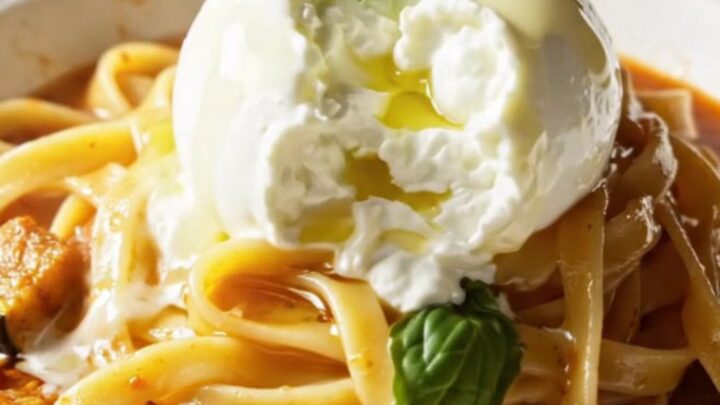
- Prep
- Cook
- Total
- Serves
- 4
Before you start
Before starting, heat the oven to 400°F (200°C) and line a baking sheet with parchment paper for easy cleanup. Have all the vegetables washed and chopped: the tomatoes halved, the eggplant and zucchini diced into even pieces, the garlic cloves peeled, and the red onion cut into wedges.
Measure out the olive oil, balsamic vinegar, oregano, and salt. Set the blender nearby, and bring a large pot of salted water to a boil for the pasta. Finally, take the burrata out of the fridge so it loses some of its chill, but keep it cold until serving.
Ingredients at a glance (15)
- 6 Roma tomatoes, halved
- 1 medium eggplant, diced
- 1 medium zucchini, diced
- 4 cloves garlic, whole
- 1 medium red onion, cut into wedges
- 1/4 cup olive oil
- 2 tbsp balsamic vinegar
- 1 tsp dried oregano
- 1 tsp salt
- 1/2 cup fresh basil leaves, plus more for garnish
- 1/2 cup grated parmesan cheese
- 12 oz fettuccine pasta
- 1/2 cup starchy pasta water
- 8 oz burrata cheese
- 1 tbsp extra virgin olive oil, for drizzling
Instructions
Roast and Blend
- Roast the VegetablesHeat the oven to 400°F (200°C). On a baking sheet, combine the tomatoes, eggplant, zucchini, garlic, and red onion. Drizzle with olive oil and balsamic vinegar, then sprinkle with oregano and salt. Toss everything to coat evenly. Spread the vegetables in a single layer and roast for 25–30 minutes, until the tomatoes are charred and the vegetables are tender and caramelized.Look for The vegetables should be soft, with charred edges and a sweet aroma filling the kitchen.Tip Keep the garlic cloves whole so they soften and sweeten without burning.
- Blend the SauceScrape the roasted vegetables and any juices from the baking sheet into a blender. Add the fresh basil and grated parmesan. Pulse until the mixture forms a thick, vibrant sauce with a few small chunks for texture. Taste and adjust salt if needed.Look for The sauce should be thick, glossy, and smell intensely of roasted vegetables.Tip Don't over-blend; a little texture makes the sauce feel rustic and hearty.
The vegetables should be tender, with charred edges and a sweet, caramelized aroma. The tomatoes will have released their juices, creating a syrupy glaze on the baking sheet.
After blending, the sauce should be thick, vibrant, and smell intensely of roasted vegetables and basil. Check that the sauce is well seasoned before moving on.
Cook and Combine
- Cook the PastaBring a large pot of salted water to a boil. Add the fettuccine and cook until al dente according to the package directions. Reserve 1/2 cup of the starchy pasta water before draining. Drain the pasta but do not rinse it.Look for The pasta should be tender but still firm to the bite.Tip Reserve more pasta water than you think you'll need; it's the key to a silky sauce.
- Combine Pasta and SaucePour the roasted vegetable sauce into a large skillet set over medium heat. Add the drained fettuccine and the reserved pasta water. Toss everything together for 1–2 minutes, until every strand is glossy and coated and the sauce is bubbling hot.Look for The sauce should cling to the pasta, and the skillet should be sizzling.Tip Use tongs to toss the pasta gently, ensuring the sauce coats evenly without breaking the noodles.
The fettuccine should be al dente and the skillet should be sizzling as the sauce and pasta water come together. The sauce should coat the noodles evenly, leaving no dry spots, and have a glossy, silky appearance. The aroma should be rich and savory, with the sweetness of the roasted vegetables coming through.
Finish and Serve
- Plate and GarnishDivide the pasta among wide bowls. Tear the burrata into pieces and place it over the top of each bowl. Drizzle with extra virgin olive oil and garnish with fresh basil leaves. Serve immediately while the pasta is hot.Look for The burrata should be creamy and start to melt into the hot pasta.Tip Tear the burrata just before serving to keep it cold and creamy.
The burrata should be torn into pieces and placed over the hot pasta, where it begins to soften and melt. The extra virgin olive oil should drizzle easily over the top, and the fresh basil should be bright and green. The dish should look inviting, with creamy white burrata contrasting against the red sauce and green basil.
Common mistakes
One common mistake is overcrowding the baking sheet, which causes the vegetables to steam instead of roast. Spread them in a single layer with space between pieces. Another is over-blending the sauce until it becomes too smooth and loses its rustic character; pulse just until it comes together.
Also, be careful not to overcook the pasta—al dente is essential because it will continue to cook slightly in the sauce. Finally, don't skip the pasta water; it's what helps the sauce cling to the noodles and achieve the right consistency.
How to tell it’s done
The pasta is done when it's al dente—tender but still firm to the bite. The sauce is ready when the vegetables are soft and lightly charred, and the blended mixture is thick and glossy.
When everything is combined, the sauce should coat the pasta evenly and be bubbling hot. There is no protein in this recipe, so no internal temperature check is needed. The dish is ready to serve as soon as the burrata is torn over the top and begins to melt.
Up next · Part 3 of 3
4 variations · storage & make-ahead · 5 answers · printable card
Tips, FAQ & printable recipe (Part 3)← Back to the ingredients (Part 1)