Dinner · Part 2 of 3: Instructions
Roasted Lemon Chicken with Crispy Baby Potatoes Step-by-step instructions
- Prep
- Cook
- Total
- Serves
- 4
Before you start
Before beginning the roasting process, gather all ingredients and equipment on the counter. Remove the whole chicken from the refrigerator about thirty minutes before cooking to take the chill off, which helps it cook more evenly.
Wash and thoroughly pat dry the baby potatoes, then slice any larger ones in half so they cook at the same rate. Finely chop a portion of the fresh rosemary to mix into the softened butter, and slice the lemons into thick wheels.
Ingredients at a glance (5)
- 1 whole roasting chicken (about 4-5 lb)
- 1 1/2 lb baby potatoes, washed and dried
- 1/2 cup butter, softened
- 4 fresh rosemary sprigs
- 2 lemons, sliced
Instructions
Prep and Seasoning
- Prepare the Chicken and PotatoesPreheat the oven to 400°F (200°C). Pat the chicken completely dry inside and out with paper towels to ensure the skin crisps up perfectly. Place the baby potatoes in a bowl and set aside. Avoid rinsing the poultry to prevent splashing water around the kitchen sink. Thoroughly clean all prep surfaces, utensils, and hands immediately after handling the raw chicken.Look for The chicken skin should feel dry to the touch.Tip Dry skin is the absolute key to achieving a beautifully crispy texture.
- Apply Herb ButterFinely chop one tablespoon of fresh rosemary leaves and mix them with the softened butter in a small bowl. Gently loosen the skin over the chicken breasts and rub half of the herb butter directly onto the meat underneath. Rub the remaining herb butter all over the outside of the chicken skin, then stuff the cavity with a few lemon slices and rosemary sprigs.Look for The chicken should be evenly coated in butter.Tip Stuffing the cavity helps steam the meat from the inside, keeping it juicy.
At the end of this preparation phase, the whole chicken is thoroughly dried and generously coated with the prepared herb butter mixture. The cavity is stuffed with aromatic lemon slices and fresh rosemary sprigs. The baby potatoes are tossed and ready to go. The kitchen should smell faintly of fresh, piney rosemary and bright, zesty lemon, indicating that the aromatic base is fully assembled and prepared for the oven.
Roasting and Basting
- Assemble in the Roasting PanPlace the prepared chicken breast-side up in the center of a heavy dark roasting pan. Arrange the baby potatoes and remaining lemon slices around the chicken in a single layer. Scatter the remaining fresh rosemary sprigs over the potatoes. Toss the potatoes gently in the pan to coat them lightly with any butter that drips down.Look for Potatoes should be in a single layer for even roasting.Tip Do not overcrowd the pan, or the potatoes will steam instead of roast.
- Roast and BasteTransfer the roasting pan to the preheated oven. Roast for about 70 to 75 minutes. Every 20 minutes, carefully baste the chicken and the baby potatoes with the melted herb butter and savory pan juices that accumulate at the bottom of the roasting pan using a spoon or baster.Look for The potatoes should look glossy and the chicken skin golden.Tip Basting ensures the potatoes absorb maximum flavor and develop a rich glaze.
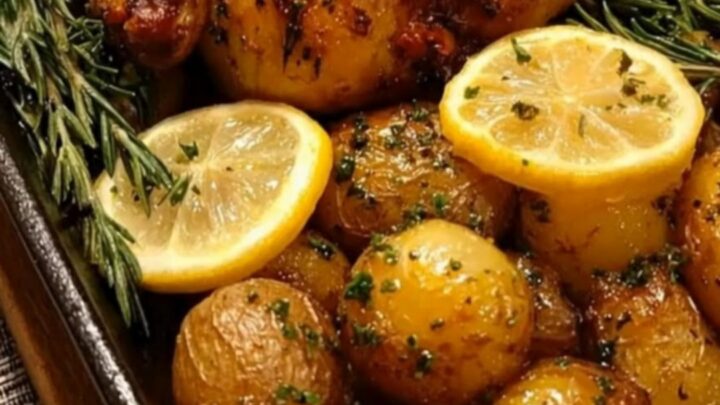
By the end of the roasting phase, the chicken skin has turned a deep, golden-brown color and looks visibly crispy. The baby potatoes surrounding the chicken are tender when pierced with a fork and glisten with a coating of rendered chicken fat and herb butter. The lemon slices have caramelized and slightly charred around the edges, and a rich, savory aroma fills the entire kitchen, accompanied by the gentle sizzling sound of the pan juices.
Carving and Serving
- Verify Doneness and RestInsert an instant-read meat thermometer into the thickest part of the chicken thigh without touching the bone. Ensure the thermometer registers a safe internal temperature of 165°F (74°C). Once fully cooked, carefully transfer the chicken to a clean cutting board and let it rest for 15 minutes before carving to allow the juices to redistribute.Look for The juices should run completely clear when the thigh is pierced.Safe temperature 165°F (74°C) internal temperature (poultry)Tip Resting the meat prevents the juices from running out during carving.
- Carve and ServeUse a sharp carving knife to slice the roasted chicken into portions. Serve the juicy chicken slices alongside the crispy, butter-basted baby potatoes and caramelized lemon slices, drizzling the remaining pan juices over the top before serving.Look for The chicken skin should make a crackling sound when sliced.Tip Serve immediately while the potatoes are hot and the skin is crispy.
At the final checkpoint, the chicken has rested to allow the juices to redistribute throughout the meat, ensuring a moist texture upon carving. The internal temperature has been verified with a meat thermometer to ensure food safety.
As the carving knife slices through the breast and thighs, the skin makes a distinct crackling sound, and clear juices run onto the cutting board, ready to be served alongside the piping hot, glossy baby potatoes.
Common mistakes
One common mistake is roasting a chicken that is still damp, which causes the skin to steam rather than crisp up; always pat the skin thoroughly dry with paper towels.
Another error is failing to let the chicken rest after roasting; carving immediately causes all the flavorful juices to run out onto the board, leaving the meat dry. Finally, overcrowding the roasting pan with too many potatoes can prevent proper air circulation, resulting in soggy potatoes instead of crispy ones.
How to tell it’s done
To determine absolute doneness, insert an instant-read meat thermometer into the thickest part of the chicken thigh, avoiding the bone. The chicken is fully cooked and safe to consume when the thermometer registers a minimum internal temperature of 165°F (74°C).
Additionally, the juices should run completely clear when the thigh joint is pierced, and the drumsticks should move easily in their sockets, indicating the connective tissue has broken down.
- Poultry: 165°F (74°C) in the thickest part
Up next · Part 3 of 3
3 variations · storage & make-ahead · 4 answers · printable card
Tips, FAQ & printable recipe (Part 3)← Back to the ingredients (Part 1)