Dinner · Part 2 of 3: Instructions
Pepperoncini Ranch Brown Gravy Pork Shoulder Step-by-step instructions
- Prep
- Cook
- Total
- Serves
- 8
Before you start
Before starting, pat the pork shoulder dry with paper towels. Measure out the ranch mix, au jus mix, and brown gravy. Cut the butter into small pats.
If using brioche slider buns, set them out to come to room temperature. No need to preheat the slow cooker—just layer everything in the insert. Have a cutting board and two forks ready for shredding.
Ingredients at a glance (6)
- 4 lb boneless pork shoulder roast (Boston butt)
- 1 oz dry ranch dressing mix
- 1 oz dry au jus gravy mix
- 10 whole pepperoncini peppers
- 1 cup brown gravy (canned or jarred)
- 2 tbsp unsalted butter, cut into pats
Instructions
Layer and Season
- Layer the RoastPlace the pork shoulder roast in the center of a 6- to 7-quart slow cooker. Sprinkle the dry ranch dressing mix and dry au jus gravy mix evenly over the top of the roast. Scatter the whole pepperoncini peppers around and on top of the roast.Look for The roast should be well coated with the seasoning mixes and surrounded by peppers.Tip If the roast is larger than the slow cooker, trim it to fit or cut it into large chunks.
- Add the Gravy and ButterPour the brown gravy over the roast, letting it flow around the sides. Dot the top of the roast with the pats of unsalted butter.Look for The gravy should pool around the roast, and the butter pats should sit on top.Tip No need to stir—the slow cooker will blend the flavors as it cooks.
The roast sits in the center of the slow cooker, dusted with the ranch and au jus mixes. The pepperoncini are scattered around, and the gravy pools at the base. The butter pats melt into the crevices. The scene is raw and promising—a blank canvas ready for hours of gentle cooking.
Slow-Cook Until Tender
- Slow-Cook Low and LongCover the slow cooker and cook on LOW for 8 to 10 hours, or on HIGH for 5 to 6 hours, until the pork is fork-tender and shreds easily. The internal temperature should reach at least 145°F (63°C), but for shredding, cook until it reaches 195°F (91°C) for best results. Let it rest for 3 minutes before slicing.Look for The meat should be falling apart when pierced with a fork, and the gravy should be bubbling gently around the edges.Safe temperature 145°F (63°C) internal temperature (steaks, chops and roasts)Tip For maximum tenderness, cook on LOW—the longer time breaks down the collagen more thoroughly.
- Shred the PorkRemove the roast from the slow cooker and place it on a cutting board. Let it rest for at least 3 minutes. Using two forks, shred the pork into bite-sized pieces, discarding any large pieces of fat. Return the shredded pork to the slow cooker and stir to coat with the gravy.Look for The pork should pull apart easily with little resistance, and the gravy should cling to the shreds.Safe temperature 145°F (63°C) internal temperature (steaks, chops and roasts)Tip If the gravy seems thin, simmer the pork in the slow cooker on HIGH with the lid off for 15 minutes to reduce.
After 8 to 10 hours on low, the kitchen smells rich and savory. The gravy has darkened to a mahogany hue, and the pepperoncini have softened. The pork is deeply browned and gives way easily when pressed with a fork. Bubbles break the surface, and the meat is surrounded by a glossy, seasoned sauce.
Shred and Serve
- Serve on Brioche BunsToast the brioche slider buns, if desired. Pile the shredded pork onto the buns and spoon extra gravy over the top. Serve immediately.Look for The pork should be moist and glossy with gravy, and the buns should be sturdy enough to hold the filling.Tip For a crunch, add a few sliced pepperoncini on top of each slider.
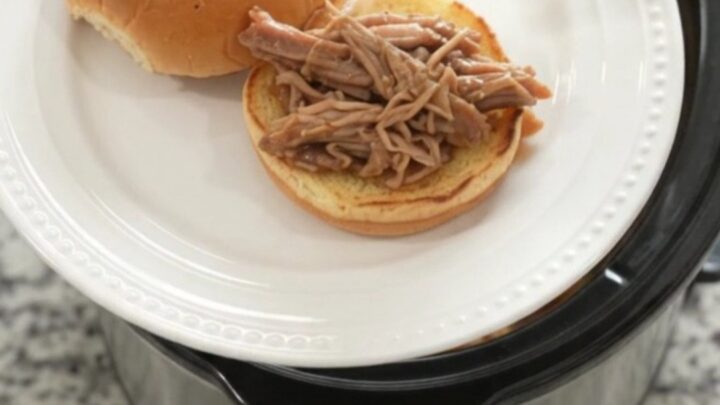
The shredded pork glistens with gravy, each strand moist and flavorful. The pepperoncini are scattered throughout, adding pops of tangy heat.
Piled on toasted brioche sliders, the meat is the star—tender, juicy, and utterly satisfying. The extra gravy is spooned over the top, and the first bite is a perfect balance of savory, tangy, and rich.
Common mistakes
One common mistake is using a lean cut like pork loin—it will dry out. Stick with pork shoulder. Another is not cooking long enough; low and slow is key.
Also, resist the urge to stir during cooking, as this can break up the meat too early. Finally, don't skip the resting time before shredding; it allows the juices to redistribute, making the meat more tender.
How to tell it’s done
The pork is done when it is fork-tender and shreds easily. The internal temperature should be at least 145°F (63°C) for food safety, but for shredding, cook until it reaches 195°F (91°C) to fully break down collagen.
The gravy should be bubbling gently and the meat should look moist and glossy. If the pork is still tough, continue cooking for another 30 minutes and check again.
- Steaks, chops and roasts: 145°F (63°C) in the thickest part, then a 3-minute rest
Up next · Part 3 of 3
4 variations · storage & make-ahead · 5 answers · printable card
Tips, FAQ & printable recipe (Part 3)← Back to the ingredients (Part 1)