Dinner · Part 2 of 3: Instructions
Parmesan Garlic Bacon Cheeseburger Lasagna Step-by-step instructions
- Prep
- Cook
- Total
- Serves
- 8
Before you start
Before beginning the assembly, ensure that all your ingredients are prepped and measured. Cook the bacon until it is crispy and set aside to cool before crumbling it into small pieces.
Boil the pasta sheets according to the package directions, drain them, and lay them flat on a piece of parchment paper to prevent them from sticking together while you prepare the sauce.
Having your station ready with the beef, bacon, sauce, and cheese organized will make the layering process smooth and efficient.
Ingredients at a glance (7)
- 2 lb ground beef
- 8 slices bacon, cooked and crumbled
- 3 cups garlic béchamel, store-bought or made ahead
- 1/2 cup parmesan cheese, grated
- 12 sheets pasta layers, boiled
- 2 cups cheddar cheese, shredded
- fresh parsley, for serving
Instructions
Cooking the Meat and Prepping Sauce
- Brown the Ground Beef and Season SauceHeat a large skillet over medium-high heat. Add the ground beef and cook until thoroughly browned and sizzling, breaking it into small crumbles, until the internal temperature reaches at least 160°F (71°C). Drain off any excess grease from the pan. In a separate bowl, warm the garlic béchamel and stir in the grated parmesan cheese until fully incorporated and smooth.Look for The beef is completely browned with no pink remaining, sizzling and reaching safe temperature.Safe temperature 160°F (71°C) internal temperature (ground meat)Tip Drain excess fat well so the assembled lasagna stays structured and not greasy.
The ground beef should be deeply browned, crumbly, and completely cooked through to a safe 160°F (71°C) with excess fat removed. The garlic béchamel should be warm, velvety, and evenly combined with the parmesan into a fragrant, smooth cream that coats a spoon effortlessly.
Building the Lasagna Layers
- Layer the LasagnaPreheat the oven to 375°F (190°C). Spread a thin spoonful of the garlic béchamel across the bottom of a 9x13 inch baking dish. Lay down a layer of boiled pasta layers, followed by a generous scoop of browned ground beef, a sprinkle of crispy bacon, a drizzle of the garlic béchamel, and a handful of shredded cheddar cheese. Repeat these layers until all ingredients are used, finishing with a generous layer of cheddar and bacon across the top.Look for The dish is evenly layered to the top edge and fully covered in shredded cheddar.Tip Spread the sauce right to the corners to keep the pasta edges moist during baking.
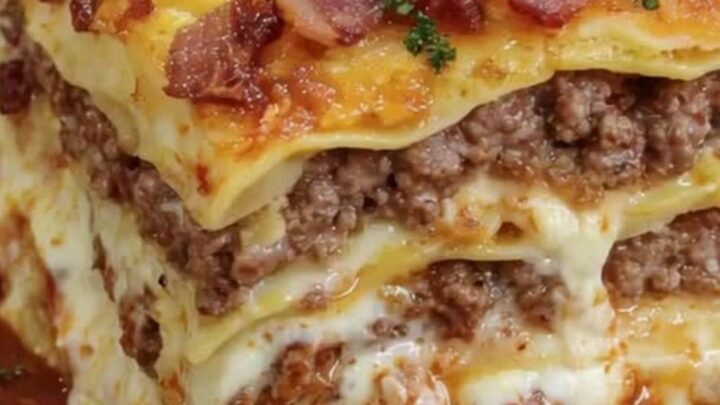
Check that the bottom of the baking dish is lightly sauced to prevent pasta from adhering to the pan. Each tier should display an even distribution of beef crumbles, crispy bacon bits, creamy garlic sauce, and shredded cheddar, finishing with a dense blanket of cheddar cheese across the top surface.
Baking, Broiling, and Resting
- Bake, Broil, and RestBake uncovered at 375°F (190°C) for 25 to 30 minutes until bubbling throughout. Switch the oven to broil for 1 to 2 minutes to achieve a deeply toasted, bubbling cheddar crust. Remove from the oven carefully. Let the lasagna rest on a flat surface for 10 minutes to set the molten layers, then sprinkle fresh parsley over the top before slicing into tall squares.Look for The cheddar crust is bubbly and toasted with molten cheese underneath.Tip Do not skip the 10-minute resting period to ensure clean, tall slices that hold their shape.
The surface should exhibit active, vigorous bubbling around the perimeter with an amber-toasted cheese crust across the center from the broiler. After sitting undisturbed on the counter for ten minutes, the casserole will settle and feel firm enough to slice cleanly without collapsing.
Common mistakes
Avoid overcooking the pasta sheets during the boiling stage, as they will turn mushy once baked in the liquid-heavy sauce. Another common error is using too little sauce; if the pasta is not adequately coated, it will dry out in the oven.
Ensure you spread the béchamel evenly between every layer to maintain the signature creaminess. Finally, do not skip the rest period after removing the dish from the oven, as it allows the internal layers to firm up, ensuring that the squares hold their shape when served.
How to tell it’s done
The lasagna is finished when the internal temperature of the dish reaches a uniform heat and the top layer of cheese is melted, bubbling, and golden brown. You will know it is ready when you can easily insert a knife through the layers with minimal resistance, indicating the pasta is tender.
The ground beef, having been browned to 160°F (71°C) before assembly, ensures food safety, while the final bake time ensures all components reach a high enough temperature for a cohesive, hot, and satisfying meal.
- Ground meat: 160°F (71°C) in the thickest part
Up next · Part 3 of 3
2 variations · storage & make-ahead · 3 answers · printable card
Tips, FAQ & printable recipe (Part 3)← Back to the ingredients (Part 1)