Dinner · Part 1 of 3: Ingredients
Pan-Seared Ribeye Steak with a Golden Crust in 20 Minutes
- Prep
- Cook
- Total
- Serves
- 2
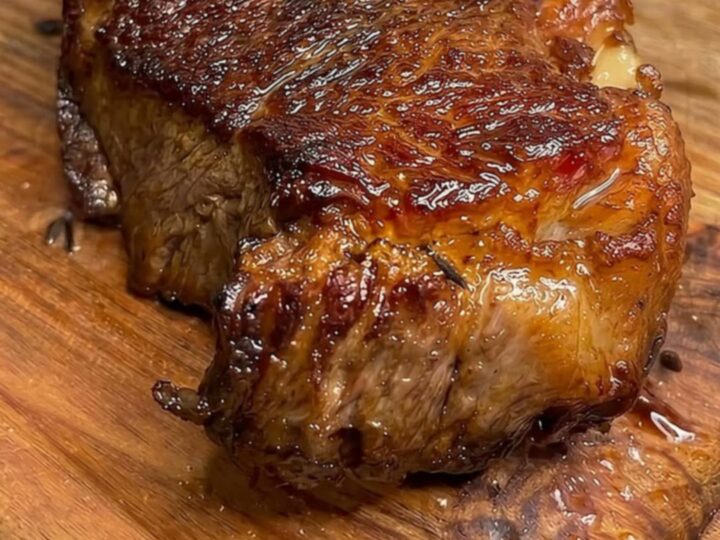
A thick ribeye, a cast-iron pan and a little patience: that is the whole secret. In about twenty minutes the outside turns deep golden and crackling while the center stays tender, juicy and pink. Slice into it and the steam rises exactly the way it should. This is the stovetop method that makes any evening feel like steakhouse night.
Pan-searing is the most reliable way to cook a steak indoors, and the ribeye is the cut built for it. Its generous marbling melts as it cooks, basting the meat from within and feeding the pan with flavor. The method here is deliberately simple: dry the surface, season with salt and pepper, heat a heavy skillet until it shimmers, and sear undisturbed on each side.
A thermometer takes out the guesswork, a short rest locks in the juices, and a sharp knife turns out thick slices with a dark crust and an even pink center. Nothing about it is fussy, and every step matters.
Ingredients
- 1 lb boneless ribeye steak, about 1 1/2 inches thick
- 1 1/2 tsp kosher salt
- 1 tsp coarsely ground black pepper
- 1 tbsp high-heat neutral oil, such as avocado or canola
Why this recipe works
Browning is chemistry, not luck. When the surface of the meat is thoroughly dry and the pan is very hot, the proteins and natural sugars on the outside race through the Maillard reaction, building the hundreds of aromatic compounds that read as deep, roasted, beefy flavor.
Moisture is the enemy: water on the surface boils at 212°F and holds the meat there, steaming instead of searing, which is why patting the steak dry is the single most important preparation step in the recipe.
Cast iron earns its place because it stores heat and gives it back instantly. When a cold steak lands in the pan, the surface temperature drops; a heavy skillet recovers quickly, so the crust keeps forming instead of stalling. Leaving the steak undisturbed lets the browned layer set and release naturally, and finishing with a thermometer plus a real rest guarantees an interior that is evenly pink and moist rather than gray at the edges and raw at the center.
Notes and substitutions
Choose a boneless ribeye about 1 1/2 inches thick with visible marbling threaded through the muscle; that intramuscular fat is where the flavor and tenderness come from.
Kosher salt seasons most evenly because its flat crystals cling to the surface without over-salting, and coarsely ground black pepper stands up to high heat without scorching the way fine pepper can. A neutral, high-heat oil such as avocado or canola keeps the pan clean-tasting and avoids the bitterness that extra-virgin olive oil develops at searing temperature.
For equipment, a 12-inch cast-iron skillet is the workhorse here, but any heavy stainless-steel pan works if it is preheated properly. An instant-read thermometer is worth owning for this dish alone; it turns steak from guesswork into a repeatable result.
If the only steak available is bone-in, cook it a minute or two longer per side and trust the thermometer rather than the clock. Let the steak sit out no more than 30 minutes before cooking, and keep everything else simple.
- boneless ribeye steak: A bone-in ribeye or a New York strip works well; cook a bone-in steak a minute or two longer per side and check with a thermometer.
- high-heat neutral oil: Grapeseed or refined safflower oil also tolerates the high heat; avoid extra-virgin olive oil, which burns and turns bitter at searing temperature.
- kosher salt: Fine sea salt can be used, but halve the amount and season with a lighter hand, since fine salt clings more densely to the surface.
Equipment
- 12-inch cast-iron skillet
- instant-read thermometer
- paper towels
- chef's knife
- wooden cutting board
- tongs
- warm plate
Up next · Part 2 of 3
8 steps · 12 min of cooking · what to look for at each stage
Step-by-step instructions (Part 2)