Dinner · Part 2 of 3: Instructions
Pan-Seared Filet Mignon with Creamy Mashed Cauliflower Step-by-step instructions
- Prep
- Cook
- Total
- Serves
- 2
Before you start
Before beginning, gather and measure all ingredients to ensure a smooth cooking process. Pat the filet mignon steaks dry with paper towels and let them rest out of the refrigerator for at most thirty minutes.
Peel and smash the garlic cloves, and set aside the fresh rosemary. Ensure the mashed cauliflower, roasted carrots, and roasted asparagus are fully prepared and kept warm so they are ready for plating as soon as the steaks finish resting.
Ingredients at a glance (7)
- 2 (6-oz) filet mignon steaks
- 4 tbsp unsalted butter
- 3 cloves garlic, smashed
- 3 sprigs fresh rosemary, divided
- 2 cups mashed cauliflower, store-bought or made ahead
- 1 cup roasted carrots, store-bought or made ahead for serving
- 8 spears roasted asparagus, store-bought or made ahead for serving
Instructions
Searing the Steaks
- Prep the SteaksPat the filet mignon steaks dry with paper towels. Ensure the steaks rest out of the refrigerator for at most 30 minutes before cooking to take the chill off, which helps them sear more evenly in the hot skillet.Look for The surface of the steaks should be completely dry.Tip Drying the meat is key to achieving a perfect sear.
- Sear the BeefHeat a heavy cast-iron skillet over high heat until it is smoking hot. Carefully place the dry steaks into the hot skillet and sear undisturbed for 2 to 3 minutes, allowing a deep, golden-brown crust to form before flipping.Look for A loud, active sizzle indicates the pan is at the correct temperature.Tip Do not move the steaks around during the first sear.
At the end of this phase, the filet mignon steaks should have a deep, rich, golden-brown caramelized crust on both the top and bottom sides. You will hear a loud, active sizzle as the meat sears in the hot pan. The kitchen should fill with the savory, mouthwatering aroma of seared beef. Before moving to the next step, ensure the crust is even and well-defined across the surface of the meat, which indicates a successful initial sear.
Butter Basting and Resting
- Baste with Garlic ButterReduce the heat to medium-high and add the unsalted butter, smashed garlic cloves, and two rosemary sprigs to the skillet. Tilt the pan slightly and continuously spoon the foaming butter over the steaks for 2 to 3 minutes until they reach a safe internal temperature of 145°F (63°C), then remove them from the heat and let them rest for at least 3 minutes.Look for The butter should be foaming and turn a light golden brown.Safe temperature 145°F (63°C) internal temperature (steaks, chops and roasts)Tip Baste continuously to cook the steaks evenly and build flavor.
- Rest the SteaksTransfer the basted filet mignon steaks to a warm plate. Let the meat rest for at least 3 minutes to allow the hot muscle fibers to relax and the savory juices to redistribute evenly throughout the steaks before slicing or serving.Look for The steaks will look plump and release a small amount of juices.Tip Never skip resting, or the juices will run out when sliced.
In this phase, the butter will melt, foam, and turn a beautiful golden brown, releasing a rich, nutty aroma mixed with the fragrant scents of toasted garlic and rosemary. You will hear a gentle, foaming sizzle as you spoon the butter over the steaks.
After resting, the steaks will look plump and juicy, and any tight muscle fibers will have relaxed. Before proceeding, verify with a meat thermometer that the internal temperature has reached the safe level of 145°F (63°C) and the meat has rested for at least three minutes.
Assembly and Serving
- Collect the Pan JusKeep the warm garlic-herb butter and steak juices in the skillet. Gently scrape up any caramelized browned bits from the bottom of the pan to incorporate them into the rich, savory pan jus.Look for The pan juices will be glossy, fragrant, and deeply flavorful.Tip Scraping the pan lifts the deep, savory flavors into the jus.
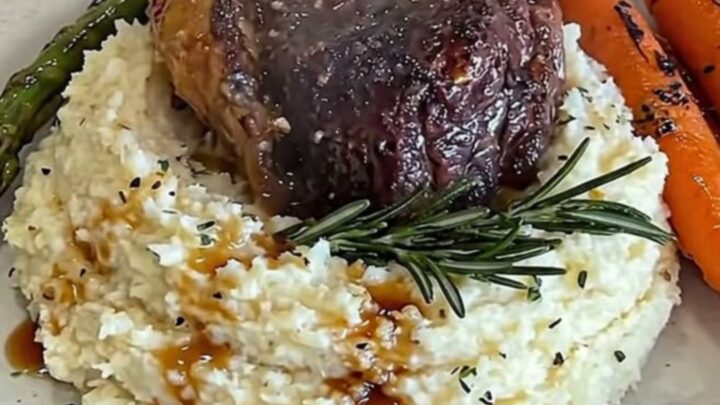
- Plate and ServeSpoon the warm mashed cauliflower onto plates, then arrange the warm roasted carrots and asparagus spears alongside. Place the rested steaks on top of the cauliflower, drizzle generously with the hot pan jus, and garnish with the remaining fresh rosemary.Look for The dish should look vibrant, steaming, and beautifully presented.Tip Warm the plates beforehand to keep the meal hot longer.
At this final stage, the pan jus is gathered from the skillet, lifting all the delicious, caramelized bits from the bottom. When plated, the hot steak sits proudly on a creamy mound of cauliflower mash, surrounded by tender roasted vegetables, all glistening under a drizzle of rich pan jus. The dish is ready to serve immediately while steaming hot.
Common mistakes
One common mistake is moving the steaks around too much after placing them in the skillet. For a perfect crust, let the meat sear undisturbed for the first few minutes. Another error is using a pan that is not hot enough, which results in steaming the meat rather than searing it, leading to a gray exterior.
Additionally, skipping the resting period is a critical mistake; cutting into the steak immediately causes all the flavorful juices to run out onto the plate, leaving the meat dry and tough.
How to tell it’s done
To guarantee the perfect level of doneness and ensure food safety, always use a digital instant-read meat thermometer inserted into the thickest part of the steak. For a safe and delicious result, cook the filet mignon until it reaches an internal temperature of 145°F (63°C), and then let the meat rest for at least three minutes.
During this resting phase, the residual heat will finish cooking the steaks while the muscle fibers relax, allowing the savory juices to redistribute evenly throughout the meat.
- Steaks, chops and roasts: 145°F (63°C) in the thickest part, then a 3-minute rest
Up next · Part 3 of 3
2 variations · storage & make-ahead · 4 answers · printable card
Tips, FAQ & printable recipe (Part 3)← Back to the ingredients (Part 1)