Dinner · Part 2 of 3: Instructions
One-Skillet Creamy Garlic Parmesan Chicken Thighs Step-by-step instructions
- Prep
- Cook
- Total
- Serves
- 4
Before you start
Before starting, ensure all ingredients are measured and ready near the stove. Pat the chicken thighs dry with paper towels to remove excess moisture, which is crucial for achieving a crispy sear.
Peel and finely mince the garlic cloves, and finely grate the parmesan cheese. Chop the fresh parsley for the final garnish. Having everything prepared beforehand prevents the garlic from burning and ensures a smooth, stress-free cooking process.
Ingredients at a glance (5)
- 4 chicken thighs
- 4 cloves garlic, minced
- 1 cup heavy cream
- 1/2 cup grated parmesan cheese
- 2 tbsp fresh parsley, chopped
Instructions
Searing the Chicken
- Sear the Chicken ThighsHeat a large cast-iron skillet over medium-high heat. Pat the chicken thighs dry. Place the chicken skin-side down in the hot skillet. Sear undisturbed for 8 to 10 minutes until the skin is golden and crispy, then flip and sear the other side for another 5 minutes. Transfer to a plate.Look for The chicken skin is deep golden-brown and releases easily from the pan.Tip Do not crowd the skillet; sear in batches if necessary to prevent steaming.
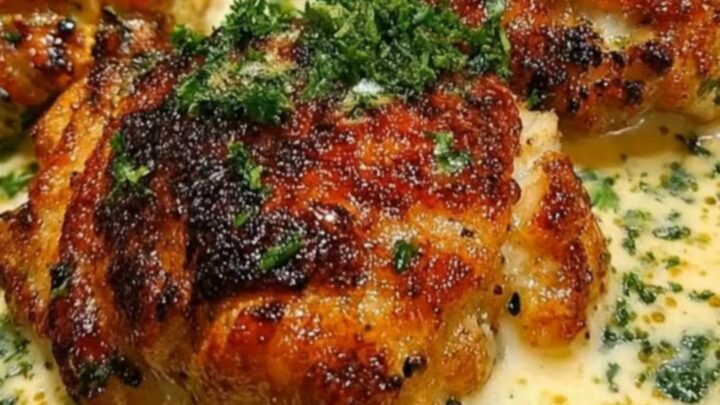
At the end of this phase, the chicken thighs should have a deep, golden-brown skin that is remarkably crispy to the touch. The kitchen will fill with the rich, savory aroma of seared poultry.
A collection of browned bits will have formed at the bottom of the cast-iron skillet, which is exactly what is needed to flavor the upcoming cream sauce. The meat itself will not be fully cooked through yet, but the exterior will be beautifully caramelized.
Creating the Cream Sauce
- Sauté the GarlicReduce the heat to medium. Leave about one tablespoon of chicken drippings in the skillet, pouring off any excess. Add the minced garlic to the skillet and sauté for 1 minute, stirring constantly to prevent burning, until fragrant and lightly golden.Look for The garlic is fragrant and pale golden, not dark brown.Tip Keep the garlic moving constantly so it cooks evenly without scorching.
- Simmer the Cream and ParmesanPour the heavy cream into the skillet, scraping up the browned bits from the bottom. Bring to a gentle simmer over medium-low heat. Stir in the grated parmesan cheese until completely melted and the sauce is smooth and velvety.Look for The cheese is fully melted and the sauce lightly coats a spoon.Tip Keep the heat low to prevent the cream from separating or boiling over.
At the end of this phase, the sauce will have transformed into a smooth, bubbling, and velvety liquid. The sharp aroma of raw garlic will have mellowed into a sweet, fragrant scent, perfectly balanced by the nutty, rich aroma of melted parmesan cheese. The sauce should be thick enough to lightly coat the back of a spoon, showing no signs of separation or clumping, ready to receive the chicken.
Simmering and Basting
- Simmer and Baste the ChickenReturn the chicken thighs and any accumulated juices to the skillet. Simmer gently for 8 to 10 minutes, spooning the cream sauce over the chicken to baste it. Cook until the chicken reaches an internal temperature of 165°F (74°C). Garnish with chopped fresh parsley before serving.Look for The sauce is bubbling gently and the chicken is tender.Safe temperature 165°F (74°C) internal temperature (poultry)Tip Use a meat thermometer to ensure the poultry is cooked safely.
At the end of this phase, the chicken thighs will be fully cooked, tender, and thoroughly coated in the luxurious sauce. Basting the chicken ensures the flavors meld completely.
The sauce will bubble gently around the chicken, having thickened slightly more to a luscious, spoonable consistency. A sprinkle of fresh green parsley over the golden chicken provides a beautiful color contrast and a fresh, clean aroma that cuts through the richness.
Common mistakes
One common mistake is crowding the skillet during the searing process. If the chicken thighs are placed too close together, they will steam instead of sear, resulting in soggy skin rather than a crispy crust.
Work in batches if the skillet is not large enough. Another frequent error is using too much heat when adding the cream and parmesan. High heat can cause the dairy to split or the cheese to clump. Keep the heat on medium-low to ensure a silky-smooth sauce.
How to tell it’s done
To determine if the dish is done, use an instant-read meat thermometer inserted into the thickest part of the chicken thighs, avoiding the bone. The poultry is safe to consume and perfectly cooked when it reaches an internal temperature of 165°F (74°C). The juices should run clear when the meat is pierced. Additionally, the cream sauce should be thick, bubbly, and cling easily to the chicken without looking oily or separated.
- Poultry: 165°F (74°C) in the thickest part
Up next · Part 3 of 3
2 variations · storage & make-ahead · 3 answers · printable card
Tips, FAQ & printable recipe (Part 3)← Back to the ingredients (Part 1)