Dinner · Part 2 of 3: Instructions
Slow-Cooker White Wine Garlic Clam Linguine Step-by-step instructions
- Prep
- Cook
- Total
- Serves
- 6
Before you start
Before starting, mince the garlic and chop the parsley. Scrub the littleneck clams under cold water, discarding any that are cracked or open. Measure the wine, olive oil, and butter.
Have the canned clams ready to open. Set out the slow cooker and all ingredients so the dump-and-go step is seamless. The total active time is about 15 minutes, with most of the cooking happening unattended.
Ingredients at a glance (9)
- 2 cans (10 oz each) baby clams with juice
- 1 cup dry Pinot Grigio
- 8 cloves garlic, minced
- 1/2 cup extra-virgin olive oil
- 1 stick butter
- 1/2 tsp red pepper flakes
- 12 scrubbed littleneck clams
- 16 oz linguine
- 1/4 cup fresh flat-leaf parsley, chopped
Instructions
Phase 1: Build the garlic wine broth
- Build the garlic wine brothIn the slow cooker, combine the canned baby clams with their juice, Pinot Grigio, minced garlic, olive oil, butter, and red pepper flakes. Stir gently to blend the butter into the liquid.Look for The butter melts into a glossy, garlicky pool with the wine and clam juice.Tip Use a 6-quart slow cooker so there is room to add the pasta and clams later.
- Slow-cook the brothCover and cook on LOW for 2 hours. The liquid should be steaming and fragrant, with the garlic softened and the butter fully incorporated.Look for The broth smells briny and garlicky, with a gentle simmer at the edges.Tip Resist lifting the lid; the heat stays steady and the flavors meld.
After the initial 2-hour simmer, the broth should be steaming and fragrant with garlic and wine. The butter should be fully melted, and the liquid will look glossy with a slightly reduced volume.
The canned clams will have softened and released their flavor. The aroma is briny and inviting. Before moving on, give the mixture a quick stir to ensure the butter is incorporated.
Phase 2: Steam clams and cook pasta
- Add fresh clams and linguineAfter 2 hours, add the scrubbed littleneck clams and the linguine to the slow cooker. Push the linguine down into the liquid so it is mostly submerged.Look for The linguine bends into the broth as you nestle it down.Tip Break the linguine in half if needed to fit, but long strands twirl better.
- Steam clams and cook pastaCover and cook on LOW for 20 minutes, until the littleneck clams have opened and the linguine is al dente. Stir once halfway through to redistribute the pasta.Look for The clam shells pop open, and the pasta absorbs the garlicky broth.Safe temperature 145°F (63°C) internal temperature (shellfish)Tip Discard any clams that stay closed after cooking.
At the end of this phase, the littleneck clams should be open, and the linguine should be al dente. The broth will have thickened slightly from the pasta starch, clinging to the noodles. The smell is intensely garlicky and briny. Check that the pasta is cooked through but still has a slight resistance. Discard any unopened clams before serving.
Phase 3: Finish and serve
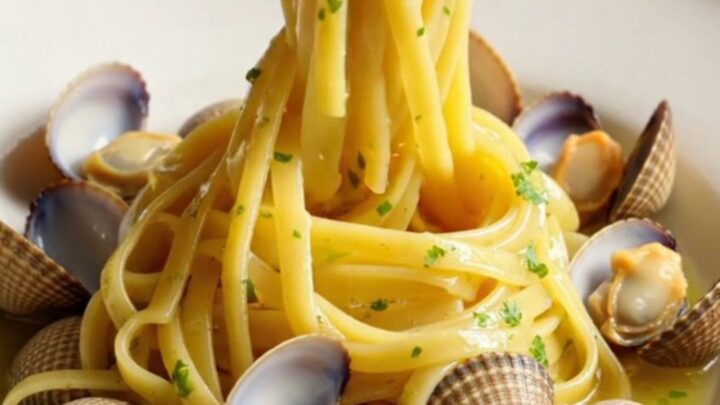
- Finish with parsley and serveTurn off the slow cooker. Gently stir in the chopped parsley. Using tongs or a carving fork, twirl the linguine into nests and serve in shallow bowls with a ladle of the lemon-garlic broth and clams on top.Look for The linguine is glossy with butter and broth, and the clams are plump.Tip Ladle extra broth over each serving for a saucy, briny finish.
The final dish should have glossy linguine coated in a garlic-butter broth, with tender clams scattered throughout. Fresh parsley adds a bright green contrast. The broth should be plentiful, not dry. Taste a strand of linguine to confirm it is seasoned well; adjust with salt if needed. Serve immediately with extra broth ladled over the top.
Common mistakes
One common mistake is adding the pasta too early, which can make it mushy. Stick to the two-hour simmer for the broth before adding the linguine. Another is using a wine you would not drink—the flavor concentrates, so choose a decent dry white.
Overcrowding the slow cooker can cause uneven cooking; use a 6-quart model. Finally, do not skip scrubbing the fresh clams; grit can ruin the sauce. If the broth seems too thin at the end, let it sit uncovered for a few minutes to reduce slightly.
How to tell it’s done
The dish is done when the littleneck clams have opened wide and the linguine is al dente, tender but with a slight bite. The broth will be slightly reduced and glossy, with a strong garlic and wine aroma.
To be safe, ensure the clams reach an internal temperature of 145°F (63°C); use an instant-read thermometer inserted into a clam if unsure. Discard any clams that remain closed after cooking.
- Shellfish: 145°F (63°C) in the thickest part
Up next · Part 3 of 3
4 variations · storage & make-ahead · 5 answers · printable card
Tips, FAQ & printable recipe (Part 3)← Back to the ingredients (Part 1)