Dinner · Part 2 of 3: Instructions
One-Pan Whole Vegetable Tagliatelle: Creamy Garden Pasta Step-by-step instructions
- Prep
- Cook
- Total
- Serves
- 4
Before you start
Before you start, make sure you have all your ingredients ready. Cook the tagliatelle according to package directions until al dente, reserving about 1/2 cup of the pasta water before draining.
Grate the Parmesan cheese and chop the parsley. Heat the olive oil in a large skillet over medium heat. Having everything prepped will make the process smooth and quick.
Ingredients at a glance (11)
- 4 tbsp olive oil
- 4 whole ripe tomatoes
- 1 whole zucchini
- 1 eggplant
- 2 peeled onions
- Salt to taste
- Freshly ground black pepper to taste
- 10 oz cooked tagliatelle egg ribbons
- 1/2 cup grated Parmesan cheese
- 1/2 cup pasta water
- 1/4 cup chopped fresh parsley
Instructions
Prepare and Soften the Vegetables
- Prepare the VegetablesHeat the olive oil in a large skillet over medium heat. Add the whole tomatoes, zucchini, eggplant, and peeled onions to the skillet. Season with salt and pepper. Cook, turning occasionally, until the vegetables are softened and the tomato skins begin to split, about 10 minutes.Look for The vegetables will be tender and the tomatoes will start to release their juices.Tip Keep the vegetables whole to lock in moisture and flavor.
- Peel the TomatoesUsing culinary tweezers or a fork, carefully lift the skins off the steamed tomatoes. Discard the skins. Continue cooking the peeled tomatoes and other vegetables for another 5 minutes, until everything is very soft.Look for The tomato skins should slip off easily, revealing the steaming red pulp.Tip Peeling the tomatoes gives a smoother sauce texture.
At the end of this phase, the vegetables should be tender and the tomato skins will have split. The onions will be translucent and the zucchini and eggplant will yield easily to a fork.
The skillet will be fragrant with olive oil and roasted vegetables, and the tomatoes will be steaming and juicy.
Mash and Combine
- Mash the VegetablesUse a potato masher to crush the stewed vegetables directly in the skillet. Mash until they form a thick, rustic sauce with a creamy, terracotta color. Stir well to combine the oil and vegetable juices into a cohesive sauce.Look for The sauce should be thick and chunky but cohesive, with no large vegetable pieces.Tip Mash to your preferred consistency; a few chunks add texture.
- Add the Pasta and CheeseAdd the cooked tagliatelle ribbons to the skillet. Sprinkle with the grated Parmesan cheese and pour in the pasta water. Use tongs to toss everything together, coating the pasta evenly with the vegetable sauce. Cook over medium heat for 2-3 minutes, until the sauce clings to the pasta and is glossy.Look for The pasta should be evenly coated and the sauce slightly thickened, clinging to the ribbons.Safe temperature 160°F (71°C) internal temperature (egg dishes)Tip The pasta water helps emulsify the sauce, making it silky.
The sauce should be thick and rustic, with a creamy terracotta color. The pasta and cheese should be evenly coated, and the sauce should have a glossy sheen from the emulsified pasta water and Parmesan. The skillet will sizzle gently as the pasta absorbs the sauce.
Finish and Serve
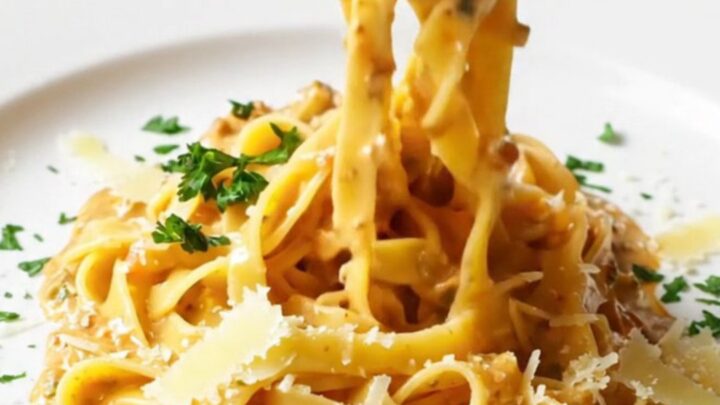
- Finish and ServeRemove the skillet from the heat. Twirl the tagliatelle into tall nests on serving plates. Shower with the chopped fresh parsley and extra grated Parmesan cheese. Serve immediately while hot and creamy.Look for The pasta should be steaming and glossy, with the sauce clinging to every ribbon.Tip Twirl the pasta high for an elegant presentation.
The final dish should be steaming hot, with the pasta twirled into neat nests. The parsley and extra Parmesan add a fresh, vibrant contrast. The sauce should be clinging to every ribbon, and the aroma should be rich and savory.
Common mistakes
One common mistake is not cooking the vegetables long enough; they must be very soft to mash into a sauce. Another is using too much pasta water, which can make the sauce watery; add it gradually.
Avoid over-tossing the pasta, which can break the ribbons. Also, don't skip peeling the tomato skins, as they can be tough and unpleasant in the sauce.
How to tell it’s done
The dish is done when the pasta is tender and well-coated with the creamy vegetable sauce, and the sauce has thickened slightly to cling to the ribbons. The vegetables should be completely soft and easily mashed.
There is no raw protein in this recipe, so no internal temperature check is needed. The final texture should be glossy and luxurious, with the cheese melted into the sauce.
- Egg dishes: 160°F (71°C) in the thickest part
Up next · Part 3 of 3
4 variations · storage & make-ahead · 5 answers · printable card
Tips, FAQ & printable recipe (Part 3)← Back to the ingredients (Part 1)