Dinner · Part 2 of 3: Instructions
One-Pan Tuscan Garlic Chicken with Blistered Tomatoes Step-by-step instructions
- Prep
- Cook
- Total
- Serves
- 4
Before you start
Before turning on the stovetop, ensure all ingredients are prepped and ready to go. Pat the chicken breasts completely dry with paper towels; any surface moisture will create steam and prevent a proper golden crust from forming.
Mince the garlic finely and wash the cherry tomatoes, ensuring they are dry. Measure out the cooking oil, seasoning, and fresh herbs so you can add them to the hot skillet without delay once the cooking process begins.
Ingredients at a glance (6)
- 4 chicken breasts (about 1.5 pounds)
- 1 tbsp seasoning of choice
- 2 tbsp cooking oil
- 4 cloves garlic, minced
- 2 cups whole cherry tomatoes
- 2 tbsp chopped fresh herbs
Instructions
Searing the Chicken Breasts
- Season and HeatSeason the chicken_breasts generously with the seasoning on all sides. Heat the cooking_oil in a large skillet over medium-high heat.Look for The oil should shimmer and be hot but not smoking.Tip Pat the chicken dry with paper towels before seasoning to ensure a better sear.
- Sear the ChickenCarefully place the seasoned chicken_breasts into the hot skillet with the cooking_oil. Sear without moving for five minutes, then flip to sear the other side.Look for A deep golden-brown crust should form on the bottom before flipping.Tip Avoid crowding the pan so the chicken sears instead of steaming.
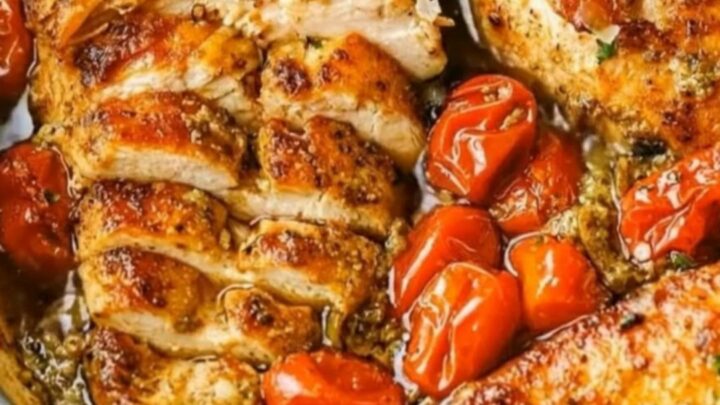
At the end of this first phase, the chicken breasts should have a gorgeous, deep golden-brown crust on both sides. The skillet will hiss loudly, and a rich, savory aroma of seared poultry will fill the kitchen.
You should see caramelized browned bits, known as fond, sticking to the bottom of the pan, which will serve as the flavorful foundation for the upcoming pan sauce. The chicken will not be fully cooked through yet, but the exterior will look perfectly seared.
Simmering the Garlic and Tomatoes
- Add Garlic and TomatoesReduce the heat to medium. Scatter the whole cherry_tomatoes and minced garlic into the skillet, placing them in the open spaces around the chicken_breasts.Look for The garlic should become highly fragrant within about thirty seconds.Tip Move the garlic around constantly at first to prevent it from burning.
- Add Herbs and SimmerSprinkle the chopped fresh_herbs directly into the bubbling pan juices around the chicken_breasts to infuse the sauce.Look for The herbs should release their aroma immediately as they hit the warm pan juices.Tip Gently stir the herbs into the juices to distribute their flavor evenly.
By the end of this phase, the cherry tomatoes will begin to soften, wrinkle, and blister, with a few starting to burst open and release their juices. The minced garlic will be fragrant and translucent, having simmered gently without taking on too much color. The fresh herbs will have combined with the pan juices, bubbling gently to form a light, aromatic sauce that coats the bottom of the skillet.
Basting and Resting
- Baste and Cook ThroughSimmer the sauce gently. Use a spoon to continuously baste the chicken_breasts with the hot pan juices until the cherry_tomatoes blister and the chicken reaches a safe internal temperature of 165°F (74°C).Look for The tomatoes should look soft and wrinkled, and some should burst open.Safe temperature 165°F (74°C) internal temperature (poultry)Tip Basting keeps the chicken incredibly moist as it finishes cooking.
- Rest and SliceRemove the skillet from the heat. Transfer the chicken_breasts to a clean cutting board and let them rest for three minutes before slicing and serving.Look for The juices will redistribute throughout the meat during the rest.Tip Slice against the grain for the most tender bite.
At the final checkpoint, the pan sauce will have thickened slightly into a rich, herby glaze, and the tomatoes will be beautifully collapsed and jammy. The chicken breasts will look plump, glistening, and deeply seasoned from the continuous basting. When tested with a meat thermometer, the chicken must register a safe internal temperature of 165°F (74°C). After a brief rest, slicing into the chicken will reveal incredibly juicy, tender meat.
Common mistakes
One common mistake is crowding the skillet with too many chicken breasts, which lowers the pan temperature and causes the meat to steam instead of sear. Ensure there is ample space between each breast, or cook them in batches if necessary.
Another pitfall is adding the garlic too early or over too high a heat, which burns the garlic and turns the entire sauce bitter. Always reduce the heat before adding the garlic and tomatoes to preserve their sweet, aromatic flavors.
How to tell it’s done
To guarantee the chicken is perfectly cooked and safe to eat, always insert an instant-read food thermometer into the thickest part of the largest breast. The chicken is fully cooked and safe when it reaches an internal temperature of 165°F (74°C).
Avoid relying solely on cooking times or the color of the meat, as breast thickness varies. Once the safe temperature is reached, immediately remove the chicken from the heat to prevent it from drying out.
- Poultry: 165°F (74°C) in the thickest part
Up next · Part 3 of 3
2 variations · storage & make-ahead · 4 answers · printable card
Tips, FAQ & printable recipe (Part 3)← Back to the ingredients (Part 1)