Dinner · Part 2 of 3: Instructions
One-Pan Stewed Vegetable Tagliatelle with Melted Cheese Step-by-step instructions
- Prep
- Cook
- Total
- Serves
- 4
Before you start
Before starting, gather all the ingredients. Wash the tomato, zucchini, and eggplant, and peel the onions. Have the olive oil, hot water, and boiling water measured. Shred the cheese if it's not already shredded, and chop the parsley.
Set the tagliatelle nests near the stove. Make sure your skillet has a lid that fits snugly. There's no need to preheat the oven or do any other prep—the entire dish cooks on the stovetop.
Ingredients at a glance (10)
- 3 tbsp extra virgin olive oil
- 1 large beefsteak tomato
- 1 whole green zucchini
- 1 whole eggplant
- 2 whole peeled onions
- 1/2 cup hot water
- 10 oz tagliatelle pasta nests
- 1 cup boiling water
- 1 cup shredded Turkish kashar cheese
- 1/4 cup freshly chopped flat parsley
Instructions
Steaming and Peeling
- Steam the VegetablesHeat the olive oil in a wide granite skillet over medium heat. Arrange the whole tomato, zucchini, eggplant, and peeled onions in the skillet in a single layer. Pour in the hot water, cover with the lid, and let steam for 12 minutes, until the vegetables are fork-tender and their skins begin to loosen.Look for The vegetables should be soft and the skins will easily peel away with tongs.Tip Keep the heat at medium to maintain a gentle steam; adjust if the water evaporates too quickly.
- Peel the VegetablesUsing tongs, lift each vegetable from the skillet and peel away the skins, which should come off easily. Return the peeled vegetables to the skillet, discarding the skins. Use a wooden spoon to gently break up the vegetables into a chunky sauce, leaving some texture.Look for The vegetables should be soft enough to mash with the spoon but still hold some shape.Tip If the mixture seems dry, add a splash of hot water to keep it saucy.
After 12 minutes of steaming, the vegetables should be soft enough that a fork pierces them easily. The skins will have loosened and can be peeled away with tongs.
The aroma will be sweet and vegetal, with the olive oil adding a fruity note. Before moving on, make sure all the vegetables are tender and the sauce has a chunky, saucy consistency.
Cooking the Pasta
- Add the PastaNestle the tagliatelle nests into the simmering vegetable sauce. Pour the boiling water over the pasta. Cover and simmer gently, tossing occasionally with tongs, until the pasta is tender and fully coated with the sauce, about 8-10 minutes.Look for The pasta should be al dente and the sauce should cling to the noodles.Tip Toss gently to avoid breaking the pasta nests; add a little more water if the sauce becomes too thick.
- Combine and SimmerContinue to toss the pasta with the vegetable sauce until every strand is evenly coated. The sauce should be thick and luscious, clinging to the pasta. If the sauce is too thin, simmer uncovered for a minute or two to reduce.Look for The pasta should be tender and the sauce should have a gravy-like consistency.Tip Taste and adjust seasoning with salt and pepper if desired, though the video does not include them.
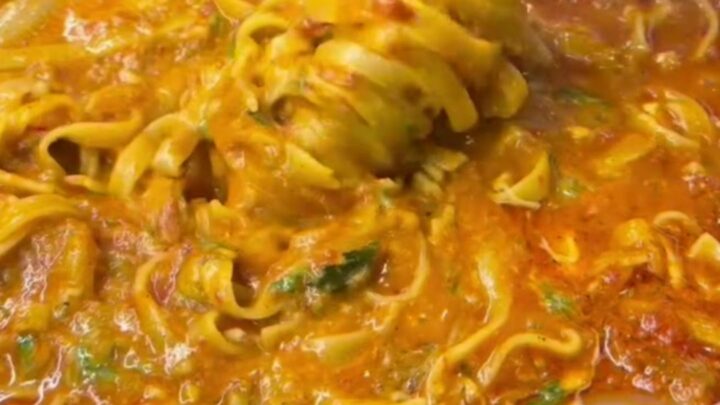
As the pasta simmers, the sauce will gradually thicken and cling to the noodles. The skillet will smell rich and savory, and the pasta will become glossy as it absorbs the vegetable juices. Check that the pasta is cooked to your liking—it should be al dente, not mushy. The sauce should be thick enough to coat the back of a spoon.
Melting the Cheese
- Top with Cheese and ParsleyScatter the shredded kashar cheese evenly over the pasta. Sprinkle with the chopped parsley. Cover the skillet with the lid and let the cheese melt for 2 minutes, until gooey and stringy.Look for The cheese should be fully melted and stretchy when lifted with a fork.Tip For extra browning, place the skillet under the broiler for a minute, but watch carefully.
- Serve the PastaLift a creamy, stringy forkful of the pasta to check the cheese pull. Serve immediately, scooping the pasta into bowls and making sure each portion gets plenty of the melted cheese and parsley.Look for The cheese should be stretchy and the pasta glossy with sauce.Tip Serve straight from the skillet for a rustic, family-style presentation.
After 2 minutes under the lid, the cheese should be fully melted and stretchy. When you lift a forkful, the cheese should pull into long ribbons. The parsley will have wilted slightly, adding a fresh green color. The dish is ready to serve immediately, with the cheese still gooey and the pasta hot.
Common mistakes
One common mistake is using too high heat, which can cause the water to evaporate before the vegetables are tender. Keep the heat at medium and check occasionally. Another issue is overcooking the pasta, which can make it mushy.
Start checking for doneness a minute or two before the package suggests. Also, be gentle when tossing the pasta to avoid breaking the nests into small pieces. Finally, don't skip the resting time under the lid after adding the cheese—it's essential for the cheese to melt properly.
How to tell it’s done
The dish is done when the pasta is tender but still has a slight bite, and the sauce has thickened enough to coat the noodles. The cheese should be fully melted and stretchy when you lift a forkful.
If you're using a thermometer, there's no protein to check, but the vegetables should be very soft and the sauce should be glossy. The finished dish should look inviting, with the cheese pulling into ribbons and the parsley adding a fresh green contrast.
Up next · Part 3 of 3
4 variations · storage & make-ahead · 5 answers · printable card
Tips, FAQ & printable recipe (Part 3)← Back to the ingredients (Part 1)