Dinner · Part 2 of 3: Instructions
One-Pan Roasted Eggplant & Tomato Shell Pasta Step-by-step instructions
- Prep
- Cook
- Total
- Serves
- 4
Before you start
Before starting, gather all the ingredients and equipment. Cut the eggplants into cylindrical halves, peel the red onion, and measure out the olive oil and water. Have the spices, pasta, boiling water, mozzarella, and basil ready.
Fill a kettle with water and bring it to a boil for the pasta. Make sure you have a large skillet with a lid, a potato masher, and culinary tweezers or tongs on hand. This recipe moves quickly once you start cooking, so having everything prepped will make the process smooth.
Ingredients at a glance (14)
- 1/4 cup olive oil
- 1/2 cup water
- 2 eggplants (cut into cylindrical halves)
- 3 whole ripe tomatoes
- 1 red bell pepper
- 1 peeled red onion
- 1 tsp sweet paprika
- 1 tsp ground cumin
- 1 tsp salt
- Black pepper to taste
- 250 g pipe rigate shell pasta
- 1 cup boiling water
- 1 cup shredded mozzarella cheese
- Fresh basil leaves, for stirring and garnish, to taste
Instructions
Steam and Puree the Vegetables
- Steam the VegetablesHeat the olive oil in a large skillet over medium heat. Add the eggplant halves, whole tomatoes, red bell pepper, and peeled red onion. Pour in the 1/2 cup water, cover with a glass lid, and steam for 12 minutes until the vegetables are tender and the skins loosen.Look for The vegetables should be fork-tender and the skins will start to peel away.Tip Keep the heat medium so the water simmers gently without evaporating too quickly.
- Peel and SeasonRemove the lid and use culinary tweezers to peel away the loose skins from the tomatoes, pepper, and eggplant. Discard the skins. Season the vegetables with the sweet paprika, cumin, salt, and a generous grind of black pepper.Look for The peeled vegetables should look glossy and soft, with the spices fragrant.Tip Peeling the skins gives a smoother sauce; take care not to burn fingers.
- Mash into a PureeUse a potato masher to crush the vegetables directly in the skillet until you have a rich, fragrant puree. The mixture should be thick and slightly chunky, not completely smooth.Look for The puree will be deep red-orange with visible pieces of eggplant and pepper.Tip Mash to your preferred consistency; leaving some chunks adds texture.
The vegetables should be completely tender, with skins that peel away easily. The puree will be thick, fragrant with paprika and cumin, and have a deep red-orange color. It should look like a rustic sauce with small chunks of eggplant and pepper. The aroma will be sweet and savory, with a hint of smokiness from the spices. Before moving on, taste the puree and adjust seasoning if needed.
Cook the Pasta in the Sauce
- Add the PastaAdd the pipe rigate shell pasta directly into the skillet with the vegetable puree. Pour in the 1 cup boiling water and stir to combine. Bring the mixture to a simmer.Look for The pasta should be mostly submerged in the sauce.Tip Use a wide skillet so the pasta cooks evenly.
- Simmer Until Al DenteCook the pasta, stirring frequently, until it is al dente and has absorbed most of the liquid, about 10-12 minutes. The sauce will thicken and coat the shells as they cook.Look for The pasta should be tender but still firm to the bite, and the sauce should cling to the shells.Tip Stir often to prevent sticking; add a splash of water if the pan looks dry.
The pasta will be simmering in the sauce, gradually absorbing the liquid. As it cooks, the sauce will thicken and cling to the shells. The pan should be bubbling gently, and the pasta should be moving freely.
The smell will be rich and tomatoey, with the spices becoming more pronounced. Check the pasta for doneness; it should be al dente with a slight bite. If the sauce is too thick, add a splash of boiling water.
Finish with Cheese and Basil
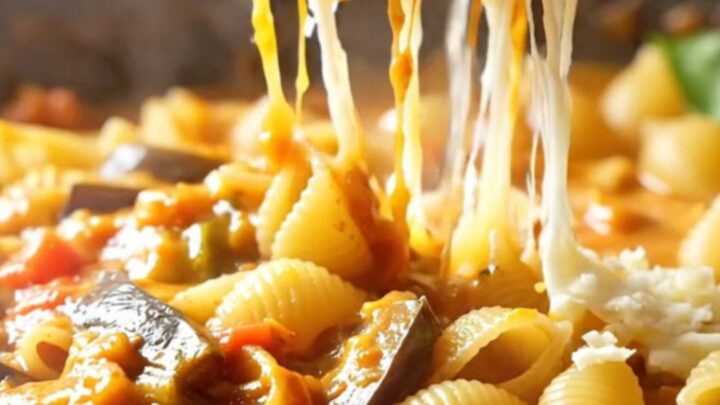
- Finish with Basil and MozzarellaStir in the fresh basil leaves and the shredded mozzarella cheese until the cheese is melted and gooey. The pasta should be glossy and coated with the cheesy sauce.Look for The cheese will stretch as you stir, and the basil will release its aroma.Tip Remove from heat just before adding the cheese to avoid overcooking.
- Serve ImmediatelyScoop the steaming pasta into bowls, making sure to get plenty of the cheesy sauce. Garnish with a few fresh basil leaves if desired. Serve hot.Look for The pasta should be hot and steamy with a glossy, cheesy coating.Tip Serve right away for the best texture and flavor.
The mozzarella will melt into glossy strands as you stir, coating the pasta and sauce. The basil leaves will wilt and release their fresh, herbal aroma. The dish should look inviting, with a creamy, cheesy texture and vibrant green flecks. The steam rising from the pan will smell wonderfully savory. Make sure the cheese is fully melted and the pasta is well coated before serving.
Common mistakes
One common mistake is overcooking the pasta, which can make it mushy. Keep an eye on it and stir frequently, testing for doneness a minute or two before the suggested time. Another issue is the sauce becoming too dry; if the pan looks dry before the pasta is done, add a splash of boiling water.
Also, be careful not to burn the vegetables during the steaming step—keep the heat medium and check that there's enough water. Finally, don't skip peeling the skins; it makes the sauce much smoother.
How to tell it’s done
The dish is done when the pasta is al dente—tender but still slightly firm to the bite—and the sauce has thickened to coat the shells. The mozzarella should be fully melted and stretchy, and the basil leaves will be wilted into the sauce.
The overall texture should be glossy and creamy, with the vegetable puree clinging to every shell. Taste a shell to ensure it's cooked through and adjust seasoning if needed. Serve immediately for the best texture and flavor.
Up next · Part 3 of 3
4 variations · storage & make-ahead · 5 answers · printable card
Tips, FAQ & printable recipe (Part 3)← Back to the ingredients (Part 1)