Dinner · Part 2 of 3: Instructions
One-Pan Korean Cheesy Kimchi Fried Rice Skillet Step-by-step instructions
- Prep
- Cook
- Total
- Serves
- 4
Before you start
Before you start, make sure the rice is cold and preferably a day old. If using fresh rice, spread it on a baking sheet and refrigerate for at least 15 minutes to dry it out.
Chop the kimchi into bite-size pieces and measure out the gochujang, kimchi juice, soy sauce, and sesame oil.
Have the mozzarella shredded and the eggs ready. Set a lid or a baking sheet nearby to cover the skillet when melting the cheese. This prep will make the cooking process smooth and quick.
Ingredients at a glance (11)
- 3 cups cold day-old cooked rice
- 1 cup well-fermented kimchi, chopped
- 2 tbsp kimchi juice
- 1 tbsp gochujang paste
- 1 tbsp soy sauce
- 1 tbsp toasted sesame oil
- 1 1/2 cups shredded mozzarella cheese
- 4 large eggs
- 2 sheets nori (dried seaweed), torn
- 1 tbsp neutral oil (such as vegetable or canola)
- Salt, to taste
Instructions
Caramelize and Fry
- Caramelize the KimchiHeat a large cast iron skillet over medium-high heat. Add the toasted sesame oil and the chopped kimchi. Sauté for about 3 minutes, stirring frequently, until the kimchi is deeply caramelized and fragrant. Add the gochujang paste and kimchi juice, stirring to coat the kimchi evenly.Look for The kimchi turns darker red and the oil is fragrant; the bottom of the skillet starts to brown slightly.Tip Use well-fermented kimchi for the deepest flavor. Stir constantly to prevent burning.
- Add Rice and SauceAdd the cold rice to the skillet, breaking up any clumps with a spatula. Drizzle with the soy sauce and stir-fry over high heat for 3 to 4 minutes, tossing frequently, until every grain is separated and coated in the spicy red sauce. The rice should be glossy and slightly charred in spots.Look for The rice is evenly red, no clumps, and you hear a constant sizzle.Tip Cold rice fries better than warm; if using fresh, spread it on a plate to cool first.
The kimchi should be deeply caramelized, with a sweet-savory aroma filling the kitchen. The rice is glossy, every grain separated, and the skillet sizzles as you toss. The bottom of the pan may have a slight crust, which is a sign of good char.
Melt the Cheese Moat
- Mound the Rice and Add Cheese MoatReduce the heat to medium-low. Using the spatula, mound the fried rice into a flat island in the center of the skillet, leaving a 1-inch border around the edges. Sprinkle the shredded mozzarella cheese into the border, forming a complete ring around the rice. Cover the skillet with a lid or a baking sheet and cook for 2 to 3 minutes, until the cheese is melted and bubbling.Look for The cheese melts into a bubbling pool around the rice; the edges turn golden brown.Tip Do not stir the cheese into the rice; the moat is the star.
The mozzarella has melted into a bubbling, golden pool around the rice island. The edges of the cheese are slightly browned and crisp, and the rice mound stays intact. The skillet is fragrant with toasted cheese and gochujang.
Top and Serve
- Fry the EggsWhile the cheese melts, heat a small nonstick skillet over medium heat with 1 tbsp neutral oil. Crack the eggs into the skillet and cook until the whites are set but the yolks are still glossy and runny, about 2 to 3 minutes. Season with a pinch of salt. If you prefer the eggs cooked through, flip and cook for another minute until the yolks are fully set to 160°F (71°C).Look for The egg whites are opaque and firm, the yolks are bright yellow and glossy.Safe temperature 160°F (71°C) internal temperature (egg dishes)Tip Use a spatula to gently lift the edges to check the whites.
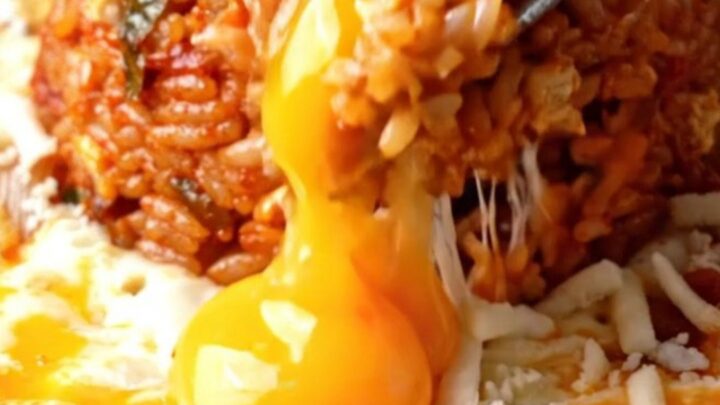
- Top and ServeRemove the skillet from the heat. Place the fried eggs on top of the rice mound. Scatter the torn nori over the top. Serve immediately, scooping the rice with the melted cheese from the moat. For the full experience, break the yolk and let it run into the rice before eating.Look for The yolk breaks and mixes with the spicy rice; the cheese pulls into long strings.Tip Use a large spoon to get both rice and cheese in each bite.
The eggs are cooked to your liking, with glossy yolks if runny. The nori adds a subtle ocean flavor. When you scoop, the cheese stretches and the yolk breaks, creating a creamy, spicy, savory bite.
Common mistakes
One common mistake is using freshly cooked rice, which becomes sticky and clumpy. Another is overcrowding the skillet, which traps steam and prevents browning. Be sure to use high heat for frying the rice and stir frequently.
Also, do not skip caramelizing the kimchi—this step builds the foundation of flavor. When adding the cheese, avoid stirring it into the rice; keep it in the moat so it melts evenly. Finally, do not overcook the eggs if you want a runny yolk; keep an eye on them.
How to tell it’s done
The dish is done when the rice is heated through and coated in a glossy red sauce, the cheese has melted into a bubbling moat around the rice, and the egg whites are set while the yolks remain glossy.
If you prefer the eggs fully cooked, cook them until the yolks are firm and reach an internal temperature of 160°F (71°C). The rice should be slightly charred in spots but not burnt, and the cheese should pull into long strings when lifted.
- Egg dishes: 160°F (71°C) in the thickest part
Up next · Part 3 of 3
4 variations · storage & make-ahead · 5 answers · printable card
Tips, FAQ & printable recipe (Part 3)← Back to the ingredients (Part 1)