Dinner · Part 2 of 3: Instructions
One-Pan Karadeniz Mıhlama: Turkish Black Sea Cheese Fondue Step-by-step instructions
- Prep
- Cook
- Total
- Serves
- 4
Before you start
Before starting, gather all ingredients and equipment. Shred the cheese (if using a block) and set aside. Toast the bread slices until golden and crisp. Bring water to a boil in a kettle or small pot. Have a heavy pan ready—ideally copper, but a cast-iron or stainless steel skillet works.
Measure the cornmeal and butter. Keep the bread warm in a low oven or covered with a towel while you cook. This dish comes together quickly, so having everything prepped and within reach ensures a smooth cooking process.
Ingredients at a glance (5)
- 3 tbsp Trabzon village butter or high-quality unsalted butter
- 3 tbsp stone-ground yellow cornmeal
- 200 ml boiling water
- 200 g Trabzon kolot cheese or aging string cheese / kaşar
- thick toasted village sourdough bread, for dipping, to taste
Instructions
Toast and Simmer
- Melt the Butter and Toast the CornmealPlace a heavy copper pan or large skillet over medium heat. Add the butter and let it melt completely, swirling the pan occasionally. Once the butter is fully melted and begins to foam, add the cornmeal. Stir continuously with a wooden spoon or spatula for about 3 minutes, until the cornmeal is fragrant and turns a light golden color. The mixture will look sandy and smell nutty.Look for The cornmeal turns golden and releases a toasty, nutty aroma.Tip Keep the heat at medium to avoid burning the butter; adjust if needed.
- Add Boiling Water and StirCarefully pour the boiling water into the pan with the toasted cornmeal. Stir immediately and continuously. The mixture will bubble vigorously and start to thicken, absorbing the water like a porridge. Keep stirring for about 2 minutes, until the cornmeal is fully hydrated and smooth, with no lumps. The mixture should be thick and creamy, similar to a soft polenta.Look for The mixture bubbles, absorbs the water, and becomes thick and creamy.Tip Use a long-handled spoon to avoid splashes from the boiling water.
The butter is melted and foaming, and the cornmeal is toasted to a light golden color, releasing a nutty aroma. The mixture looks sandy and slightly clumpy. When the boiling water is added, it bubbles vigorously and then thickens into a smooth, creamy porridge. The texture should be similar to a soft polenta—thick enough to hold its shape but still pourable. The pan should be sizzling gently, and the aroma of toasted cornmeal and butter fills the kitchen.
Melt the Cheese
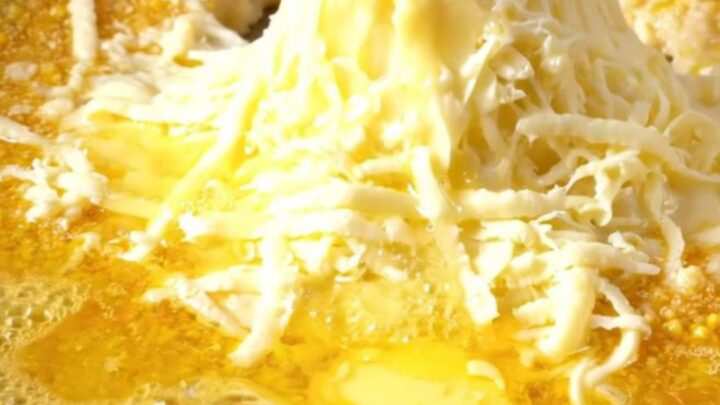
- Layer the Cheese on TopReduce the heat to low. Scatter the shredded Kolot cheese evenly over the surface of the cornmeal mixture. Do not stir. Let the cheese melt gently over low heat. As it melts, the butter from the cheese will rise to the surface, creating a glossy, golden layer. This process takes about 3 to 5 minutes. The cheese will become soft and stretchy, and the butter will pool around the edges.Look for The cheese melts into a smooth layer, and clear butter floats to the surface.Tip Resist stirring; letting the cheese melt undisturbed creates the classic mıhlama texture.
The cheese is scattered evenly over the hot cornmeal and begins to melt slowly over low heat. As it melts, the cheese softens and spreads, and clear, golden butter starts to pool around the edges and rise to the surface.
The top becomes glossy and inviting, with a few spots of browned cheese adding depth. The mixture is now a beautiful contrast of creamy white and golden yellow. The aroma is intensely buttery and milky, with a hint of toasted corn. The cheese should be fully melted, not stringy or separated.
Serve and Savor
- Serve and Dip with BreadRemove the pan from the heat. Tear a chunk of the toasted village bread and dip it deep into the mıhlama, scooping from the bottom to capture the cornmeal and the melted cheese. Lift the bread high to see the long, endless cheese pull. Serve immediately while hot, with extra bread on the side for dipping.Look for The cheese pulls in long strands, and the butter glistens on top.Tip Use a spoon to scoop from the bottom if the cheese is too stretchy to lift with bread alone.
The mıhlama is bubbling gently, with a layer of melted cheese and butter on top. When you dip a piece of toasted bread and lift, a long, unbroken cheese pull extends—a sign of perfect texture. The bread is crusty on the outside, soft inside, and perfect for scooping.
The dish is best enjoyed immediately, with the pan placed in the center of the table for everyone to dig in. The cheese is stretchy, the cornmeal is creamy, and the butter adds a luxurious richness.
Common mistakes
One common mistake is stirring the cheese into the cornmeal. Resist the urge—stirring will make the dish greasy and less appealing. Another pitfall is using cold water; always use boiling water to ensure the cornmeal cooks properly.
Overcooking the cornmeal can make it gluey, so keep the heat low and stir only until the water is absorbed. Also, don’t skimp on the butter; it’s essential for flavor and texture. Finally, use a good melting cheese—if it doesn’t stretch, the dish won’t have that iconic pull.
How to tell it’s done
The mıhlama is done when the cheese is fully melted and the butter has risen to the surface, creating a glossy, golden layer. The cornmeal should be thick and creamy, not runny. To check, dip a piece of bread into the center and lift—the cheese should pull in long, stretchy strands. If the mixture looks too thick, you can add a splash of hot water and stir gently, but this is rarely needed. Serve immediately, as the dish will continue to thicken as it cools.
Up next · Part 3 of 3
4 variations · storage & make-ahead · 5 answers · printable card
Tips, FAQ & printable recipe (Part 3)← Back to the ingredients (Part 1)