Dinner · Part 1 of 3: Ingredients
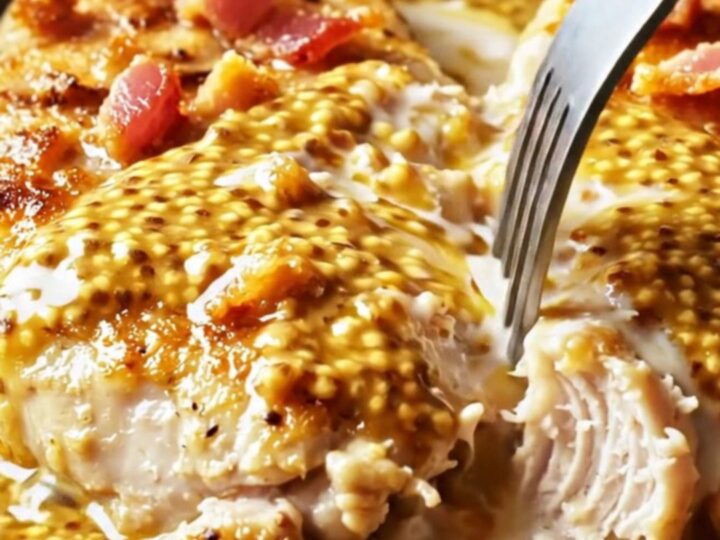
One-Pan Honey Mustard Bacon Chicken Skillet
- Prep
- Cook
- Total
- Serves
- 4
This one-pan honey mustard bacon chicken skillet is the weeknight dinner that delivers on every front: golden-seared chicken, crispy bacon lardons, and a tangy-sweet cream sauce that comes together in a single skillet. The honey mustard glaze is balanced with Dijon and whole-grain mustard for a touch of heat and texture, while the heavy cream rounds out the acidity into a silky, luscious sauce.
There is something deeply comforting about a skillet dinner that goes from stovetop to table in under half an hour. This honey mustard bacon chicken recipe brings together pantry staples and a few flavorful extras to create a meal that feels special but requires little effort.
The chicken cutlets are seasoned simply with garlic powder and seared in rendered bacon fat, which adds a smoky depth that you cannot get from oil alone. The sauce, a quick whisk of two mustards and honey, transforms into a creamy glaze when simmered with heavy cream. It is a dish that works for a casual family dinner or a cozy gathering, and it all happens in one pan.
Ingredients
- 6 strips thick-cut applewood bacon, diced
- 1 1/2 lb chicken breast cutlets
- 1 tsp garlic powder
Honey Mustard Sauce
- 1/4 cup Dijon mustard
- 1/4 cup whole-grain mustard
- 1/3 cup honey
- 1/2 cup heavy cream
Why this recipe works
The method is built around building layers of flavor in the same skillet. Starting with bacon renders its fat, which becomes the cooking medium for the chicken. This one step adds a smoky, savory foundation that infuses the meat as it sears. Deglazing with the honey mustard mixture lifts the browned bits from the pan, ensuring every drop of flavor ends up in the sauce rather than stuck to the metal. The result is a cohesive dish where each component enhances the others.
The sauce itself is a study in balance. Dijon mustard brings sharpness, whole-grain mustard adds texture and a milder heat, and honey provides sweetness that mellows the acidity. Heavy cream ties everything together, creating a glossy emulsion that coats the chicken and bacon without feeling heavy.
Simmering the chicken briefly in the sauce allows it to absorb some of that flavor while keeping the meat moist. The entire process is efficient, forgiving, and designed to get dinner on the table quickly.
Notes and substitutions
Chicken breast cutlets are ideal here because they cook quickly and evenly. If you cannot find cutlets, slice boneless, skinless chicken breasts horizontally into thin pieces or pound them to an even thickness.
The garlic powder is a simple seasoning that does not overpower the mustard sauce; you can add a pinch of salt and pepper if you like, but the bacon and mustard provide plenty of seasoning already. Thick-cut applewood bacon is recommended for its smoky flavor and substantial texture, but any good-quality bacon will work.
The skillet choice matters: a cast-iron or heavy stainless steel pan holds heat well and helps achieve a nice sear on the chicken. Nonstick skillets can also work, but you may get less browning. For the sauce, use Dijon and whole-grain mustard as specified—yellow mustard will not give the same depth.
Honey is the sweetener; if you prefer a less sweet sauce, reduce it to 1/4 cup. Heavy cream is essential for the silky texture; substituting milk or half-and-half will result in a thinner sauce.
- chicken breast cutlets: Chicken thighs (boneless, skinless) work well; adjust cooking time to reach 165°F (74°C).
- heavy cream: Half-and-half can be used for a lighter sauce, but the sauce will be thinner and less rich.
- applewood bacon: Any thick-cut bacon or pancetta can replace applewood bacon.
- honey: Maple syrup or agave nectar can substitute for honey, though the flavor will change slightly.
Equipment
- Large cast-iron skillet or heavy-bottomed skillet
- Cutting board
- Chef's knife
- Whisk
- Small bowl
- Tongs
- Instant-read thermometer
Up next · Part 2 of 3
6 steps · 20 min of cooking · what to look for at each stage
Step-by-step instructions (Part 2)