Dinner · Part 1 of 3: Ingredients
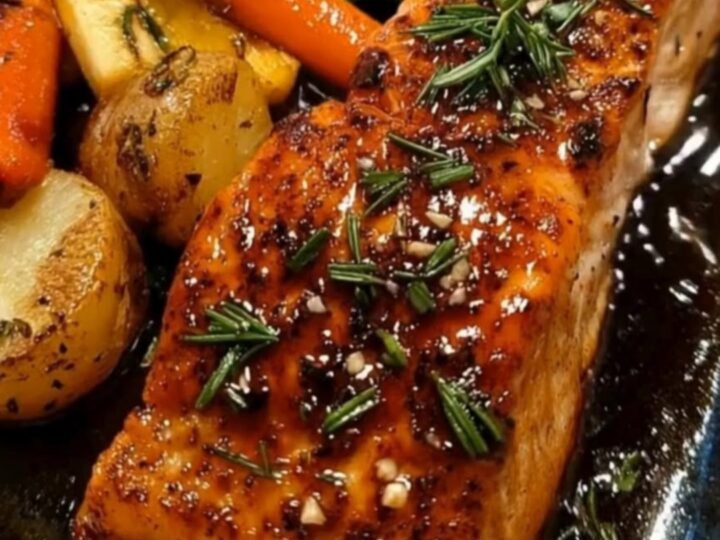
One-Pan Honey Garlic Salmon with Roasted Vegetables
- Prep
- Cook
- Total
- Serves
- 4
Experience the ultimate weeknight luxury with this delicious, caramelized honey garlic salmon sheet pan meal. Tender, flaky salmon fillets are coated in a sticky, sweet, and savory glaze, roasted alongside crispy baby potatoes, sweet carrots, and fresh asparagus.
It is a complete, restaurant-quality dinner that comes together quickly with minimal cleanup, making it absolutely perfect for busy evenings when you want maximum flavor with minimal effort in the kitchen.
Cooking a complete dinner on a single sheet pan is the ultimate kitchen timesaver, and this recipe elevates the concept to new heights. The rich honey garlic glaze caramelizes beautifully under the heat, creating a glossy coating on the succulent salmon while infusing the dish with incredible depth of flavor.
By roasting the potatoes and carrots first, you ensure every single component reaches its perfect texture at the exact same moment, resulting in a flawless meal every single time.
Ingredients
- 4 skin-on salmon fillets
- 1/3 cup honey
- 4 garlic cloves, minced
- 2 sprigs fresh rosemary, finely chopped
- 1 lb baby potatoes, halved
- 3 medium carrots, sliced into batons
- 1 bunch asparagus, trimmed
Why this recipe works
The science behind this recipe lies in the caramelization of the honey and garlic glaze when exposed to dry oven heat. Honey contains natural sugars that break down and brown quickly, forming a protective, sweet crust on the salmon that locks in moisture.
This prevents the delicate fish from drying out while creating those coveted caramelized edges that pair beautifully with the savory notes of fresh garlic, transforming simple ingredients into a gourmet masterpiece without any hassle.
Staggering the roasting times is the secret to perfect texture across different ingredients. Potatoes and carrots are dense root vegetables that require a longer cooking time to soften and develop crispy, golden skins.
Asparagus and salmon cook much faster; adding them later in the process ensures the vegetables are tender-crisp and the salmon remains wonderfully juicy and flaky rather than overcooked, ensuring every bite is cooked to absolute perfection on the pan.
Notes and substitutions
Select high-quality, skin-on salmon fillets of uniform thickness to guarantee even cooking throughout the pan. Skin-on fillets hold their shape much better during roasting and flipping, preventing the fish from breaking apart. For the vegetables, choose small baby potatoes and cut them into uniform halves, and slice the carrots into matching sizes so they roast at the exact same rate, preventing any pieces from burning or remaining undercooked in the oven.
Fresh rosemary provides a piney, aromatic contrast to the sweet honey, but fresh thyme or oregano can work as excellent alternatives. A heavy-duty, rimmed baking sheet is essential for this recipe to prevent juices from spilling and to allow proper heat circulation. For easy cleanup, line the baking sheet with parchment paper or heavy-duty aluminum foil before arranging the ingredients, ensuring the sticky glaze does not stick to your pan during roasting.
- baby potatoes: fingerling potatoes or cubed sweet potatoes
Equipment
- Baking sheet
- Parchment paper
- Small bowl
- Whisk
- Pastry brush
- Chef's knife
- Cutting board
Up next · Part 2 of 3
6 steps · 30 min of cooking · what to look for at each stage
Step-by-step instructions (Part 2)